As December 1, 2025, dawns, the global economy finds itself at a critical juncture, grappling with a complex interplay of persistent inflationary pressures and a highly fragmented commodity market. While a broad trend indicates a projected decline in overall commodity prices in the coming years, certain vital sectors are defying this gravitational pull, fueled by unique supply-demand dynamics, geopolitical tensions, and evolving monetary policy expectations. This divergence is creating a challenging yet opportunity-rich environment for industries and investors alike, reshaping cost structures, influencing monetary policy, and impacting consumer purchasing power worldwide.
The immediate implications are far-reaching. The anticipated overall easing of commodity prices, particularly in energy and food, is a crucial factor in tempering global inflationary pressures, offering a glimmer of hope for consumers and central banks. This shift has fueled strong market anticipation of potential interest rate adjustments by major central banks, notably the U.S. Federal Reserve, contributing to a "dovish" market outlook. However, this general trend masks significant volatility and sector-specific surges, creating a landscape where strategic adaptation and vigilant monitoring are paramount for navigating the economic currents ahead.
A Tapestry of Trends: Unpacking the Commodity Market's Complexities
The current state of global commodity markets as of December 1, 2025, presents a nuanced picture, characterized by a projected decline in overall prices alongside robust performance in specific, strategically important commodities. The World Bank forecasts a fourth consecutive year of decline in overall global commodity prices by 2026, reaching their lowest level in six years, primarily due to weak global economic growth, an expanding oil surplus, and persistent policy uncertainty. Energy prices, for instance, are expected to drop significantly in 2025 and 2026.
However, this broad stroke overlooks critical details. While Brent crude oil prices are forecast to fall to around $68 in 2025 and $60 in 2026, influenced by slower demand growth (particularly from China) and an expanding global oil surplus from non-OPEC+ exporters, oil prices showed a slight strength on December 1, 2025. This was partly due to anticipated sustained production limits by OPEC+ and elevated geopolitical energy concerns, with OPEC+ having deferred planned production increases. In stark contrast, U.S. natural gas prices are expected to rise in 2025, driven by sustained domestic demand and increasing export levels, potentially straining the market as winter 2025-2026 approaches.
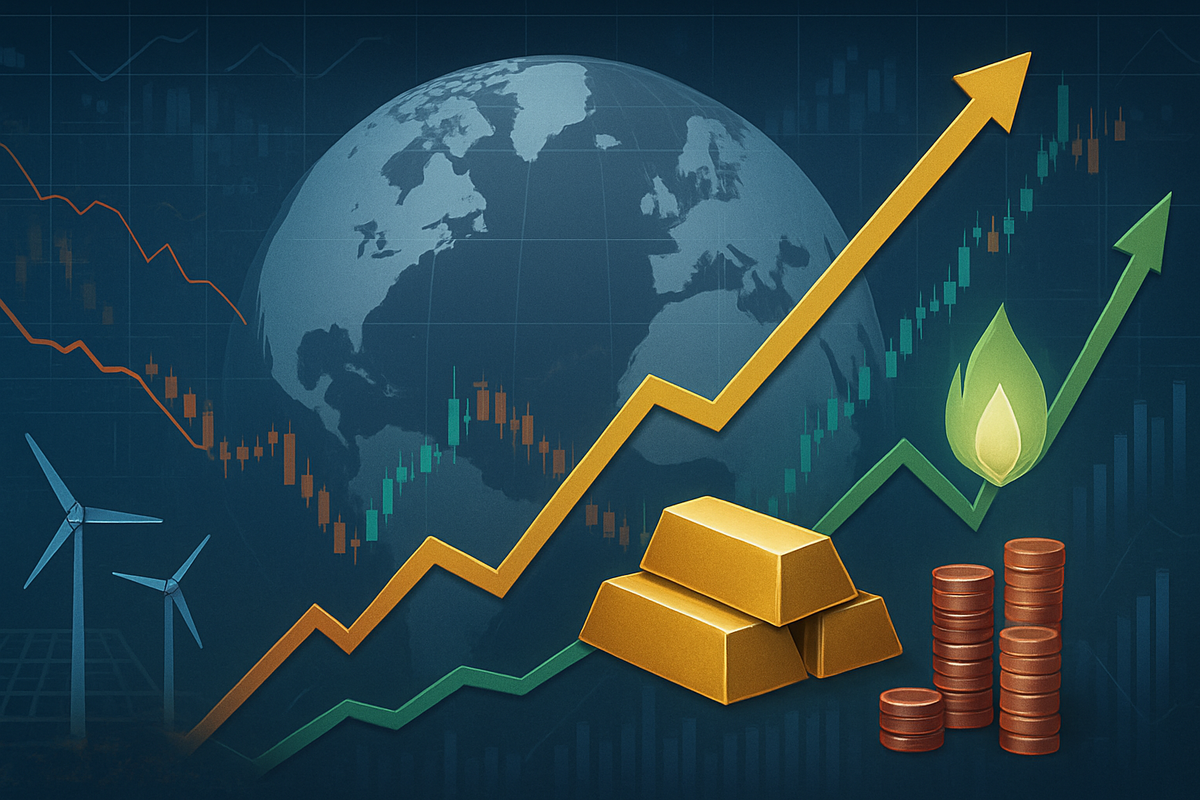
The metals sector further exemplifies this divergence. Precious metals like gold and silver are experiencing a significant rally, reaching or nearing multi-decade highs. Gold hit a record high in late October 2025, fueled by its safe-haven appeal amidst global uncertainty, a softer U.S. dollar (influenced by expectations of Federal Reserve rate cuts), and speculative interest. Industrial metals, particularly copper, are also seeing strong support, with prices touching nearly $11,200 per tonne due to tight supply, mining disruptions, and robust demand related to the energy transition (e.g., for electric vehicles, wind, and solar). Conversely, iron ore prices may decline in 2025 due to slower steel demand, especially from China. Agricultural commodities generally show easing prices, though specific items like beef are expected to remain high due to reduced production.
Winners and Losers: Corporate Fortunes in a Volatile Market
The mixed commodity price trends and persistent inflationary pressures are creating distinct winners and losers among public companies. Businesses with direct exposure to surging commodities stand to benefit significantly, while those facing elevated input costs or reduced consumer demand are likely to struggle.
Companies Poised to Win:
Gold and silver mining companies are direct beneficiaries of the precious metals bull run. Companies like Barrick Gold Corporation (NYSE: GOLD; TSX: ABX), Newmont Corporation (NYSE: NEM), and Pan American Silver Corp. (NYSE: PAAS; TSX: PAAS) are seeing boosted revenues, profits, and stock valuations. The increased cash flow can be channeled into debt reduction, exploration, and enhanced shareholder returns. Similarly, precious metals royalty and streaming companies such as Royal Gold, Inc. (NASDAQ: RGLD) and Wheaton Precious Metals Corp. (NYSE: WPM; TSX: WPM) thrive in this environment, generating stable, high-margin revenue without direct operational risks.
Copper mining companies are also experiencing a boom due to robust demand from global electrification, renewable energy initiatives, AI data centers, and defense spending. Companies like KGHM Polska Miedź S.A. (WSE: KGHM) and Hudbay Minerals Inc. (NYSE: HBM) are well-positioned to capitalize on elevated prices and strong margins. U.S. natural gas producers and LNG exporters, including Cheniere Energy (NYSE: LNG) and EQT Corporation (NYSE: EQT), benefit from strong domestic demand and rising LNG exports. Midstream companies like Kinder Morgan Inc. (NYSE: KMI), which transport natural gas, also see earnings growth from higher volumes.
Companies Facing Headwinds:
Conversely, companies with high input costs from broadly declining commodities or those struggling with persistent inflation face significant challenges. Manufacturing sectors, construction companies (not specifically focused on copper-intensive infrastructure), and automotive and consumer electronics firms may see squeezed profit margins if they cannot pass on increased costs for raw materials, energy, and labor to price-sensitive consumers. Even with a general decline in overall commodity prices, tariffs and other inflationary factors can keep input costs elevated.
Consumer discretionary companies, including automotive manufacturers, airlines, hotels, and luxury retailers, are vulnerable as inflation erodes consumer purchasing power. Reduced disposable income leads to decreased spending on non-essential goods and services, directly impacting sales volumes and profit margins. High-growth technology companies with elevated valuations, such as Nvidia (NASDAQ: NVDA) and Microsoft (NASDAQ: MSFT), could face valuation compression if higher interest rates (or the lingering effects of previous hikes) make their discounted future cash flows less attractive. Real estate and homebuilders, like D.R. Horton (NYSE: DHI) and Lennar (NYSE: LEN), continue to contend with increased mortgage costs, reduced housing affordability, and labor shortages, leading to lower sales and profits.
Wider Implications: Reshaping Industries and Policies
The current confluence of inflationary pressures and mixed commodity price trends is profoundly reshaping industries, influencing global trade, and prompting significant policy responses. These dynamics are not isolated but are deeply embedded within broader economic transformations.
One major trend is the intensified focus on supply chain resilience and localization. Ongoing geopolitical tensions, port congestion, shipping delays, labor shortages, and climate change-induced natural disasters continue to disrupt global supply chains. This volatility drives up costs for manufacturers and consumers, pushing companies towards greater diversification, reshoring, and strategic stockpiling of critical materials to ensure resource security. Simultaneously, the energy transition is accelerating, driving robust demand for metals vital for clean energy technologies—such as copper, nickel, lithium, and cobalt—underpinning their price resilience. The burgeoning demand from data centers and AI is also significantly increasing global electricity demand, necessitating substantial investment in clean power.
Geopolitical influence on trade remains a critical factor. The potential re-introduction of sweeping tariffs by a new U.S. administration, particularly on Chinese exports, is a significant concern. Such protectionist policies could weaken global economic growth, trigger retaliatory measures, and intensify trade wars, creating further uncertainty in commodity markets. This environment leads to ripple effects on cost structures and profitability across industries, where companies with diversified supply chains or strong hedging strategies gain a competitive edge. It also fosters strategic alliances and mergers and acquisitions (M&A) in capital-intensive sectors like energy and mining, as companies seek scale and reduced risk.
From a regulatory and policy standpoint, central banks are walking a tightrope, aiming to control inflation without stifling economic growth. Anticipated interest rate cuts by central banks like the Federal Reserve could ease some financial pressures, though the effectiveness of monetary policy in taming commodity-driven inflation is closely linked to central bank credibility. Governments are increasingly implementing industrial policies, such as the U.S. Inflation Reduction Act, to secure domestic supply chains for critical minerals and promote clean energy. Historically, the current environment bears some resemblance to the 1970s oil crises, where commodity price shocks had a large impact on core inflation. However, improved monetary policy frameworks since then suggest that the inflationary impact from commodity movements may be less persistent today, though the unique combination of supply chain disruptions, geopolitical events, and climate change adds layers of complexity not seen before.
The Road Ahead: Navigating Future Scenarios
Looking forward, the global economy faces a period of continued adjustment, with both short-term volatility and long-term structural shifts. The next 6-12 months (into 2026) are expected to see a general moderation in global inflation, potentially allowing central banks to ease monetary policy. However, inflation in the U.S. might remain stickier, influenced by tariffs and immigration restrictions. Overall commodity prices are projected to decline, yet natural gas, precious metals (gold, silver), and industrial metals like copper and aluminum are expected to maintain or increase their upward trajectory, driven by strong demand from the energy transition and AI investments.
In the long term (1-5 years and beyond, 2027-2030), aggregate commodity prices are expected to stabilize and begin a modest recovery as global economic activity improves. The energy transition will remain a paramount driver, with demand for critical minerals like lithium, cobalt, nickel, and copper projected to increase by 300-500% by 2030. Population growth, food security concerns, and technological advancements (especially AI) will also shape long-term demand dynamics.
Strategic pivots for businesses will involve mastering pricing power through selective increases or "shrinkflation," rigorously managing costs, and investing in supply chain resilience through diversification and strategic stockpiling. Digital transformation will be crucial for agility. For investors, diversification across commodities, real estate, and dividend-paying stocks will be key, with a tactical overweight towards energy transition metals and safe-haven assets. Governments and policymakers must prioritize fiscal prudence, nuanced monetary policy, trade facilitation, and robust support for the energy transition.
Potential scenarios range from a baseline of gradual disinflation and divergent commodity paths, where moderate global growth allows for gradual rate cuts, to an upside scenario of resurgent growth and inflationary pressures driven by strong consumer demand or AI-led productivity gains, leading to broader commodity price increases. A downside scenario of stagflationary headwinds or recession could emerge from escalating geopolitical conflicts or prolonged trade wars, causing extreme volatility, with industrial metals suffering while precious metals surge as safe havens.
Conclusion: A Market in Flux
The global financial markets as of December 1, 2025, are navigating a period of profound recalibration. The "double burden" of persistent inflation and evolving trade policies is eroding consumer purchasing power and influencing corporate strategies. While an overall moderation in commodity prices offers some relief from headline inflation, the divergent performance of specific commodities—the bull run in precious metals, the strength of copper and natural gas, contrasting with a generally softer oil market—underscores a fragmented and complex market landscape.
The lasting impact of this period will likely be a heightened emphasis on supply chain security, accelerated investment in green technologies, and a more politically charged global trade environment. For investors, this environment demands vigilance and adaptability. Key takeaways include the continued importance of safe-haven assets like gold, the growth potential in commodities tied to the energy transition and AI, and the need to monitor central bank actions, inflation reports, and geopolitical developments closely.
As the market moves forward, investors should watch for the timing and pace of interest rate adjustments, the impact of new tariffs on supply chains and consumer prices, and shifts in consumer behavior. The US dollar index will remain a critical factor for dollar-denominated commodities, while the performance of commodity futures markets can offer forward-looking insights. The sustained rally in precious metals suggests their enduring role as diversifiers and inflation hedges. This dynamic period promises both significant challenges and compelling opportunities for those prepared to navigate its intricate crosscurrents.
This content is intended for informational purposes only and is not financial advice