Health insurance provider Elevance Health (NYSE: ELV) reported revenue ahead of Wall Street’s expectations in Q3 2026, but sales were flat year on year at $50.44 billion. Its non-GAAP profit of $6.99 per share was 48.9% above analysts’ consensus estimates.
Is now the time to buy Elevance Health? Find out by accessing our full research report, it’s free.
Elevance Health (ELV) Q3 2026 Highlights:
- Revenue: $50.44 billion vs analyst estimates of $48.93 billion (flat year on year, 3.1% beat)
- Adjusted EPS: $6.99 vs analyst estimates of $4.69 (48.9% beat)
- Management raised its full-year Adjusted EPS guidance to $29 at the midpoint, a 7.4% increase
- Operating Margin: 2.5%, in line with the same quarter last year
- Free Cash Flow Margin: 2%, similar to the same quarter last year
- Customers: 44.88 million, down from 44.95 million in the previous quarter
- Market Capitalization: $95.46 billion
"Elevance Health's third quarter results reflect stronger execution across our diversified portfolio and underscore the earnings power of the business. We are raising our 2026 earnings outlook and remain confident in delivering at least 12% growth in adjusted diluted earnings per share in 2027 from our higher earnings baseline of at least $26.753. By bringing together the capabilities of our Health Benefits business and Carelon, we are improving the healthcare experience, strengthening our competitive advantage, and creating long-term value for our shareholders."
Company Overview
Formerly known as Anthem until its 2022 rebranding, Elevance Health (NYSE: ELV) is one of America's largest health insurers, serving approximately 47 million medical members through its network-based managed care plans.
Revenue Growth
Examining a company’s long-term performance can provide clues about its quality. Any business can put up a good quarter or two, but many enduring ones grow for years. Luckily, Elevance Health’s sales grew at a decent 8.5% compounded annual growth rate over the last five years. Its growth was slightly above the average healthcare company and shows its offerings resonate with customers.
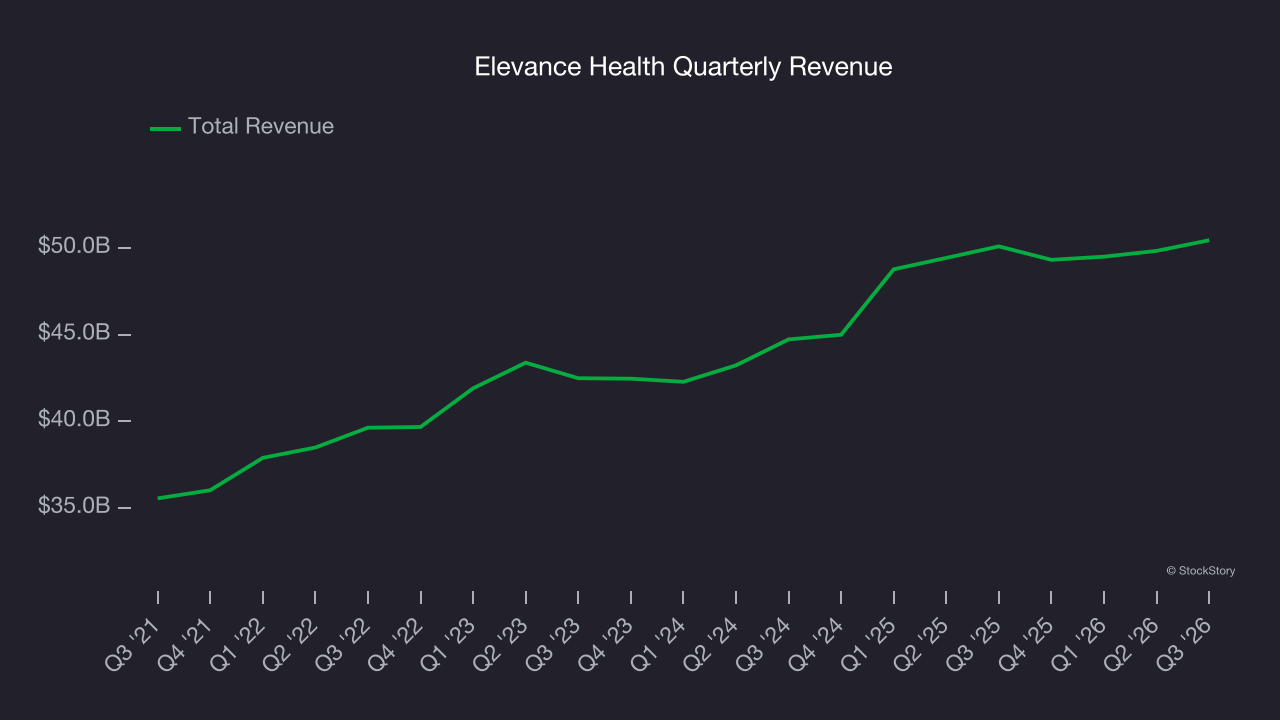
Long-term growth is the most important, but within healthcare, a half-decade historical view may miss new innovations or demand cycles. Elevance Health’s recent performance shows its demand has slowed as its annualized revenue growth of 7.4% over the last two years was below its five-year trend. We’re wary when companies in the sector see decelerations in revenue growth, as it could signal changing consumer tastes aided by low switching costs. 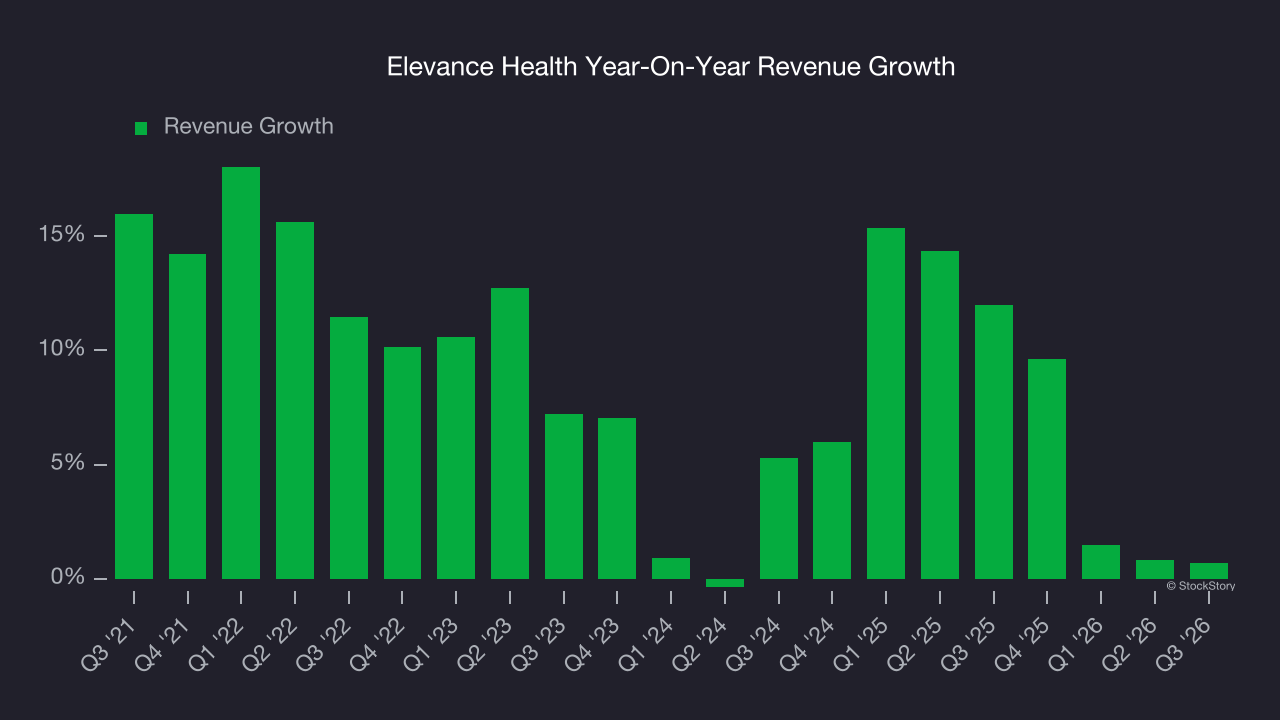
We can better understand the company’s revenue dynamics by analyzing its number of customers, which reached 44.88 million in the latest quarter. Over the last two years, Elevance Health’s customer base averaged 1.2% year-on-year declines. Because this number is lower than its revenue growth, we can see the average customer spent more money each year on the company’s products and services. 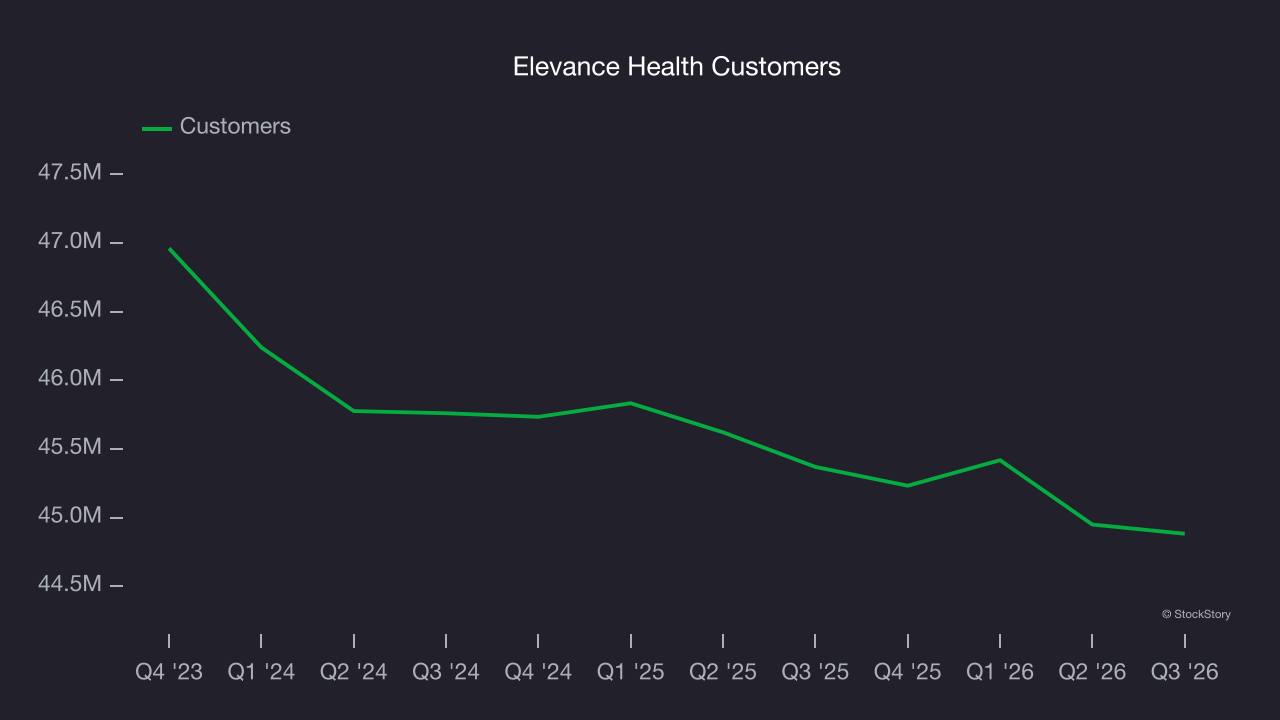
This quarter, Elevance Health’s $50.44 billion of revenue was flat year on year but beat Wall Street’s estimates by 3.1%.
Looking ahead, sell-side analysts expect revenue to remain flat over the next 12 months, a deceleration versus the last two years. This projection doesn’t excite us and implies its products and services will see some demand headwinds. At least the company is tracking well in other measures of financial health.
ONE MORE THING: 3 Hidden Platforms Growing 3X Faster than Amazon, Google, and PayPal. Amazon, Google, and Meta all followed the same playbook: Dominate an ignored market. Build an unbeatable moat. Scale until you’re unstoppable.
These three platforms are running that exact playbook right now. The early investors in Amazon made fortunes. The early investors in these could do the same. Get All 3 Stocks Here for FREE.
Adjusted Operating Margin
Elevance Health was profitable over the last five years but held back by its large cost base. Its average adjusted operating margin of 5.9% was weak for a healthcare business.
Analyzing the trend in its profitability, Elevance Health’s adjusted operating margin decreased by 2.2 percentage points over the last five years. The company’s two-year trajectory also shows it failed to get its profitability back to the peak as its margin fell by 2.4 percentage points. We still like Elevance Health but would like to see some improvement in the future.
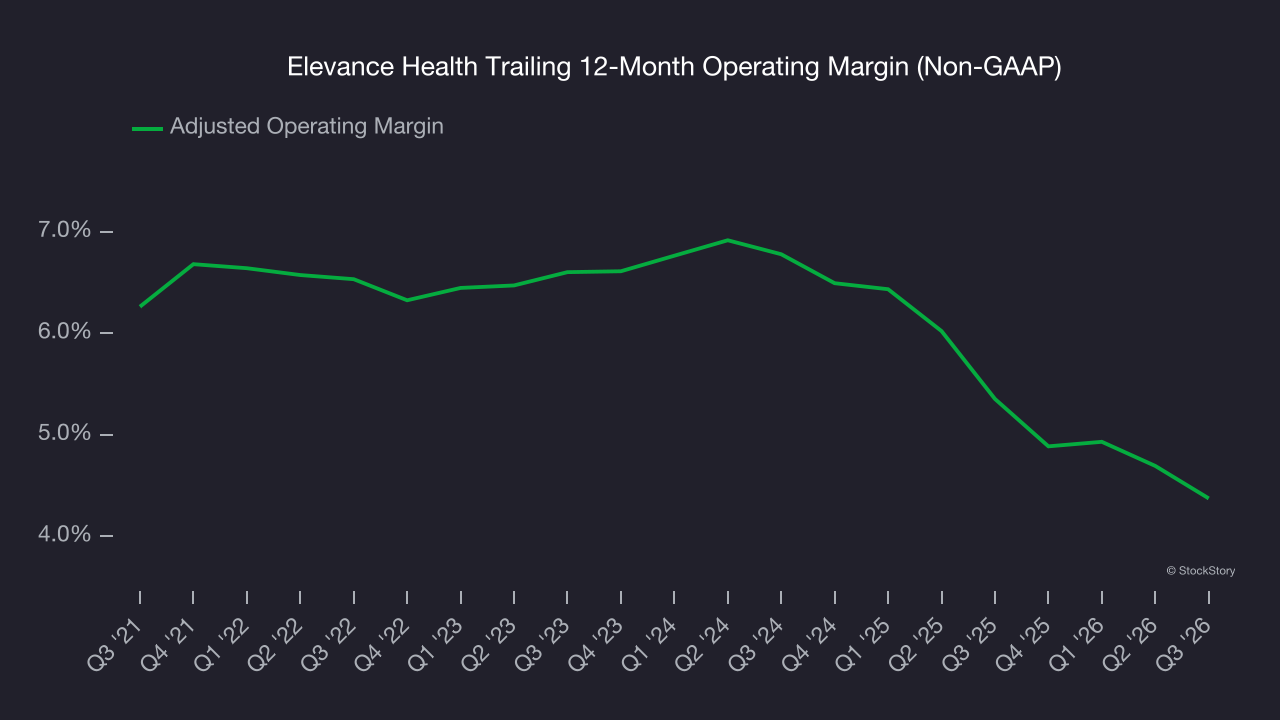
This quarter, Elevance Health generated an adjusted operating margin profit margin of 2.7%, down 1.3 percentage points year on year. This reduction is quite minuscule and indicates the company’s overall cost structure has been relatively stable.
Earnings Per Share
Revenue trends explain a company’s historical growth, but the long-term change in earnings per share (EPS) points to the profitability of that growth — for example, a company could inflate its sales through excessive spending on advertising and promotions.
Elevance Health’s EPS grew at a decent 5.4% compounded annual growth rate over the last five years. However, this performance was lower than its 8.5% annualized revenue growth, telling us the company became less profitable on a per-share basis as it expanded due to non-fundamental factors such as interest expenses and taxes.
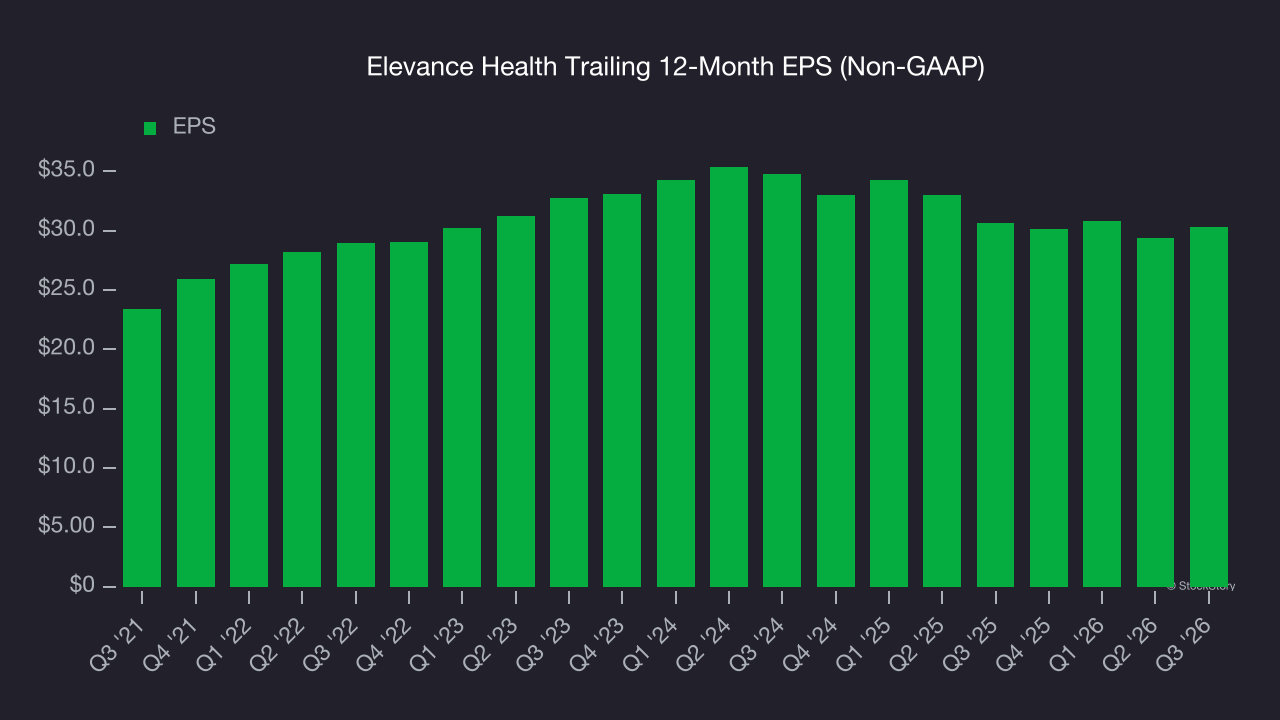
Diving into the nuances of Elevance Health’s earnings can give us a better understanding of its performance. As we mentioned earlier, Elevance Health’s adjusted operating margin declined by 2.2 percentage points over the last five years. This was the most relevant factor (aside from the revenue impact) behind its lower earnings; interest expenses and taxes can also affect EPS but don’t tell us as much about a company’s fundamentals.
In Q3, Elevance Health reported adjusted EPS of $6.99, up from $6.03 in the same quarter last year. This print easily cleared analysts’ estimates, and shareholders should be content with the results. Over the next 12 months, Wall Street expects Elevance Health’s full-year EPS to shrink by 6.6% from $30.35 to $28.34.
Key Takeaways from Elevance Health’s Q3 Results
It was good to see Elevance Health beat analysts’ EPS expectations this quarter. We were also excited its full-year EPS guidance outperformed Wall Street’s estimates by a wide margin. Zooming out, we think this was a solid print. The stock traded up 1.3% to $445.81 immediately after reporting.
Indeed, Elevance Health had a rock-solid quarterly earnings result, but is this stock a good investment here? The latest quarter does matter, but not nearly as much as longer-term fundamentals and valuation, when deciding if the stock is a buy. We cover that in our actionable full research report which you can read here (it’s free).