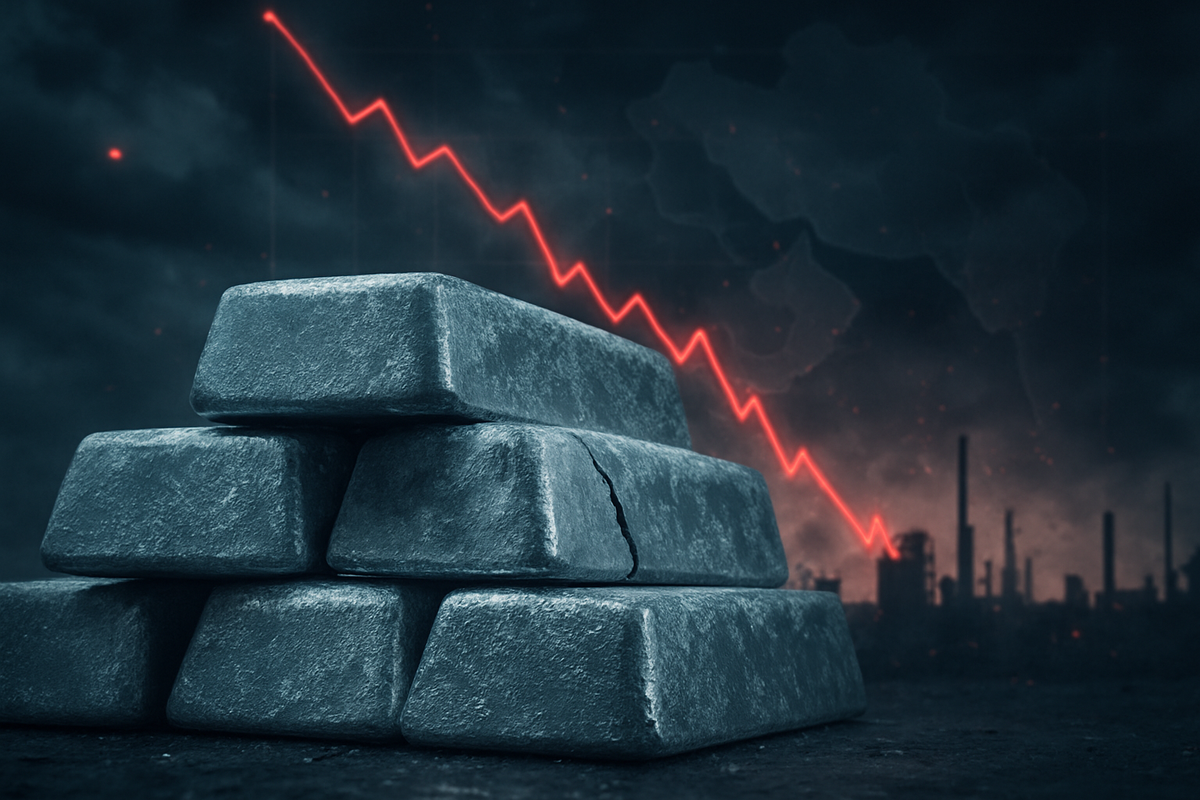
In a startling reversal of fortune that has sent shockwaves through the commodities sector, First Majestic Silver (NYSE: AG) saw its shares plummet 19% in the first week of April 2026. The sudden sell-off, which wiped out billions in market capitalization, comes as a sobering reality check for investors who had rode the "silver rocket" to record highs earlier this year. The decline represents one of the sharpest weekly drops for the Vancouver-based miner in recent history, catching many retail and institutional investors off guard.
The immediate implications are far-reaching, as the crash in First Majestic’s valuation has triggered a broader liquidation across the precious metals space. While silver is traditionally viewed as a "safe-haven" asset during times of geopolitical strife, the current conflict involving Iran has failed to provide the expected price floor. Instead, a toxic cocktail of surging real yields, a "flight to cash" among institutional desks, and a dramatic cooling of industrial demand from Asia has turned the silver market into a cautionary tale of overextension.
A Perfect Storm: Timeline of the April Reset
The seeds of this month’s collapse were sown in the exuberant peak of January 2026, when silver prices touched an astronomical $121.67 per ounce. Buoyed by a massive short squeeze and aggressive stockpiling by Chinese state-run enterprises, First Majestic Silver (NYSE: AG) hit an all-time high of approximately $32.04 per share. At the time, the mood was euphoric; H.C. Wainwright had recently reiterated a "Buy" rating, hiking its price target to a bullish $30.00, citing the company’s successful integration of the Gatos Silver assets and record-breaking quarterly revenues.
However, the narrative began to shift as the war in Iran escalated throughout March. Contrary to historical precedent where war drives investors into bullion, the 2026 conflict caused energy prices to skyrocket, leading the Federal Reserve to maintain its "higher for longer" interest rate stance. This drove the U.S. Dollar to multi-year highs and pushed real yields on Treasury bonds into territory that made non-yielding assets like silver unattractive. By the time April 1st rolled around, the "panic bid" had shifted from silver to oil and the Greenback.
The final blow came on April 4th, 2026, when reports surfaced of a massive liquidation from a prominent London-based hedge fund facing margin calls on its tech positions. Forced to sell its most liquid winners, the fund dumped a significant stake in First Majestic. This "forced selling" event occurred simultaneously with a bearish report on Chinese manufacturing PMI, which showed the sharpest contraction in industrial silver use since the early 2020s.
Winners and Losers in the Silver Fallout
In the wake of the 19% slide, First Majestic Silver (NYSE: AG) stands as the most visible casualty, given its high operational leverage and aggressive growth strategy. Other primary silver miners, such as Pan American Silver Corp. (NYSE: PAAS), have also felt the sting, with their shares trailing the downward trend as investors reassess the "risk-on" nature of silver mining stocks. The loss of confidence is palpable, particularly among those who entered the market during the $100/oz silver euphoria.
However, the carnage is not universal. "Streaming" companies like Wheaton Precious Metals Corp. (NYSE: WPM) have shown relative resilience. Because their business model relies on fixed-price contracts rather than the high overhead of direct mining operations, they remain better positioned to weather the volatility, though they are not immune to the broader sector malaise. On the "winning" side of the ledger, surprisingly, are the heavy consumers of industrial silver. Large-scale solar manufacturers and electric vehicle producers, many of whom are listed on the Shanghai and New York exchanges, may find relief in lower input costs after months of agonizingly high silver prices.
The China Factor and the Death of the Safe-Haven Narrative
The April plummet highlights a significant structural shift in the global silver market: the dominance of industrial demand over investment demand. China, which accounts for nearly 40% of global industrial silver consumption, has entered a phase of "demand destruction." As silver prices crossed the $100 threshold earlier this year, Chinese solar giants began an aggressive pivot toward copper-based metallization and other "thrifting" technologies to reduce their reliance on the expensive white metal.
This shift has effectively decoupled silver from its traditional relationship with geopolitical risk. While the war in Iran would usually drive silver higher, the reduction in Chinese manufacturing activity—exacerbated by war-related supply chain disruptions—has created a surplus of physical metal. This event mirrors the "violent resets" seen in the nickel market in years past, where speculative bubbles met the hard reality of industrial substitution. Furthermore, the Federal Reserve's commitment to fighting energy-driven inflation has ensured that the "opportunity cost" of holding silver remains high, further eroding its status as a refuge for capital.
Navigating the Aftermath: What Lies Ahead
Looking forward, the silver market is likely to enter a period of painful consolidation. In the short term, First Majestic Silver (NYSE: AG) and its peers must focus on cost containment and shareholder preservation. The $30 price targets set by firms like H.C. Wainwright now appear overly optimistic, and a wave of analyst downgrades is expected as the market adjusts to a "new normal" where silver trades in the $60–$70 range rather than the triple digits.
Strategic pivots are already underway. Industry insiders suggest that First Majestic may need to slow its exploration projects in Mexico and Nevada to preserve cash. Meanwhile, the broader market will be watching the "Shanghai Premium" closely; if Chinese demand does not recover by the third quarter of 2026, the surplus could push prices even lower. However, a potential opportunity emerges for long-term value investors who believe the green energy transition will eventually necessitate a return to silver, regardless of temporary thrifting measures.
The Verdict for Investors
The 19% plummet of First Majestic Silver is more than just a bad week for a mining stock; it is a signal that the rules of the commodities game have changed. The combination of high interest rates and industrial "thrifting" has proven to be a more powerful force than geopolitical fear. For the market moving forward, the focus will shift from speculative headlines to hard economic data—specifically Chinese manufacturing output and U.S. inflation prints.
Investors should watch for First Majestic's upcoming Q1 earnings call, which will likely provide the first clear picture of how the company intends to navigate this low-price environment. The lasting impact of this event will be a renewed respect for the volatility of silver and a more cautious approach to the "safe-haven" labels that have defined the metal for decades. In the coming months, the ability to distinguish between speculative hype and industrial reality will be the difference between profit and loss in the precious metals sector.
This content is intended for informational purposes only and is not financial advice