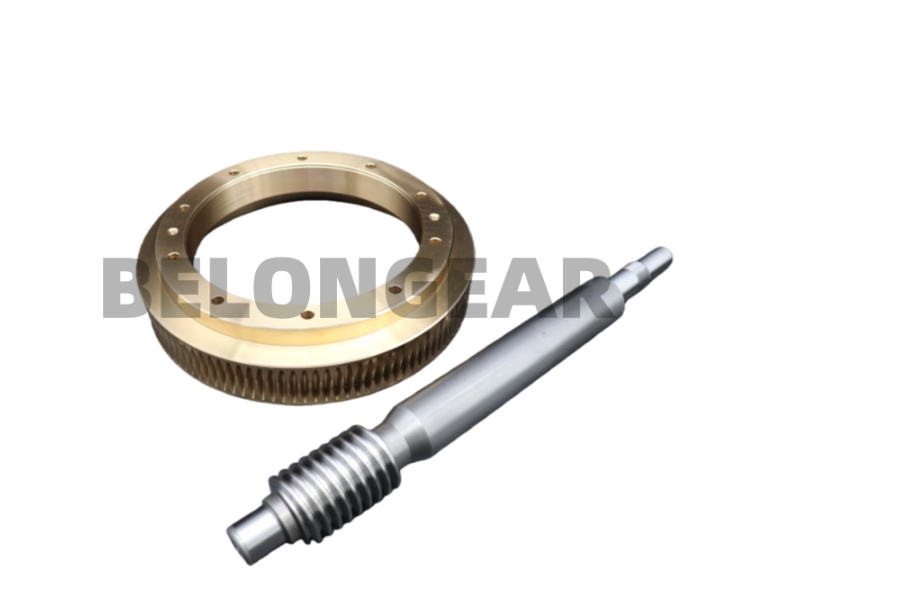
What Is a Worm Gear Ratio?
The worm gear ratio describes the relationship between the rotational speed of the worm and the worm wheel in a worm gear drive system. It is calculated by dividing the number of teeth on the worm wheel by the number of starts (threads) on the worm gear.
For example, when a single start worm drives a worm wheel with 40 teeth, the resulting worm gear ratio is 40:1. This means the worm must rotate 40 times to produce one full rotation of the worm wheel.
Because of this design, worm gear drives can achieve very high reduction ratios in a single stage, making them highly efficient for compact transmission systems.
How to Calculate Worm Gear Ratio
The formula for worm gear ratio calculation is:
Gear Ratio = Number of Teeth on Worm Wheel ÷ Number of Starts on Worm
Common examples include:
1-start worm + 20-tooth wheel → 20:1 gear ratio
2-start worm + 40-tooth wheel → 20:1 gear ratio
1-start worm + 60-tooth wheel → 60:1 gear ratio
This simple calculation allows engineers to precisely control output speed and torque in worm gear reducers.
Why Worm Gear Ratio Is Important in Power Transmission
Choosing the correct worm gear ratio is essential for achieving optimal system performance. Key benefits include:
High Speed Reduction in compact gearboxes
Increased Output Torque for heavy load applications
Smooth and Quiet Operation due to continuous tooth contact
Self-Locking Function in certain worm gear designs, preventing reverse motion
These characteristics make worm gears ideal for applications requiring stable motion control and high load capacity.
Typical Worm Gear Ratio Ranges
Standard worm gear ratios typically range from 5:1 to 100:1, with the most commonly used ratios being:
10:1, 20:1, 30:1, 40:1, 50:1, and 60:1
Higher gear ratios provide greater torque output but may reduce efficiency due to increased sliding friction. Therefore, ratio selection should consider load, speed, duty cycle, and efficiency requirements.
Industrial Applications of Worm Gears
Worm gears with high reduction ratios are widely used in:
Worm gear reducers and gearboxes
Conveyor and material handling systems
Packaging machinery
Lifting equipment and hoists
Automation and positioning systems
Their compact structure and self locking capability make worm gears especially suitable for industrial power transmission applications.
Custom Worm Gear Ratio Solutions from Belon Gear
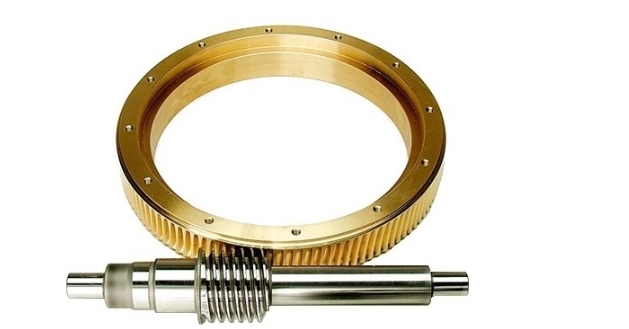
At Belon Gear, we specialize in manufacturing custom worm gears and worm wheels with optimized gear ratios, materials, and precision grades. Our worm gear solutions are designed to meet demanding industrial requirements for durability, efficiency, and long service life.
By combining advanced machining, controlled heat treatment, and strict quality inspection, we deliver worm gear systems that provide reliable performance in a wide range of applications.
Selecting the correct worm gear ratio is a critical step in building efficient and dependable power transmission systems.
Media Contact
Company Name: Shanghai Belon Machinery Co., Ltd.
Email: Send Email
Country: China
Website: https://www.belongear.com/