The year 2024 will be remembered as the moment artificial intelligence transcended its reputation as a Silicon Valley novelty to become the bedrock of modern scientific discovery. In an unprecedented "double win" that sent shockwaves through the global research community, the Nobel Committees in Stockholm awarded both the Physics and Chemistry prizes to pioneers of AI. This historic recognition signaled a fundamental shift in the hierarchy of knowledge, cementing machine learning not merely as a tool for automation, but as a foundational scientific instrument capable of solving problems that had baffled humanity for generations.
The dual awards served as a powerful validation of the "AI for Science" movement. By honoring the theoretical foundations of neural networks in Physics and the practical application of protein folding in Chemistry, the Nobel Foundation acknowledged that the digital and physical worlds are now inextricably linked. As we look back from early 2026, it is clear that these prizes were more than just accolades; they were the starting gun for a new era where the "industrialization of discovery" has become the primary driver of technological and economic value.
The Physics of Information: From Spin Glasses to Neural Networks
The 2024 Nobel Prize in Physics was awarded to John Hopfield and Geoffrey Hinton for foundational discoveries that enable machine learning with artificial neural networks. While the decision initially sparked debate among traditionalists, the technical justification was rooted in the deep mathematical parallels between statistical mechanics and information theory. John Hopfield’s 1982 breakthrough, the Hopfield Network, utilized the concept of "energy landscapes"—a principle borrowed from the study of magnetic spins in physics—to create a form of associative memory. By modeling neurons as "up or down" states similar to atomic spins, Hopfield demonstrated that a system could "remember" patterns by settling into a state of minimum energy.
Geoffrey Hinton, often hailed as the "Godfather of AI," expanded this work by introducing the Boltzmann Machine. This model incorporated stochasticity (randomness) and the Boltzmann distribution—a cornerstone of thermodynamics—to allow networks to learn and generalize from data rather than just store it. Hinton’s use of "simulated annealing," where the system is "cooled" to find a global optimum, allowed these networks to escape local minima and find the most accurate representations of complex datasets. This transition from deterministic memory to probabilistic learning laid the groundwork for the deep learning revolution that powers today’s generative AI.
The reaction from the scientific community was a mixture of awe and healthy skepticism. Figures like Max Tegmark of MIT championed the award as a recognition that AI is essentially "the physics of information." However, some purists argued that the work belonged more to computer science or mathematics. Despite the debate, the consensus by 2026 is that the award was a prescient acknowledgement of how physics-based architectures have become the "telescopes" of the 21st century, allowing scientists to see patterns in massive datasets—from CERN’s particle collisions to the discovery of exoplanets—that were previously invisible to the human eye.
Cracking the Biological Code: AlphaFold and the Chemistry of Life
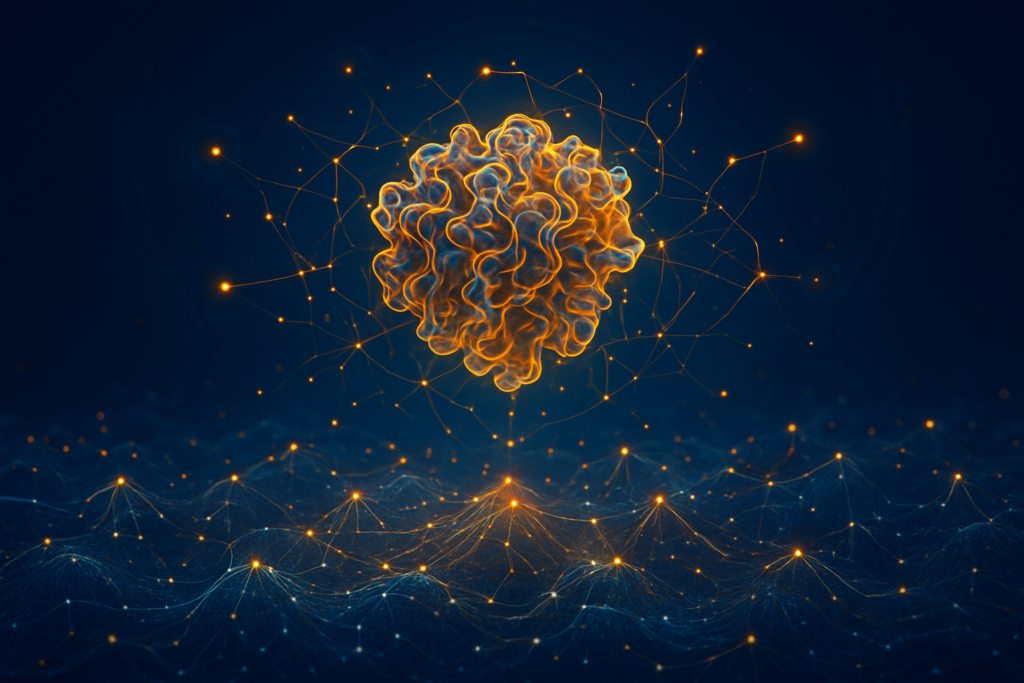
Just days after the Physics announcement, the Nobel Prize in Chemistry was awarded to David Baker, Demis Hassabis, and John Jumper. This prize recognized a breakthrough that many consider the most significant application of AI in history: solving the "protein folding problem." For over 50 years, biologists struggled to predict how a string of amino acids would fold into a three-dimensional shape—a shape that determines a protein’s function. Hassabis and Jumper, leading the team at Google DeepMind, a subsidiary of Alphabet Inc. (NASDAQ: GOOGL), developed AlphaFold 2, an AI system that achieved near-experimental accuracy in predicting these structures.
Technically, AlphaFold 2 represented a departure from traditional convolutional neural networks, utilizing a transformer-based architecture known as the "Evoformer." This allowed the model to process evolutionary information and spatial interactions simultaneously, iteratively refining the physical coordinates of atoms until a stable structure was reached. The impact was immediate and staggering: DeepMind released the AlphaFold Protein Structure Database, containing predictions for nearly all 200 million proteins known to science. This effectively collapsed years of expensive laboratory work into seconds of computation, democratizing structural biology for millions of researchers worldwide.
While Hassabis and Jumper were recognized for prediction, David Baker was honored for "computational protein design." Using his Rosetta software and later AI-driven tools, Baker’s lab at the University of Washington demonstrated the ability to create entirely new proteins that do not exist in nature. This "de novo" design capability has opened the door to synthetic enzymes that can break down plastics, new classes of vaccines, and targeted drug delivery systems. Together, these laureates transformed chemistry from a descriptive science into a predictive and generative one, providing the blueprint for the "programmable biology" we are seeing flourish in 2026.
The Industrialization of Discovery: Tech Giants and the Nobel Effect
The 2024 Nobel wins provided a massive strategic advantage to the tech giants that funded and facilitated this research. Alphabet Inc. (NASDAQ: GOOGL) emerged as the clear winner, with the Chemistry prize serving as a definitive rebuttal to critics who claimed the company had fallen behind in the AI race. By early 2026, Google DeepMind has successfully transitioned from a research-heavy lab to a "Science-AI platform," securing multi-billion dollar partnerships with global pharmaceutical giants. The Nobel validation allowed Google to re-position its AI stack—including Gemini and its custom TPU hardware—as the premier ecosystem for high-stakes scientific R&D.
NVIDIA (NASDAQ: NVDA) also reaped immense rewards from the "Nobel effect." Although not directly awarded, the company’s hardware was the "foundry" where these discoveries were forged. Following the 2024 awards, NVIDIA’s market capitalization surged toward the $5 trillion mark by late 2025, as the company shifted its marketing focus from "generative chatbots" to "accelerated computing for scientific discovery." Its Blackwell and subsequent Rubin architectures are now viewed as essential laboratory infrastructure, as indispensable to a modern chemist as a centrifuge or a microscope.
Microsoft (NASDAQ: MSFT) responded by doubling down on its "agentic science" initiative. Recognizing that the next Nobel-level breakthrough would likely come from AI agents that can autonomously design and run experiments, Microsoft invested heavily in its "Stargate" supercomputing projects. By early 2026, the competitive landscape has shifted: the "AI arms race" is no longer just about who has the best chatbot, but about which company can build the most accurate "world model" capable of predicting physical reality, from material science to climate modeling.
Beyond the Chatbot: AI as the Third Pillar of Science
The wider significance of the 2024 Nobel Prizes lies in the elevation of AI to the "third pillar" of the scientific method, joining theory and experimentation. For centuries, science relied on human-derived hypotheses tested through physical trials. Today, AI-driven simulation and prediction have created a middle ground where "in silico" experiments can narrow down millions of possibilities to a handful of high-probability candidates. This shift has moved AI from being a "plagiarism machine" or a "homework helper" in the public consciousness to being a "truth engine" for the physical world.
However, this transition has not been without concerns. Geoffrey Hinton used his Nobel platform to reiterate his warnings about AI safety, noting that we are moving into an era where we may "no longer understand the internal logic" of the tools we rely on for survival. There is also a growing "compute-intensity divide." As of 2026, a significant gap has emerged between "AI-rich" institutions that can afford the massive GPU clusters required for AlphaFold-scale research and "AI-poor" labs in developing nations. This has sparked a global movement toward "AI Sovereignty," with nations like the UAE and South Korea investing in national AI clouds to ensure they are not left behind in the race for scientific discovery.
Comparisons to previous milestones, such as the discovery of the DNA double helix or the invention of the transistor, are now common. Experts argue that while the transistor gave us the ability to process information, AI gives us the ability to process complexity. The 2024 prizes recognized that human cognition has reached a limit in certain fields—like the folding of a protein or the behavior of a billion-parameter system—and that our future progress depends on a partnership with non-human intelligence.
The 2026 Horizon: From Prediction to Synthesis
Looking ahead through the rest of 2026, the focus is shifting from predicting what exists to synthesizing what we need. The "AlphaFold moment" in biology is being replicated in material science. We are seeing the emergence of "AlphaMat" and similar systems that can predict the properties of new crystalline structures, leading to the discovery of room-temperature superconductors and high-density batteries that were previously thought impossible. These near-term developments are expected to shave decades off the transition to green energy.
The next major challenge being addressed is "Closed-Loop Discovery." This involves AI systems that not only predict a new molecule but also instruct robotic "cloud labs" to synthesize and test it, feeding the results back into the model without human intervention. Experts predict that by 2027, we will see the first FDA-approved drug that was entirely designed, optimized, and pre-clinically tested by an autonomous AI system. The primary hurdle remains the "veracity problem"—ensuring that AI-generated hypotheses are grounded in physical law rather than "hallucinating" scientific impossibilities.
A Legacy Written in Silicon and Proteins
The 2024 Nobel Prizes were a watershed moment that marked the end of AI’s "infancy" and the beginning of its "industrial era." By honoring Hinton, Hopfield, Hassabis, and Jumper, the Nobel Committee did more than just recognize individual achievement; they redefined the boundaries of what constitutes a "scientific discovery." They acknowledged that in a world of overwhelming data, the algorithm is as vital as the experiment.
As we move further into 2026, the long-term impact of this double win is visible in every sector of the economy. AI is no longer a separate "tech" category; it is the infrastructure upon which modern biology, physics, and chemistry are built. The key takeaway for the coming months is to watch for the "Nobel Effect" to move into the regulatory and educational spheres, as universities overhaul their curricula to treat "AI Literacy" as a core requirement for every scientific discipline. The age of the "AI-Scientist" has arrived, and the world will never be the same.
This content is intended for informational purposes only and represents analysis of current AI developments.
TokenRing AI delivers enterprise-grade solutions for multi-agent AI workflow orchestration, AI-powered development tools, and seamless remote collaboration platforms.
For more information, visit https://www.tokenring.ai/.