
Property and casualty insurer The Hanover Insurance Group (NYSE: THG) met Wall Street’s revenue expectations in Q2 CY2026, with sales up 4.2% year on year to $1.73 billion. Its non-GAAP profit of $5.31 per share was 41.3% above analysts’ consensus estimates.
Is now the time to buy The Hanover Insurance Group? Find out by accessing our full research report, it’s free.
The Hanover Insurance Group (THG) Q2 CY2026 Highlights:
- Net Premiums Earned: $1.60 billion vs analyst estimates of $1.60 billion (3.4% year-on-year growth, in line)
- Revenue: $1.73 billion vs analyst estimates of $1.73 billion (4.2% year-on-year growth, in line)
- Combined Ratio: 91.2% vs analyst estimates of 95.6% (438 basis point beat)
- Adjusted EPS: $5.31 vs analyst estimates of $3.76 (41.3% beat)
- Book Value per Share: $105.40 vs analyst estimates of $104.18
- Market Capitalization: $7.68 billion
"Our very successful second quarter is a testament to the strength of our business model, the durable earnings power we have built across The Hanover and the disciplined execution of our team," said John C. Roche, president and chief executive officer at The Hanover.
Company Overview
Founded in 1852 during a time when fire insurance was crucial for protecting businesses and homes, The Hanover Insurance Group (NYSE: THG) provides property and casualty insurance products through independent agents, serving individuals, small businesses, and mid-sized companies.
Revenue Growth
Insurance companies generate revenue three ways. The first is the core insurance business itself, represented in the income statement as premiums earned. The second source is investment income from investing the “float” (premiums collected but not yet paid out as claims) in assets such as fixed-income assets and equities. The third is fees from policy administration, annuities, and other value-added services. Regrettably, The Hanover Insurance Group’s revenue grew at a mediocre 6.5% compounded annual growth rate over the last five years. This was below our standard for the insurance sector and is a tough starting point for our analysis.
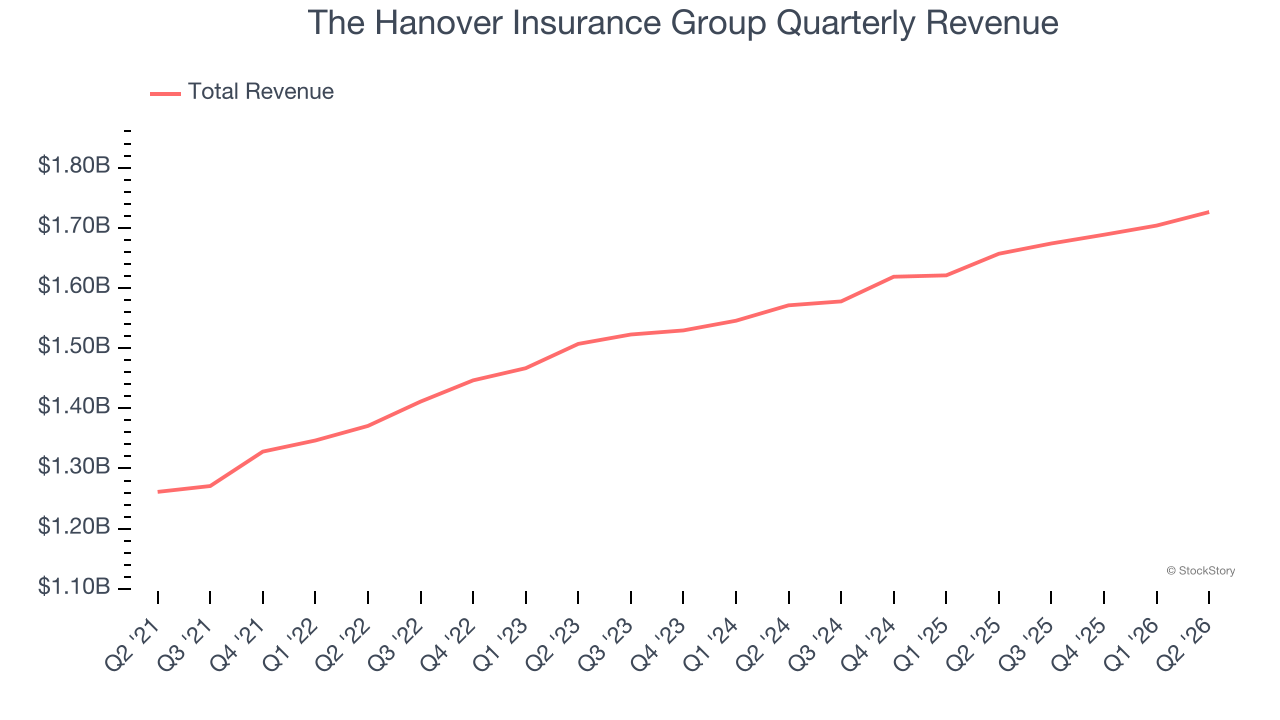
We at StockStory place the most emphasis on long-term growth, but within financials, a half-decade historical view may miss recent interest rate changes, market returns, and industry trends. The Hanover Insurance Group’s recent performance shows its demand has slowed as its annualized revenue growth of 4.9% over the last two years was below its five-year trend. We’re wary when companies in the sector see decelerations in revenue growth, as it could signal changing consumer tastes aided by low switching costs. 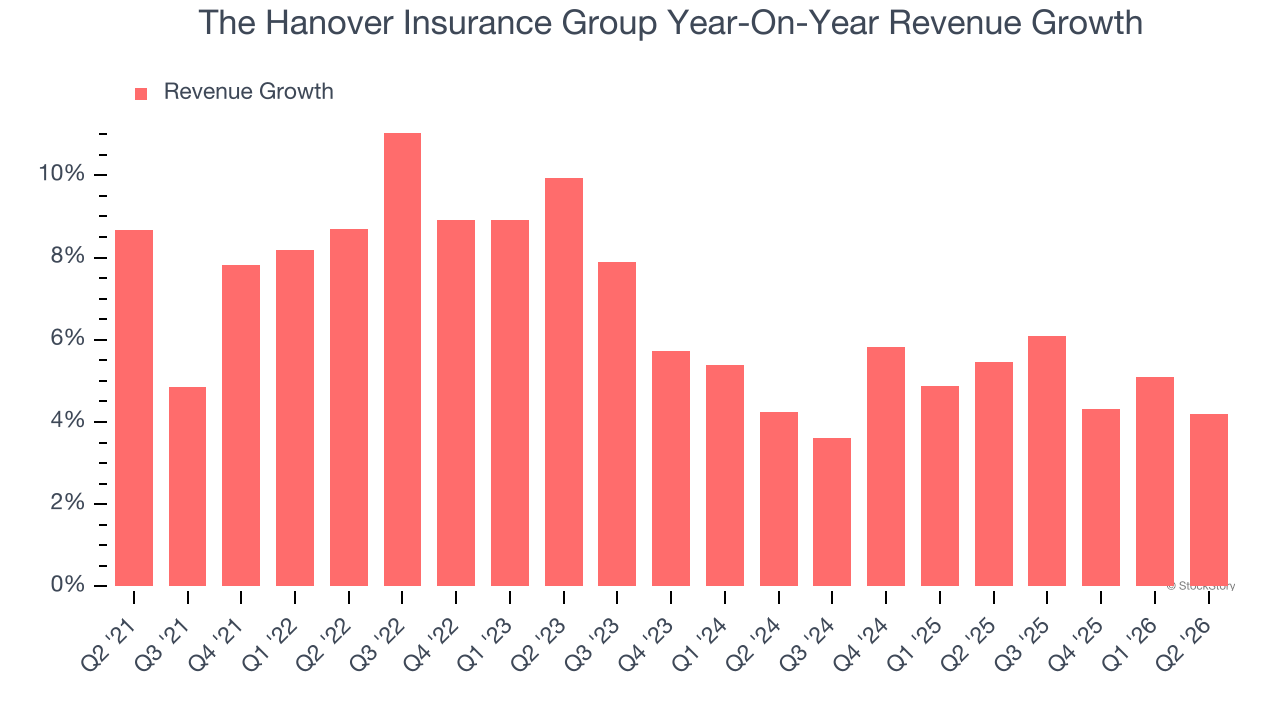
This quarter, The Hanover Insurance Group grew its revenue by 4.2% year on year, and its $1.73 billion of revenue was in line with Wall Street’s estimates.
Net premiums earned made up 93.5% of the company’s total revenue during the last five years, meaning The Hanover Insurance Group lives and dies by its underwriting activities because non-insurance operations barely move the needle.
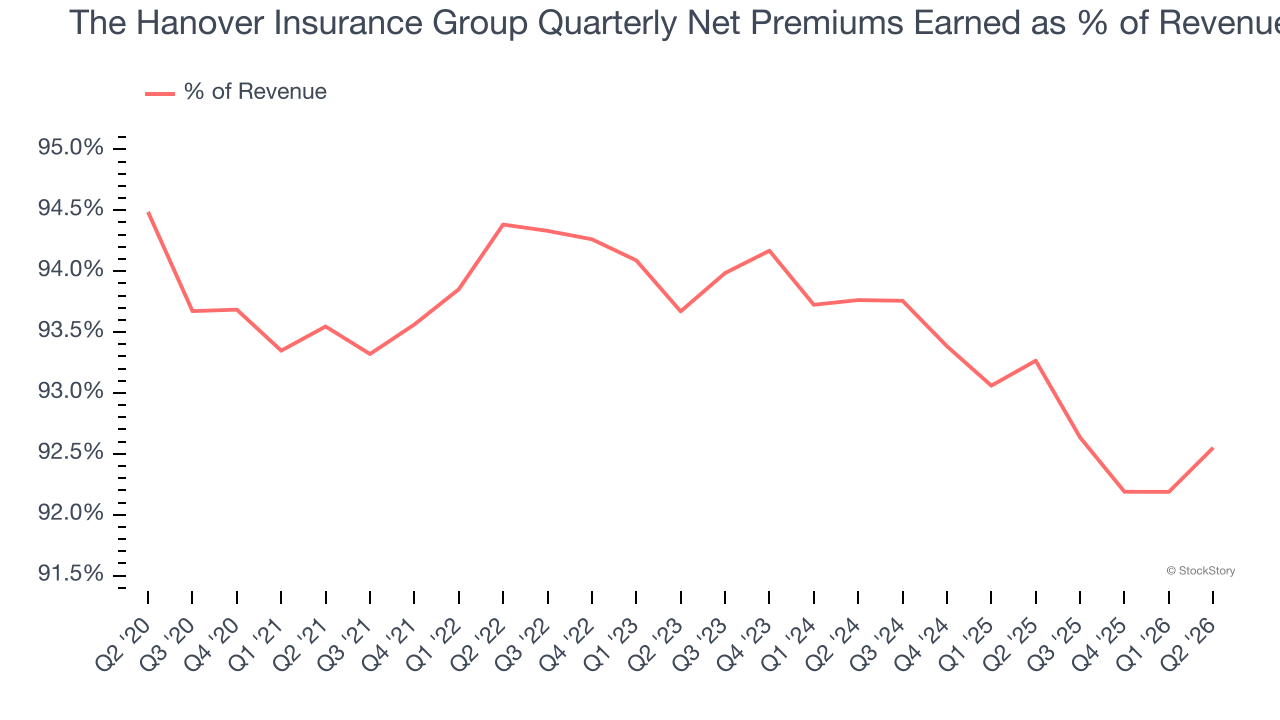
Our experience and research show the market cares primarily about an insurer’s net premiums earned growth as investment and fee income are considered more susceptible to market volatility and economic cycles.
ONE MORE THING: The $21 AI Application Stock Wall Street Forgot. While Wall Street obsesses over who’s building AI, one company is already using it to print money. And nobody’s paying attention.
AI chip stocks trade at ridiculous valuations. This company processes a trillion consumer signals monthly using AI and trades at a third of the price. The gap won’t last. The institutions will figure it out. You need to see this first. Read the FREE Report Before They Notice.
Book Value Per Share (BVPS)
Insurance companies are balance sheet businesses, collecting premiums upfront and paying out claims over time. The float (premiums collected but not yet paid out) is invested, creating an asset base supported by a liability structure. Book value per share (BVPS) captures this dynamic by measuring these assets (investment portfolio, cash, reinsurance recoverables) less liabilities (claim reserves, debt, future policy benefits). BVPS is essentially the residual value for shareholders.
We therefore consider BVPS very important to track for insurers and a metric that sheds light on business quality. While other (and more commonly known) per-share metrics like EPS can sometimes be lumpy due to reserve releases or one-time items and can be managed or skewed while still following accounting rules, BVPS reflects long-term capital growth and is harder to manipulate.
The Hanover Insurance Group’s BVPS grew at a sluggish 3.7% annual clip over the last five years. However, BVPS growth has accelerated recently, growing by 21.9% annually over the last two years from $70.89 to $105.40 per share.
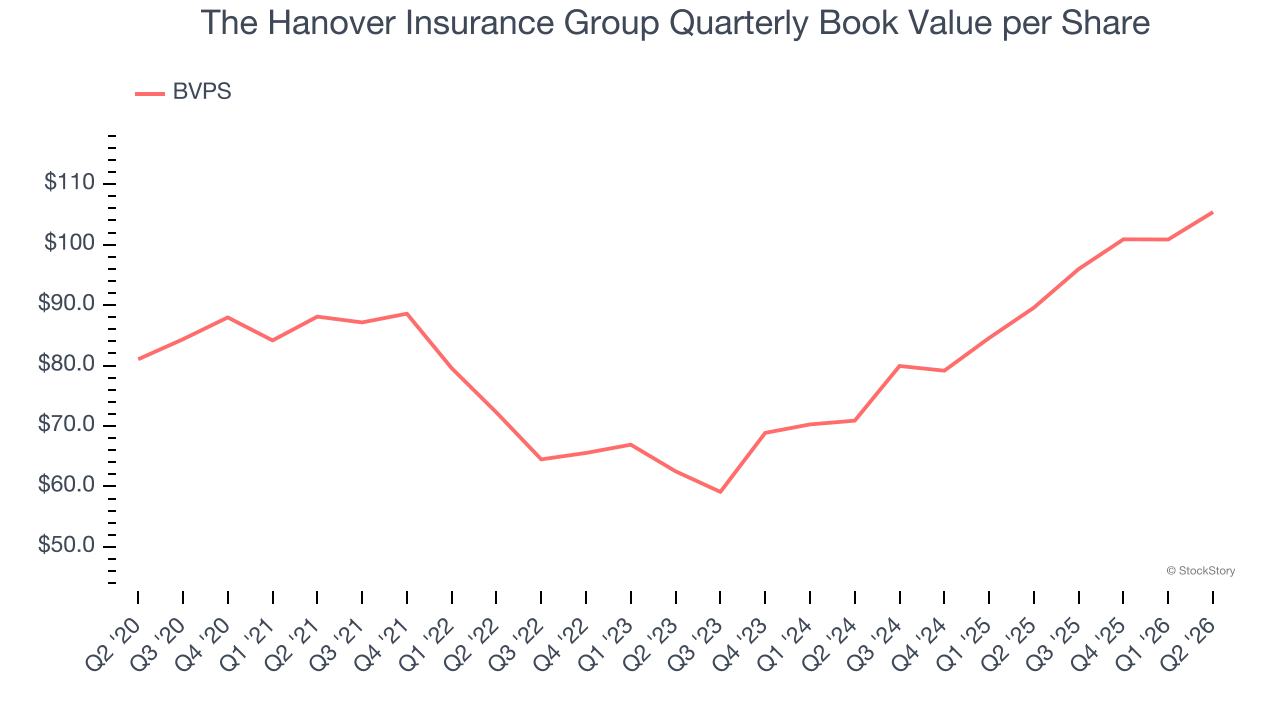
Over the next 12 months, Consensus estimates call for The Hanover Insurance Group’s BVPS to grow by 30.6% to $121.54, elite growth rate.
Key Takeaways from The Hanover Insurance Group’s Q2 Results
It was good to see The Hanover Insurance Group beat analysts’ EPS expectations this quarter. Its net premiums earned was in line with Wall Street’s estimates. Zooming out, we think this was a good quarter. The stock remained flat at $224.05 immediately following the results.
Is The Hanover Insurance Group an attractive investment opportunity right now? We think that the latest quarter is only one piece of the longer-term business quality puzzle. Quality, when combined with valuation, can help determine if the stock is a buy. We cover that in our actionable full research report which you can read here (it’s free).