This first-ever molecular blueprint of innate survival switch was revealed in Free Radical Biology and Medicine
Imagine your body had a built-in survival switch that protects the brain. Scientists at Northwell Health’s Feinstein Institutes for Medical Research have decoded the molecular mechanism behind the “diving reflex,” an ancient, powerful reflex that triggers a protective, oxygen-conserving state in the body. This discovery was recently detailed in Free Radical Biology and Medicine and could lead to groundbreaking new treatments for serious conditions like dementia, traumatic brain injury and stroke.
This press release features multimedia. View the full release here: https://www.businesswire.com/news/home/20260629080854/en/
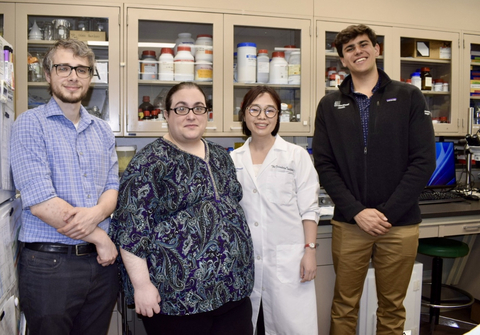
(Pictured from left to right): Steven Wadolowski, Keren Powell, Dr. Chunyan Li, and Christopher LeDoux who led the study. (Credit: Feinstein Institutes)
The diving reflex is a natural reaction, seen in everything from whales to humans, that kicks in when one holds their breath and submerges their face, especially in cold water. It helps the body conserve oxygen and protect vital organs. Led by Chunyan Li, PhD, associate professor in the Institute of Bioelectronic Medicine at the Feinstein Institutes, the research team believes the diving reflex may follow the example of hibernation-based interventions and exhibit similar, vast therapeutic potential. This is the first manuscript to reveal the molecular blueprint of this potent protective response, opening the door to treat a host of diseases, from dementia to traumatic brain injury to stroke.
“The diving reflex has long been known as a powerful survival tool, but its brain-protective mechanisms were a mystery,” said Dr. Li. “We’ve now uncovered its molecular blueprint, providing a path to new therapies that activate this natural defense on demand. This isn't just a scientific curiosity; it's a blueprint for new therapies. Nature has already invented the perfect protective mechanism, but our job is to learn how to activate it on demand.”
The research reveals that the diving reflex acts like a master switch for the brain’s antioxidant defense system, offering a new and safer treatment approach. When the reflex is triggered, a nerve in the face called the trigeminal nerve, releases a chemical messenger called calcitonin gene-related peptide (CGRP) into the brain. This CGRP then activates Nrf2, which is the body’s main manager for antioxidant and cell-protection systems. This natural activation critically differs from the majority of drug-based activators, as it boosts the brain’s defenses without causing extra cellular stress. In experiments modeling vascular dementia, this reflex-driven therapy was highly effective, rescuing damaged brain cells, refilling the brain’s protective antioxidant reserves, and significantly improving memory and cognitive function.
“The ability to switch on the body’s own protective mechanisms, on-demand, would be a game-changer for medicine,” said Kevin J. Tracey, MD, president and CEO of the Feinstein Institutes and Karches Family Distinguished Chair in Medical Research. “Dr. Li’s research has taken this powerful reflex from a biological mystery to a defined, targeted pathway for treatment.”
The team also found that the reflex works in two stages – an incredibly fast response that ramps up antioxidant gene production within just 30 minutes for immediate protection, and a long-term adaptive response that builds up a steady supply of protective proteins for lasting resilience. This double-action approach makes it ideal for tackling both sudden injuries and long-term brain diseases.
Last year, Dr. Li and her team discovered that dysregulation of vasoactive neuropeptides causes microvascular dysfunction in vascular cognitive impairment (VCI) and that activating the diving reflex could restore vessel function and improve cognition. By uncovering the molecular basis of the diving reflex, this research charts a clear course for new therapies that can be similarly applied, from CGRP-targeting pharmaceuticals to bioelectronic devices to trigger diving reflex, positioning this ancient mechanism as a new strategy for some of today's most challenging medical conditions.
About the Feinstein Institutes
The Feinstein Institutes for Medical Research is the home of the research institutes of Northwell Health, the largest health care provider and private employer in New York State. Encompassing 50+ research labs, 3,000 clinical research studies and 5,000 researchers and staff, the Feinstein Institutes raises the standard of medical innovation through its six institutes of behavioral science, bioelectronic medicine, cancer, health system science, molecular medicine, and translational research. We are the global scientific leader in bioelectronic medicine – an innovative field of science that has the potential to revolutionize medicine. The Feinstein Institutes publishes two open-access, international peer-reviewed journals Molecular Medicine and Bioelectronic Medicine. Through the Elmezzi Graduate School of Molecular Medicine, we offer an accelerated PhD program. For more information about how we produce knowledge to cure disease, visit http://feinstein.northwell.edu and follow us on LinkedIn.
View source version on businesswire.com: https://www.businesswire.com/news/home/20260629080854/en/
Contacts
Julianne Mosher Allen
516-880-4824
jmosherallen@northwell.edu