Beijing - The Wise Kaiwu skill library has received a major upgrade. As the world’s first general-purpose embodied intelligence platform featuring a unified intelligence architecture capable of supporting multiple skills and coordinating multiple robots, Wise Kaiwu has continuously strengthened its technological foundation across both cognitive intelligence and robot control systems.
Since releasing the industry’s first standardized large-scale cross-embodiment dataset in late 2024, Wise Kaiwu has continuously advanced the evolution pathway of embodied intelligence. The latest update, Robo-ValueRL, introduces an industry-leading millimeter-precision Vision-Language-Action (VLA) reinforcement learning solution, bringing embodied intelligence closer to refined, long-duration real-world applications.
Robo-ValueRL is a joint industry-academia-research achievement developed by the Beijing Innovation Center of Humanoid Robotics (X-Humanoid) and the GaoLing School of Artificial Intelligence at Renmin University of China. The framework is now fully open-sourced to the global community.
Featuring an innovative historical observation-based value estimation mechanism, Robo-ValueRL overcomes key limitations of traditional Vision-Language-Action (VLA) models and addresses the challenges of high-precision industrial operations for humanoid robots. Through its fully open-source architecture, the framework aims to accelerate industrial deployment in high-value manufacturing scenarios, including precision semiconductor assembly.
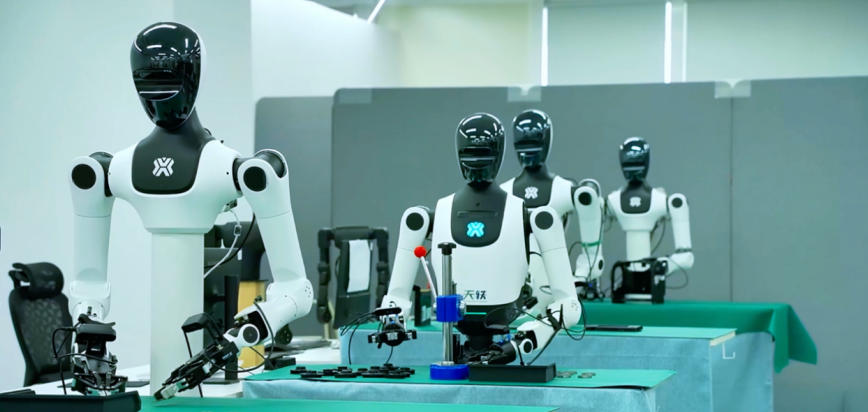
I. Industry Challenges: Multiple Barriers Remain in Humanoid Robot Industrial Deployment
The humanoid robotics industry is currently advancing rapidly, with mainstream solutions relying on VLA models to enable autonomous robot operations. However, existing general-purpose VLA architectures still face three fundamental challenges that significantly limit large-scale industrial adoption.
First, data quality lacks quantitative evaluation standards. Current models cannot autonomously identify and select high-quality samples, allowing low-quality data to interfere with training and significantly reducing operational accuracy and training efficiency.
Second, precision manipulation capabilities remain insufficient. Advanced manufacturing scenarios, such as semiconductor micro-component assembly, require extremely high levels of motion accuracy and gripping-force control. Traditional models may damage delicate components and fail to meet the requirements of precision production lines.
Third, online adaptation stability remains limited. Real-world industrial environments are dynamic and complex, and real-time model adjustments may lead to motion oscillation and decision deviations. This affects reliability during long-duration operations while increasing maintenance and calibration costs.
These challenges have kept humanoid robots largely confined to laboratory demonstrations, making deployment in advanced precision manufacturing environments difficult.
To overcome these obstacles, the Beijing Innovation Center of Humanoid Robotics (X-Humanoid) and the Gaoling School of Artificial Intelligence at Renmin University of China launched a deep industry-academia-research collaboration. By integrating expertise in robotic hardware control, multimodal foundation models, and deep reinforcement learning, the two parties jointly developed the Robo-ValueRL framework and decided to fully open-source the technology stack, sharing core algorithm capabilities with the global robotics community.
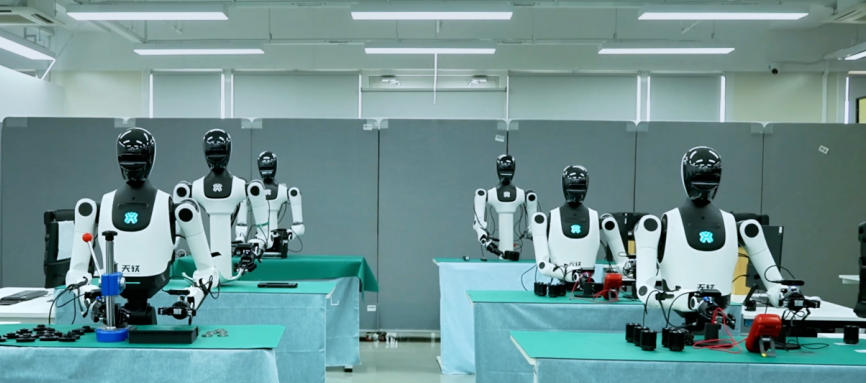
II. Core Technology: Value Estimation Enables Autonomous Evaluation of Action Quality
The core innovation of the Robo-ValueRL framework is its historical observation-based value estimation mechanism, which enables robots to independently evaluate the effectiveness of their actions.
The framework establishes a closed-loop learning process:
Observation → Value Estimation → Correction → Iteration
By improving data selection, precision control, and stable online operation, Robo-ValueRL addresses key limitations of traditional VLA models.
The system can automatically evaluate historical actions, visual observations, and task outcomes; remove ineffective or incorrect training samples; dynamically optimize motion trajectories and gripping forces; and reduce instability caused by environmental disturbances. These capabilities enable robots to meet the demanding precision requirements of advanced assembly tasks.
The most significant highlight of this release is its fully open-source approach. The project removes closed technical barriers by openly providing:
Core algorithm frameworks;
Value evaluation toolchains;
Industrial scenario debugging cases;
Standardized operating code.
Universities, research institutions, manufacturing companies, and robotics development teams can freely access the source code without commercial licensing restrictions. Developers can freely download, modify, and customize the framework for different applications.
The open-source framework is compatible with mainstream humanoid robot hardware platforms. Developers no longer need to build reinforcement learning foundations from scratch and can quickly adapt the framework to specialized manufacturing scenarios, including semiconductor production, precision electronics, and medical device assembly.
The development team has also released open-source tutorials and testing datasets to further lower the entry barrier for developers.
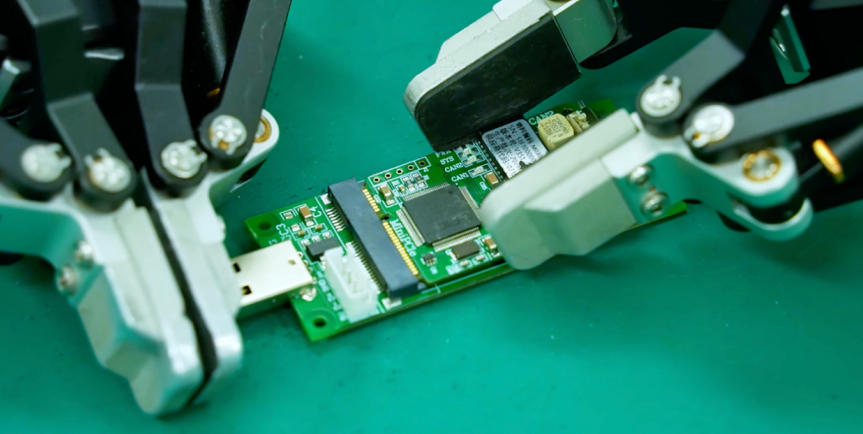
III. Industrial Impact: Open-Source Innovation Accelerates Humanoid Robot Adoption
The full open-source release of Robo-ValueRL is expected to generate significant industrial value by breaking down technological barriers to accessing advanced humanoid robotics algorithms.
For manufacturing companies, the open-source framework reduces expensive algorithm customization costs, minimizes manual data annotation requirements, shortens production-line deployment cycles, and lowers component waste caused by operational errors. This enables small and medium-sized manufacturers to deploy high-precision humanoid robotic systems more efficiently.
For the research community, the standardized open-source foundation provides universities and laboratories with a unified development platform. Researchers worldwide can explore general-purpose robot intelligence, precision manipulation, and reinforcement learning while sharing and iterating on research outcomes to accelerate breakthroughs across the field.
A representative from the Beijing Innovation Center for Humanoid Robotics (X-Humanoid) stated that full open sourcing represents the core strategy behind this technology release. By opening Robo-ValueRL’s core capabilities, the center aims to promote collaborative innovation throughout the robotics industry.
Moving forward, the team will continue improving open-source versions, expanding industrial application modules, and releasing additional supporting datasets. Meanwhile, the GaoLing School of Artificial Intelligence at Renmin University of China will continue advancing frontier research in value-based reinforcement learning and integrating new developments into the open-source repository, further enhancing robot autonomous decision-making and environmental adaptability.
Industry analysts believe that Robo-ValueRL not only enables robots to autonomously evaluate and optimize their actions through its innovative value estimation mechanism but also lowers technological barriers through its fully open-source model. This represents an important step in advancing humanoid robots from laboratory environments toward scalable industrial applications, while further improving the automation and intelligence capabilities of precision manufacturing.
Media Contact
Company Name: X-Humanoid
Contact Person: Clara Liu
Email: Send Email
Country: China
Website: https://www.x-humanoid.com/