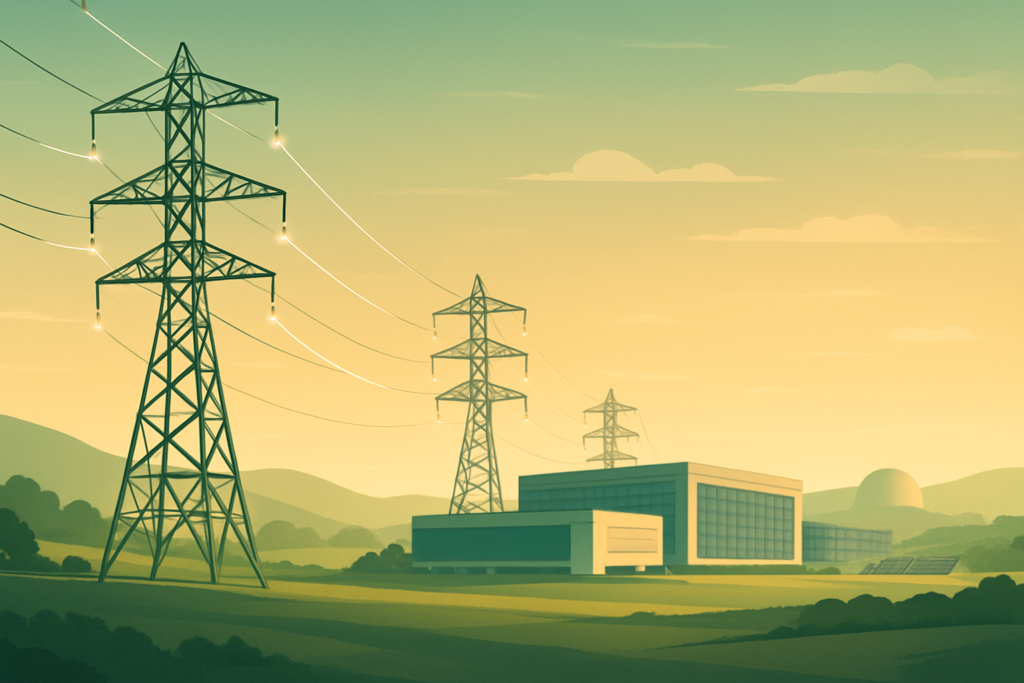
As of March 30, 2026, the utility sector has shed its reputation as a sleepy "bond proxy" and emerged as a primary engine for the AI-driven industrial renaissance. At the center of this transformation is Entergy Corporation (NYSE: ETR), a New Orleans-based energy giant that has spent the last two years pivoting from a traditional Gulf South utility to a critical infrastructure partner for Silicon Valley.
Entergy is currently in the spotlight following the finalized implementation of a massive grid agreement with Meta (Nasdaq: META), designed to power a next-generation hyperscale data center complex in Louisiana. This deal, coupled with a broader defensive rotation among investors seeking stable growth in a volatile macro environment, has propelled Entergy into a new tier of "growth utilities." By leveraging its unique geographic footprint and a nuclear-heavy generation mix, Entergy is successfully navigating the dual challenges of climate resilience and unprecedented load growth.
Historical Background
Entergy’s roots trace back to the early 20th century and the vision of Harvey Couch, who founded Arkansas Power & Light in 1913. Over the next several decades, a series of mergers and acquisitions led to the formation of Middle South Utilities, a holding company that integrated power systems across Arkansas, Louisiana, and Mississippi.
In 1989, the company rebranded as Entergy, signaling a move toward modern management and expanded operations. The 1990s and early 2000s were defined by the acquisition of Gulf States Utilities and a strategic focus on nuclear power, which became the cornerstone of the company’s carbon-free generation. However, the 21st century brought significant trials, most notably Hurricane Katrina in 2005 and Hurricane Ida in 2021. These events forced a fundamental shift in the company’s strategy, moving away from simple service restoration toward "Future Ready" grid hardening and industrial electrification—a transformation that set the stage for its current success.
Business Model
Entergy operates as an integrated energy company primarily engaged in electric power production and retail distribution. Its business model is centered on its status as a regulated utility, where earnings are largely determined by state and federal regulators based on the capital invested in its infrastructure (rate base).
The company serves approximately 3 million customers across four key states:
- Louisiana: Its largest market, characterized by a heavy concentration of industrial customers.
- Arkansas: A growing hub for manufacturing and technology.
- Mississippi: Focused on reliability and supporting rural electrification.
- Texas (East): A critical region for the expansion of the petrochemical and LNG industries.
Entergy’s revenue mix is unique among peers due to its high percentage of industrial sales (roughly 35-40% of total load). This "industrial-first" model has historically provided a stable revenue floor, which is now being augmented by the rapid "electrification" of the Gulf South's massive petrochemical and tech sectors.
Stock Performance Overview
Over the past year, Entergy has significantly outperformed the broader S&P 500 Utilities Index. As of late March 2026, ETR shares have seen a 1-year total return of approximately 18%, driven by the announcement of the Meta partnership and better-than-expected rate case outcomes in Louisiana and Texas.
- 1-Year Performance: ETR has transitioned from a laggard to a leader as the market recognized its data center potential.
- 5-Year Performance: The stock has delivered steady annualized returns of roughly 9%, recovering fully from the post-pandemic volatility and the costs associated with the 2021 storm season.
- 10-Year Performance: Historically, Entergy has been a reliable dividend payer. Long-term shareholders have benefited from a consistent payout ratio and a stock price that has roughly doubled over the decade, reflecting the company’s successful exit from merchant nuclear operations and its focus on regulated growth.
Financial Performance
Entergy enters 2026 on strong financial footing. For the full year 2025, the company reported Adjusted Earnings Per Share (EPS) of $3.91, representing a healthy 7% year-over-year growth.
Key financial highlights include:
- Revenue Growth: Total revenue for 2025 hit $12.1 billion, spurred by a surge in industrial sales and new rate base additions.
- Capital Expenditures: The company recently expanded its five-year capital plan to $22 billion (2025-2029), with the majority earmarked for transmission, distribution, and clean energy resources.
- Debt and Liquidity: Despite the capital-intensive nature of grid hardening, Entergy maintains a solid investment-grade credit rating (BBB+/Baa2), supported by robust cash flow from operations and innovative financing mechanisms like securitization for storm costs.
- Dividend: The Board recently approved a 6% increase in the quarterly dividend, continuing a multi-year trend of rewarding shareholders as the earnings base expands.
Leadership and Management
The strategic pivot of Entergy is largely credited to Andrew "Drew" Marsh, who assumed the role of Chair and CEO in November 2022. Marsh, who previously served as Entergy’s CFO for nearly a decade, brought a disciplined financial approach to the company’s regulatory and operational challenges.
Under Marsh’s leadership, the management team has focused on "industrial electrification"—persuading large customers to switch from on-site fossil fuel power to Entergy’s grid-connected, increasingly clean electricity. His administration is also noted for its transparent communication with state regulators, which has helped de-risk the company's massive capital spending plans.
Products, Services, and Innovations
Entergy is no longer just "the power company." It is positioning itself as a provider of specialized energy solutions:
- The Nuclear Anchor: Entergy operates one of the cleanest fleets in the country, providing carbon-free baseload power that is essential for 24/7 data center operations.
- Future Ready Grid: The company is deploying smart grid technology, including advanced metering and self-healing circuits, to reduce outage times and improve reliability.
- Renewable Expansion: Entergy is on track to add 5,000 MW of solar and wind by 2028, largely funded through partnerships with corporate off-takers who require green energy credits to meet ESG goals.
- Hydrogen and CCUS: In Louisiana, Entergy is exploring partnerships for hydrogen co-firing in natural gas plants and carbon capture and storage (CCUS) projects, positioning itself at the center of the "Energy Transition" corridor.
Competitive Landscape
While utilities operate as regional monopolies, Entergy competes for "load" (large-scale industrial projects) against other Southeastern giants like NextEra Energy (NYSE: NEE), Southern Company (NYSE: SO), and Duke Energy (NYSE: DUK).
Entergy's competitive edge lies in its affordability. The company consistently offers some of the lowest industrial electricity rates in the United States. This cost advantage, combined with the proximity to the Gulf of Mexico’s shipping lanes and pipelines, makes Entergy’s service territory highly attractive to energy-intensive industries and hyperscale data centers that prioritize low operational expenses.
Industry and Market Trends
The utility sector is currently experiencing a "Renaissance." After decades of flat demand growth, electricity consumption is surging due to:
- AI and Data Centers: High-performance computing requires massive amounts of power.
- Manufacturing Reshoring: New factories are being built in the U.S. south to secure supply chains.
- Electric Vehicles (EVs): While slowing in some regions, the electrification of commercial fleets remains a long-term driver.
Consequently, investors have "rotated" into utilities, viewing them as a safer way to play the AI theme than high-multiple tech stocks. This "defensive growth" trend has benefited Entergy significantly.
Risks and Challenges
Investing in Entergy is not without risks:
- Extreme Weather: The Gulf South remains ground zero for hurricanes. While the "Future Ready" plan aims to mitigate damage, a major storm can still lead to multi-billion-dollar restoration costs and regulatory lag in recovering those funds.
- Regulatory Scrutiny: As Entergy invests billions into the grid, customer rates must eventually rise. Balancing necessary investment with affordability is a constant political tightrope, especially in low-income regions of the South.
- Execution Risk: The Meta agreement involves complex infrastructure builds. Any delays in permitting or construction of the 500 kV transmission lines could impact the projected earnings timeline.
Opportunities and Catalysts
The most significant near-term catalyst is the Meta Agreement (March 2026). This deal includes:
- Seven new power plants: Totaling 5,200 MW of capacity.
- Grid Infrastructure: 240 miles of high-voltage transmission lines.
- Meta Funding: Under Louisiana's "Lightning Amendment," Meta is covering the lion's share of the infrastructure costs, which will ultimately lower fixed costs for residential ratepayers while boosting Entergy's rate base.
Additional catalysts include potential news regarding a second hyperscale data center in Arkansas and the potential for new nuclear uprates at its existing facilities.
Investor Sentiment and Analyst Coverage
Wall Street sentiment on Entergy is decidedly bullish. As of March 2026, the consensus rating is a "Strong Buy."
- Price Targets: Major firms like Morgan Stanley and Evercore ISI have set price targets in the $110-$115 range, citing the de-risking of the Meta deal.
- Institutional Moves: There has been a notable increase in institutional ownership from "growth at a reasonable price" (GARP) funds, which are attracted to Entergy’s 8% projected EPS CAGR.
- Retail Chatter: Retail investors are increasingly viewing Entergy as a "backdoor AI play," focusing on its role in providing the "picks and shovels" (power and wires) for the tech boom.
Regulatory, Policy, and Geopolitical Factors
The regulatory environment in the Gulf South has become increasingly supportive of industrial expansion.
- The "Lightning Amendment": This Louisiana policy allows large customers (like Meta) to fast-track grid connections by paying for their own infrastructure, benefiting the entire system.
- Federal Incentives: Entergy is a major beneficiary of the Inflation Reduction Act (IRA), which provides production tax credits (PTCs) for its nuclear fleet and investment tax credits (ITCs) for its new solar builds.
- Geopolitics: As a hub for LNG exports, Entergy’s service territory is geopolitically vital for European and Asian energy security, ensuring continued federal and state support for regional energy infrastructure.
Conclusion
Entergy Corporation has successfully transformed from a storm-battered regional utility into a sophisticated infrastructure partner for the 21st-century economy. The agreement with Meta marks a watershed moment, proving that the Gulf South can provide the scale, reliability, and clean energy required by the world’s largest tech companies.
For investors, Entergy offers a compelling blend of defensive stability and high-growth potential. While the risks of extreme weather and regulatory friction remain, the company’s "Future Ready" strategy and industrial-heavy business model provide a significant cushion. As the "utility rotation" continues, Entergy stands out as a premier vehicle for capturing the massive tailwinds of the AI era without the volatility of the tech sector itself.
This content is intended for informational purposes only and is not financial advice.