Let’s dig into the relative performance of Astec (NASDAQ: ASTE) and its peers as we unravel the now-completed Q2 heavy machinery earnings season.
Automation that increases efficiencies and connected equipment that collects analyzable data have been trending, creating new demand for heavy machinery and equipment companies. The gradual transition to clean energy also allows companies to innovate around emissions, potentially spurring replacement cycles that can accelerate revenue growth. On the other hand, heavy machinery companies are at the whim of economic cycles. Interest rates, for example, can greatly impact the commercial and residential construction that drives demand for these companies’ offerings.
The 21 heavy machinery stocks we track reported a satisfactory Q2. As a group, revenues beat analysts’ consensus estimates by 1.8% while next quarter’s revenue guidance was 1.2% above.
Amidst this news, share prices of the companies have had a rough stretch. On average, they are down 9.5% since the latest earnings results.
Astec (NASDAQ: ASTE)
Inventing the first ever double-barrel hot-mix asphalt plant, Astec (NASDAQ: ASTE) provides machines and equipment for building roads, processing raw materials, and producing concrete.
Astec reported revenues of $408.1 million, up 23.6% year on year. This print exceeded analysts’ expectations by 0.6%. Despite the top-line beat, it was still a softer quarter for the company with a significant miss of analysts’ EBITDA estimates and a significant miss of analysts’ EPS estimates.
"We reported second quarter results with increased net sales, EBITDA and backlog. Materials Solutions orders continued to remain strong, while dealers reported healthy inventory levels and rental conversions." said Jaco van der Merwe, Chief Executive Officer.
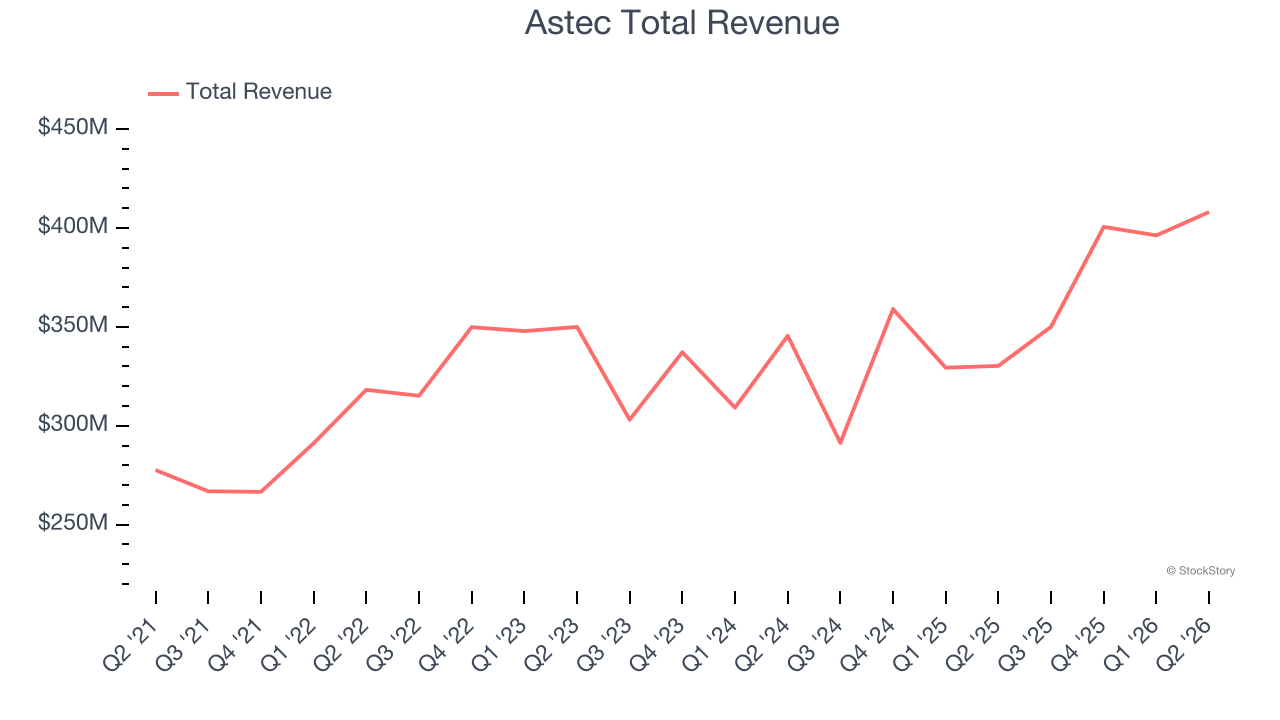
The market seems disappointed with the results as the stock is down 22.3% since reporting and currently trades at $40.59.
Is now the time to buy Astec? Access our full analysis of the earnings results here, it’s free.
Best Q2: Caterpillar (NYSE: CAT)
With its iconic yellow machinery working on construction sites, Caterpillar (NYSE: CAT) manufactures construction equipment like bulldozers, excavators, and parts and maintenance services.
Caterpillar reported revenues of $20.54 billion, up 24% year on year, outperforming analysts’ expectations by 8.4%. The business had an incredible quarter with a beat of analysts’ EPS estimates.
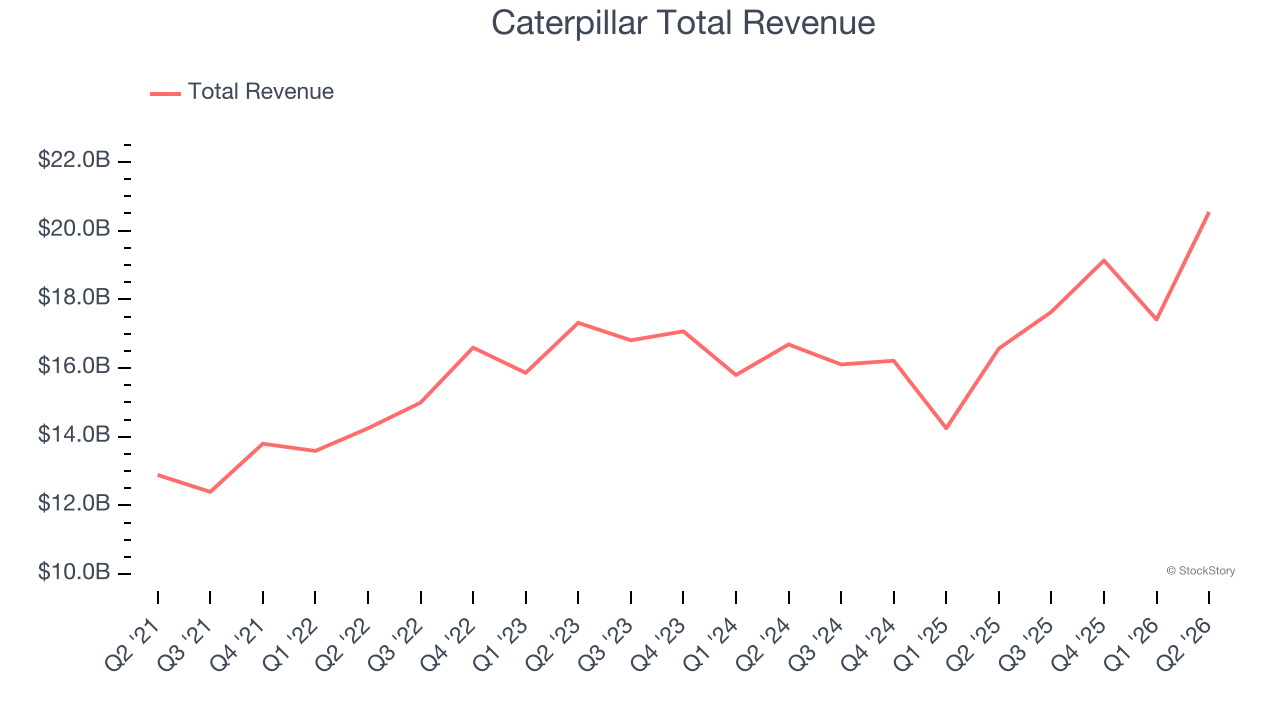
Although it had a fine quarter compared to its peers, the market seems unhappy with the results as the stock is down 3.1% since reporting. It currently trades at $804.25.
Is now the time to buy Caterpillar? Access our full analysis of the earnings results here, it’s free.
Weakest Q2: AGCO (NYSE: AGCO)
With a history that features both organic growth and acquisitions, AGCO (NYSE: AGCO) designs, manufactures, and sells agricultural machinery and related technology.
AGCO reported revenues of $2.61 billion, flat year on year, falling short of analysts’ expectations by 4.9%. It was a disappointing quarter as it posted full-year revenue guidance missing analysts’ expectations significantly and a significant miss of analysts’ EPS estimates.
AGCO delivered the weakest full-year guidance update among its peers. The stock is flat since the results and currently trades at $116.21.
Read our full analysis of AGCO’s results here.
Terex (NYSE: TEX)
With humble beginnings as a dump truck company, Terex (NYSE: TEX) today manufactures lifting and material handling equipment designed to move and hoist heavy goods and materials.
Terex reported revenues of $2.24 billion, up 50.5% year on year. This print surpassed analysts’ expectations by 4%. Overall, it was a very strong quarter as it also produced an impressive beat of analysts’ EBITDA estimates and a beat of analysts’ EPS estimates.
The stock is down 11.8% since reporting and currently trades at $56.94.
Read our full, actionable report on Terex here, it’s free.
Cummins (NYSE: CMI)
With more than half of the heavy-duty truck market using its engines at one point, Cummins (NYSE: CMI) offers engines and power systems.
Cummins reported revenues of $9.46 billion, up 9.4% year on year. This number beat analysts’ expectations by 1.6%. Taking a step back, it was a slower quarter as it recorded a significant miss of analysts’ EPS estimates and a miss of analysts’ EBITDA estimates.
The stock is down 19.8% since reporting and currently trades at $520.50.
Read our full, actionable report on Cummins here, it’s free.
Market Update
Over the past year, investors have been forced to repeatedly answer the same question: what is the market’s biggest risk? The answer has changed several times, and each shift has reshaped market leadership.
Late in 2025 and early 2026, artificial intelligence became the market’s primary uncertainty. Investors questioned whether AI would erode software pricing power and weaken competitive moats as AI made it easier to replicate once-differentiated products.
By the spring, technology took a back seat to geopolitics. The U.S. conflict with Iran briefly became the market’s dominant narrative, raising concerns about oil prices, inflation, and global growth. But as energy markets remained orderly and fears of a prolonged supply disruption faded, investors quickly turned their focus back to fundamentals.
Want to invest in winners with rock-solid fundamentals? Check out our Top 6 Stocks and add them to your watchlist. These companies are poised for growth regardless of the political or macroeconomic climate.