The end of the earnings season is always a good time to take a step back and see who shined (and who didn’t). Let’s take a look at how video conferencing stocks fared in Q1, starting with RingCentral (NYSE: RNG).
Work is becoming more distributed, both across geographies and devices. In order for businesses to keep functioning efficiently, they need to be able to communicate as well as they did when the teams were co-located, which drives the demand for integrated communication platforms.
The 4 video conferencing stocks we track reported a satisfactory Q1. As a group, revenues beat analysts’ consensus estimates by 1.4% while next quarter’s revenue guidance was in line.
Thankfully, share prices of the companies have been resilient as they are up 6.2% on average since the latest earnings results.
Weakest Q1: RingCentral (NYSE: RNG)
Built on its proprietary Message Video Phone (MVP) platform that unifies multiple communication methods, RingCentral (NYSE: RNG) provides AI-driven cloud communications and collaboration solutions that enable businesses to connect through voice, video, messaging, and contact center services.
RingCentral reported revenues of $644.2 million, up 5.3% year on year. This print was in line with analysts’ expectations, but overall, it was a mixed quarter for the company with full-year EPS guidance beating analysts’ expectations but a miss of analysts’ billings estimates.
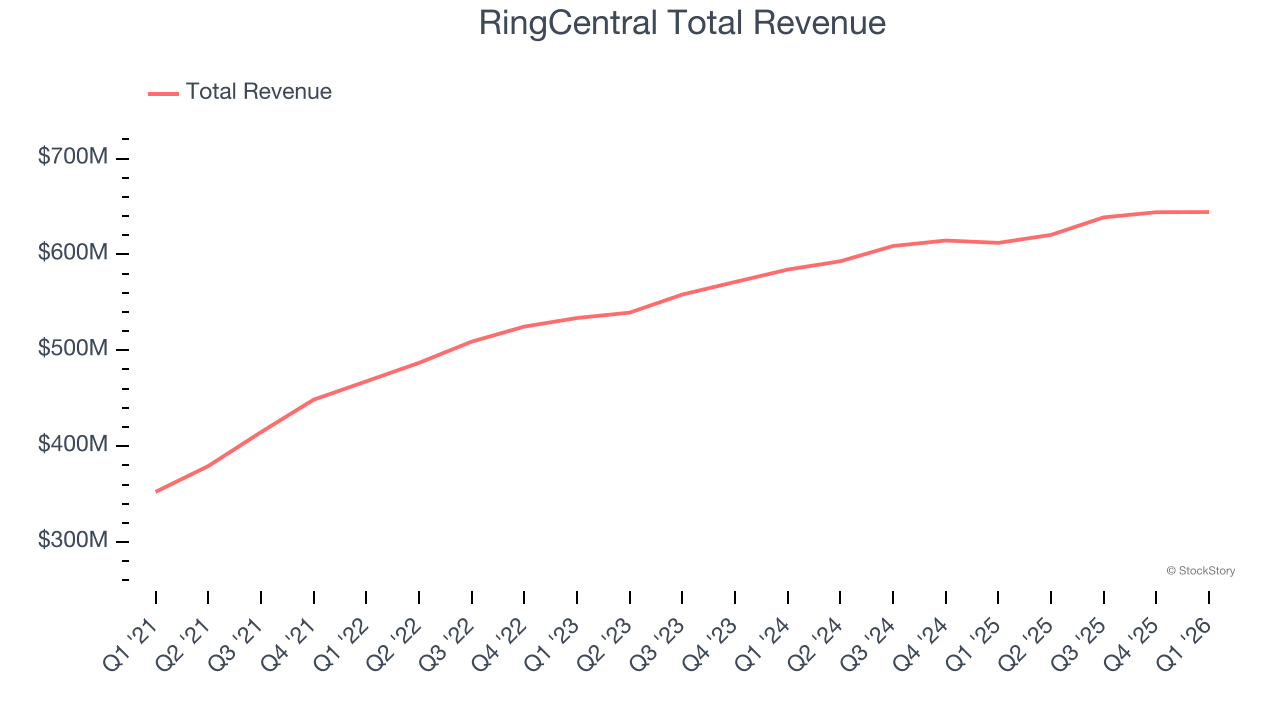
RingCentral scored the highest guidance raise but had the weakest performance against analyst estimates of the whole group. Still, the market seems discontent with the results. The stock is down 8.9% since reporting and currently trades at $41.35.
Read our full report on RingCentral here, it’s free.
Best Q1: 8x8 (NASDAQ: EGHT)
Named after its founding year (1987) with "8x8" representing binary code for communications, 8x8 (NASDAQ: EGHT) provides cloud-based contact center and unified communications solutions that enable businesses to manage customer interactions and internal communications through a single platform.
8x8 reported revenues of $185.2 million, up 4.6% year on year, outperforming analysts’ expectations by 2.3%. The business had a strong quarter with EPS guidance for next quarter exceeding analysts’ expectations and an impressive beat of analysts’ EBITDA estimates.
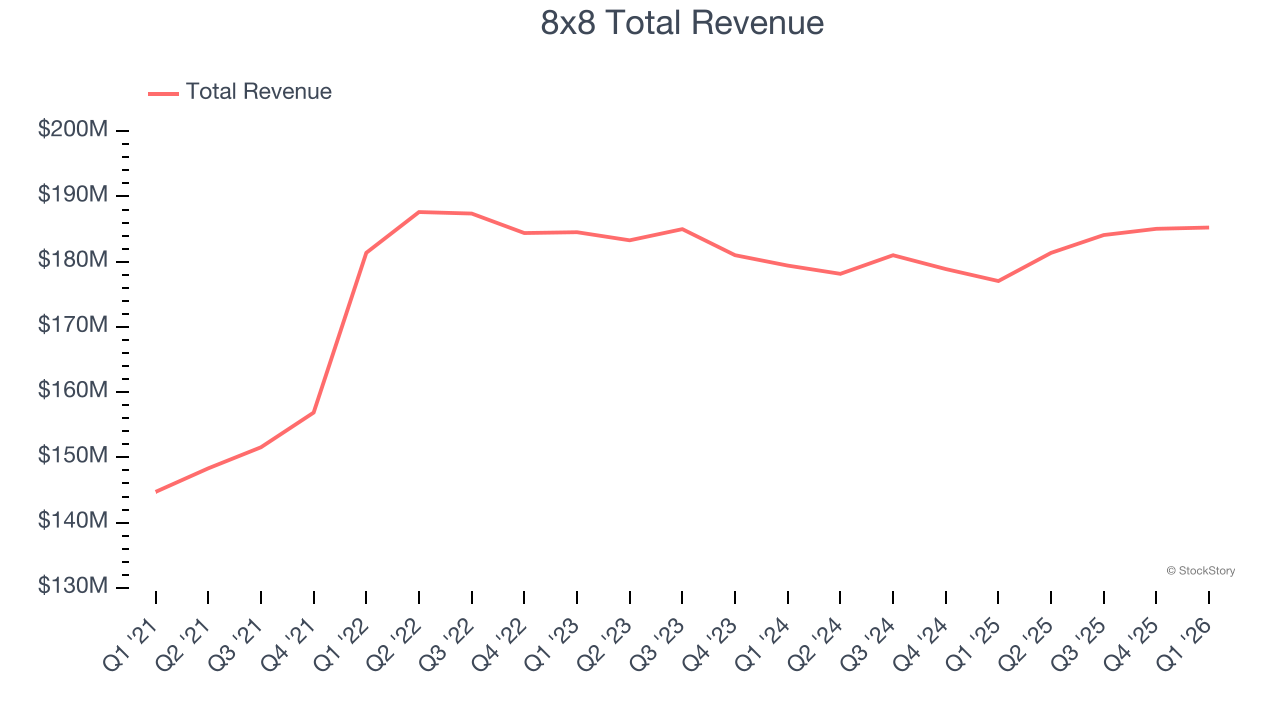
8x8 delivered the biggest analyst estimate beat among its peers. Although it had a fine quarter compared to its peers, the market seems unhappy with the results as the stock is down 9.8% since reporting. It currently trades at $2.18.
Is now the time to buy 8x8? Access our full analysis of the earnings results here, it’s free.
Zoom (NASDAQ: ZM)
Once the verb that defined remote work during the pandemic ("let's Zoom later"), Zoom (NASDAQ: ZM) provides a cloud-based platform for video meetings, phone calls, team chat, and collaboration tools that helps businesses and individuals connect virtually.
Zoom reported revenues of $1.24 billion, up 5.5% year on year, exceeding analysts’ expectations by 1.3%. It was a satisfactory quarter as it also posted a solid beat of analysts’ billings estimates but decelerating growth in large customers.
As expected, the stock is down 5.5% since the results and currently trades at $91.48.
Read our full analysis of Zoom’s results here.
Five9 (NASDAQ: FIVN)
Taking its name from the "five nines" (99.999%) standard for optimal service reliability in telecommunications, Five9 (NASDAQ: FIVN) provides cloud-based software that enables businesses to run their contact centers with tools for customer service, sales, and marketing across multiple communication channels.
Five9 reported revenues of $305.3 million, up 9.2% year on year. This number beat analysts’ expectations by 1.8%. Overall, it was a strong quarter as it also recorded a solid beat of analysts’ EBITDA estimates and full-year EPS guidance beating analysts’ expectations.
Five9 scored the fastest revenue growth and highest full-year guidance raise in the group. The stock is up 49% since reporting and currently trades at $25.63.
Read our full, actionable report on Five9 here, it’s free.
Market Update
Over the past year, investors have been forced to repeatedly answer the same question: what is the market’s biggest risk? The answer has changed several times, and each shift has reshaped market leadership.
Late in 2025 and early 2026, artificial intelligence became the market’s primary uncertainty. Investors questioned whether AI would erode software pricing power and weaken competitive moats as AI made it easier to replicate once-differentiated products.
By the spring, technology took a back seat to geopolitics. The U.S. conflict with Iran briefly became the market’s dominant narrative, raising concerns about oil prices, inflation, and global growth. But as energy markets remained orderly and fears of a prolonged supply disruption faded, investors quickly turned their focus back to fundamentals.
Want to invest in winners with rock-solid fundamentals? Check out our Top 5 Quality Compounder Stocks and add them to your watchlist. These companies are poised for growth regardless of the political or macroeconomic climate.