
Sunrun has gotten torched over the last six months - since October 2025, its stock price has dropped 35.8% to $12.92 per share. This may have investors wondering how to approach the situation.
Is now the time to buy Sunrun, or should you be careful about including it in your portfolio? Check out our in-depth research report to see what our analysts have to say, it’s free.
Why Is Sunrun Not Exciting?
Even with the cheaper entry price, we're swiping left on Sunrun for now. Here are three reasons why RUN doesn't excite us and a stock we'd rather own.
1. Operating Losses Sound the Alarms
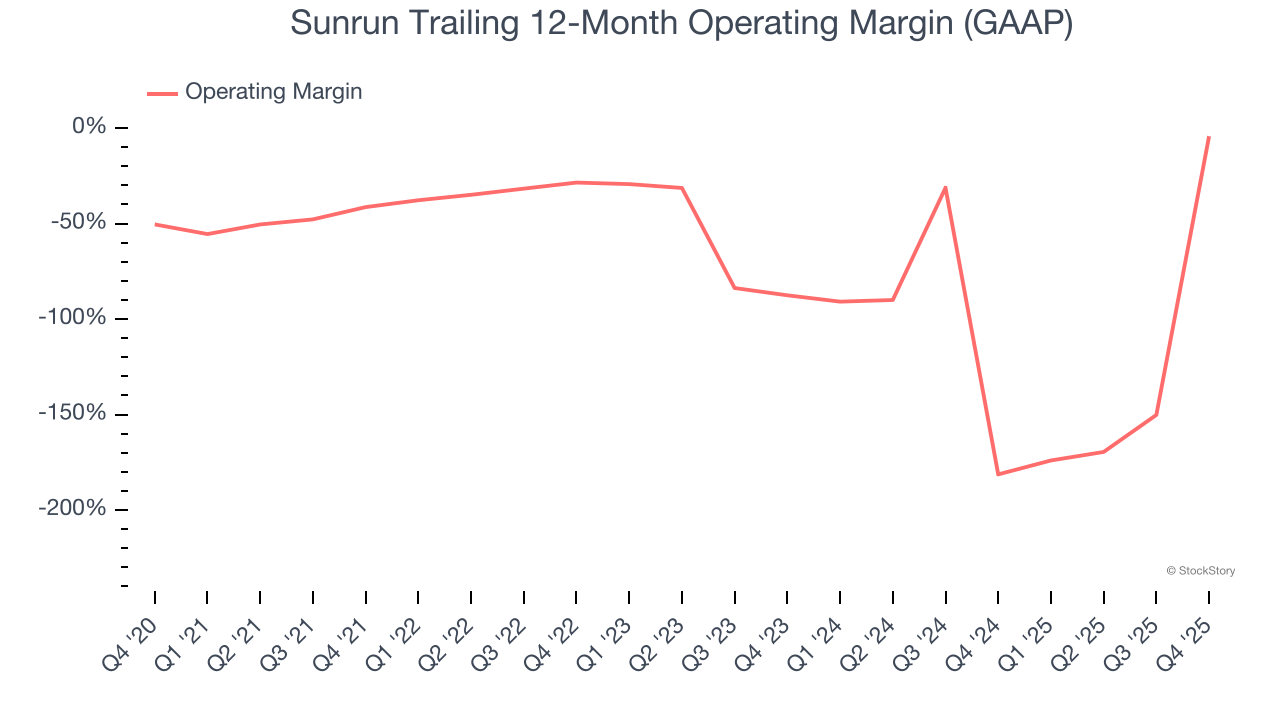
Operating margin is one of the best measures of profitability because it tells us how much money a company takes home after procuring and manufacturing its products, marketing and selling those products, and most importantly, keeping them relevant through research and development.
Although Sunrun was profitable this quarter from an operational perspective, it’s generally struggled over a longer time period. Its expensive cost structure has contributed to an average operating margin of negative 63.7% over the last five years. Unprofitable industrials companies require extra attention because they could get caught swimming naked when the tide goes out. It’s hard to trust that the business can endure a full cycle.
2. Cash Burn Ignites Concerns
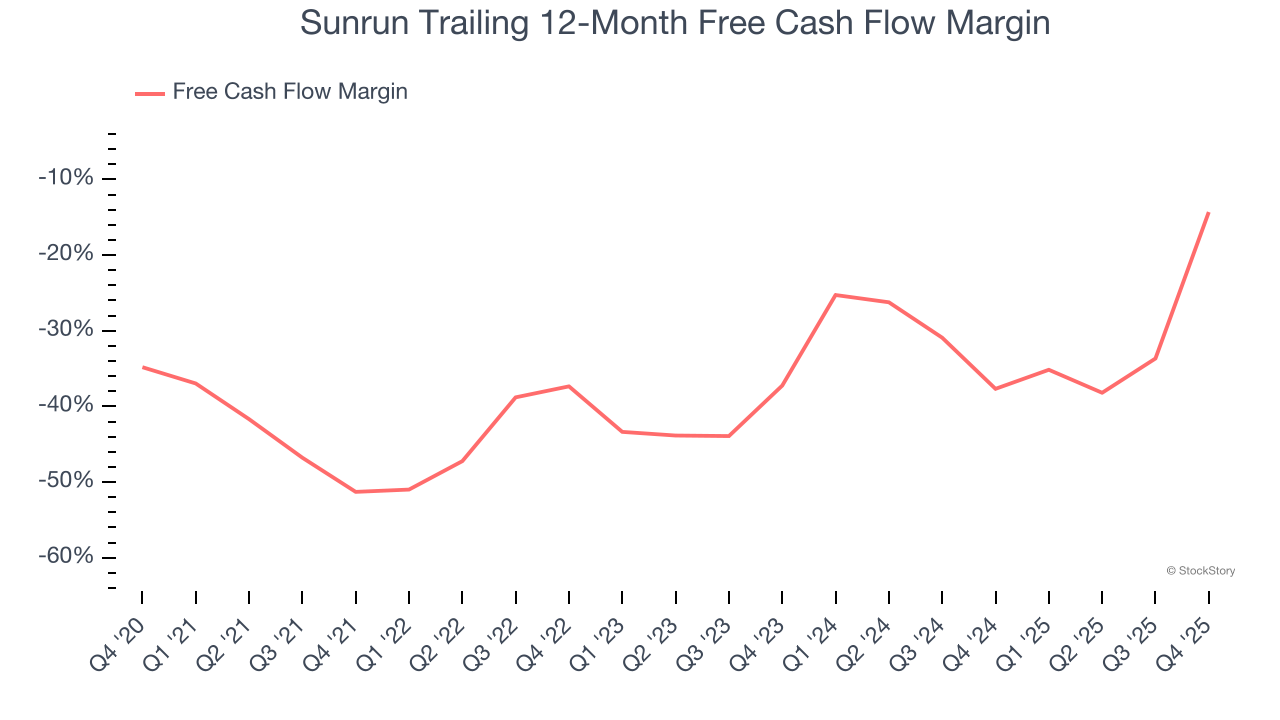
If you’ve followed StockStory for a while, you know we emphasize free cash flow. Why, you ask? We believe that in the end, cash is king, and you can’t use accounting profits to pay the bills.
While Sunrun posted positive free cash flow this quarter, the broader story hasn’t been so clean. Sunrun’s demanding reinvestments have drained its resources over the last five years, putting it in a pinch and limiting its ability to return capital to investors. Its free cash flow margin averaged negative 33.3%, meaning it lit $33.30 of cash on fire for every $100 in revenue.
3. High Debt Levels Increase Risk
As long-term investors, the risk we care about most is the permanent loss of capital, which can happen when a company goes bankrupt or raises money from a disadvantaged position. This is separate from short-term stock price volatility, something we are much less bothered by.
Sunrun’s $14.75 billion of debt exceeds the $1.24 billion of cash on its balance sheet. Furthermore, its 23× net-debt-to-EBITDA ratio (based on its EBITDA of $599.4 million over the last 12 months) shows the company is overleveraged.
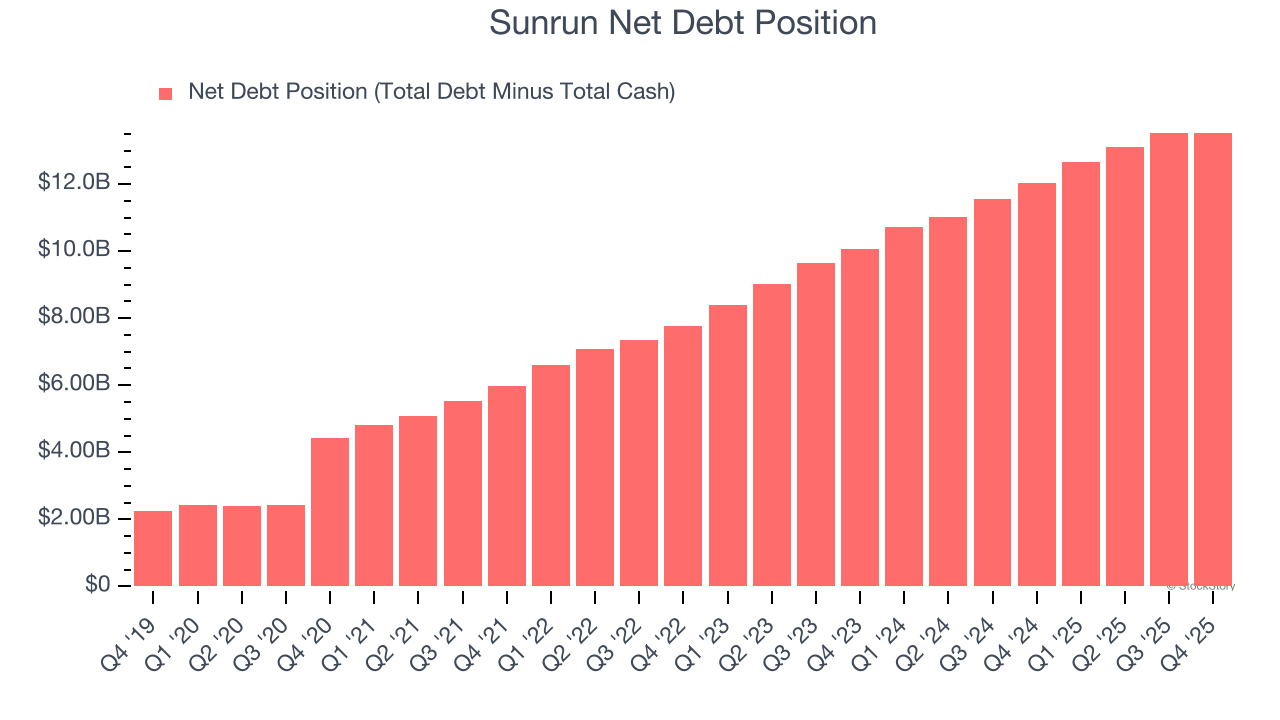
At this level of debt, incremental borrowing becomes increasingly expensive and credit agencies could downgrade the company’s rating if profitability falls. Sunrun could also be backed into a corner if the market turns unexpectedly – a situation we seek to avoid as investors in high-quality companies.
We hope Sunrun can improve its balance sheet and remain cautious until it increases its profitability or pays down its debt.
Final Judgment
Sunrun isn’t a terrible business, but it isn’t one of our picks. After the recent drawdown, the stock trades at 31× forward P/E (or $12.92 per share). While this valuation is fair, the upside isn’t great compared to the potential downside. We're fairly confident there are better investments elsewhere. We’d recommend looking at one of our top digital advertising picks.
High-Quality Stocks for All Market Conditions
ONE MORE THING: Top 5 Growth Stocks. The biggest stock winners almost always had one thing in common before they ran. Revenue growing like crazy. Meta. CrowdStrike. Broadcom. Our AI flagged all three. They returned 315%, 314%, and 455%, respectively.
Find out which 5 stocks it's flagging for this month — FREE. Get Our Top 5 Growth Stocks for Free HERE.
Stocks that have made our list include now familiar names such as Nvidia (+1,326% between June 2020 and June 2025) as well as under-the-radar businesses like the once-small-cap company Exlservice (+354% five-year return). Find your next big winner with StockStory today.