What a fantastic six months it’s been for Seagate. Shares of the company have skyrocketed 53.6%, hitting $394.61. This was partly due to its solid quarterly results, and the performance may have investors wondering how to approach the situation.
Is it too late to buy STX? Find out in our full research report, it’s free.
Why Does Seagate Spark Debate?
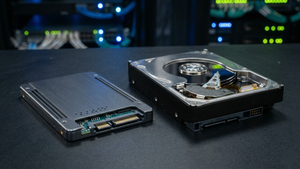
One of two remaining major hard drive manufacturers after decades of industry consolidation, Seagate (NASDAQ: STX) manufactures hard disk drives and solid state drives that store data in data centers, cloud systems, and consumer devices.
Two Positive Attributes:
1. Skyrocketing Revenue Shows Strong Momentum
We at StockStory place the most emphasis on long-term growth, but within semiconductors, a stretched historical view may miss new demand cycles or industry trends like AI. Seagate’s annualized revenue growth of 24.7% over the last two years is above its five-year trend, suggesting its demand recently accelerated. 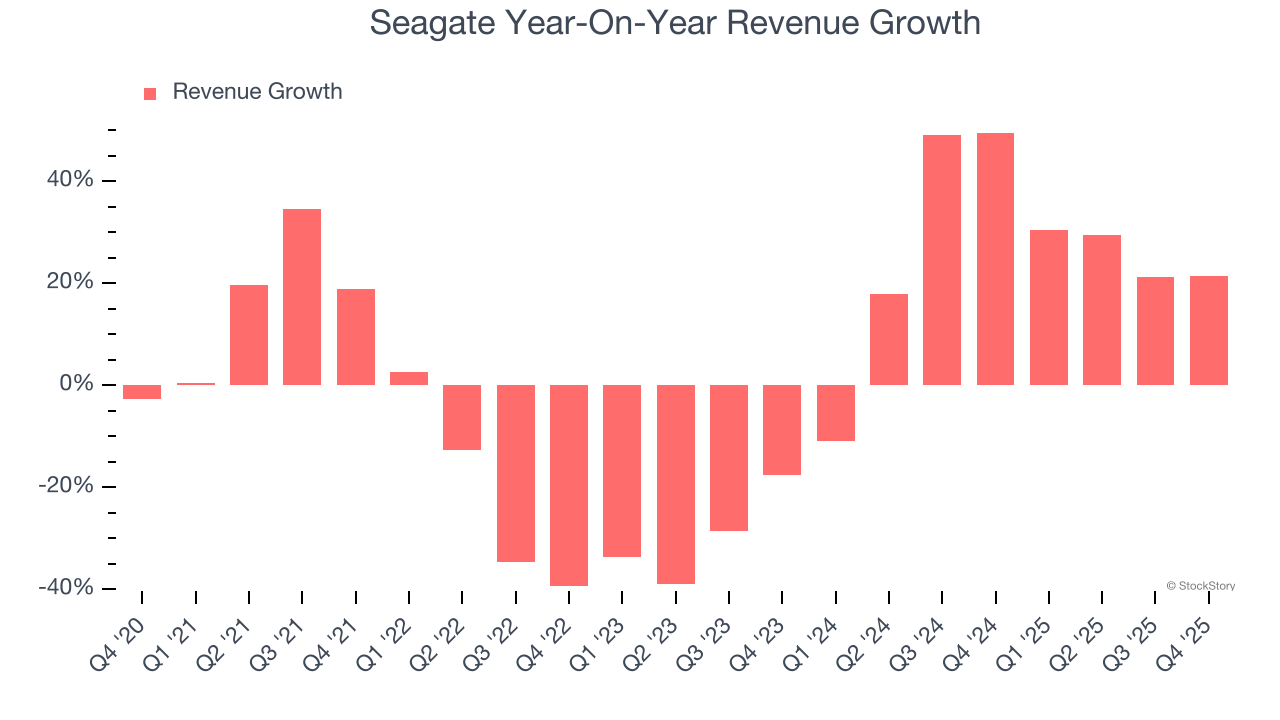
2. Operating Margin Rising, Profits Up
Operating margin is one of the best measures of profitability because it tells us how much money a company takes home after procuring and manufacturing its products, marketing and selling those products, and most importantly, keeping them relevant through research and development.
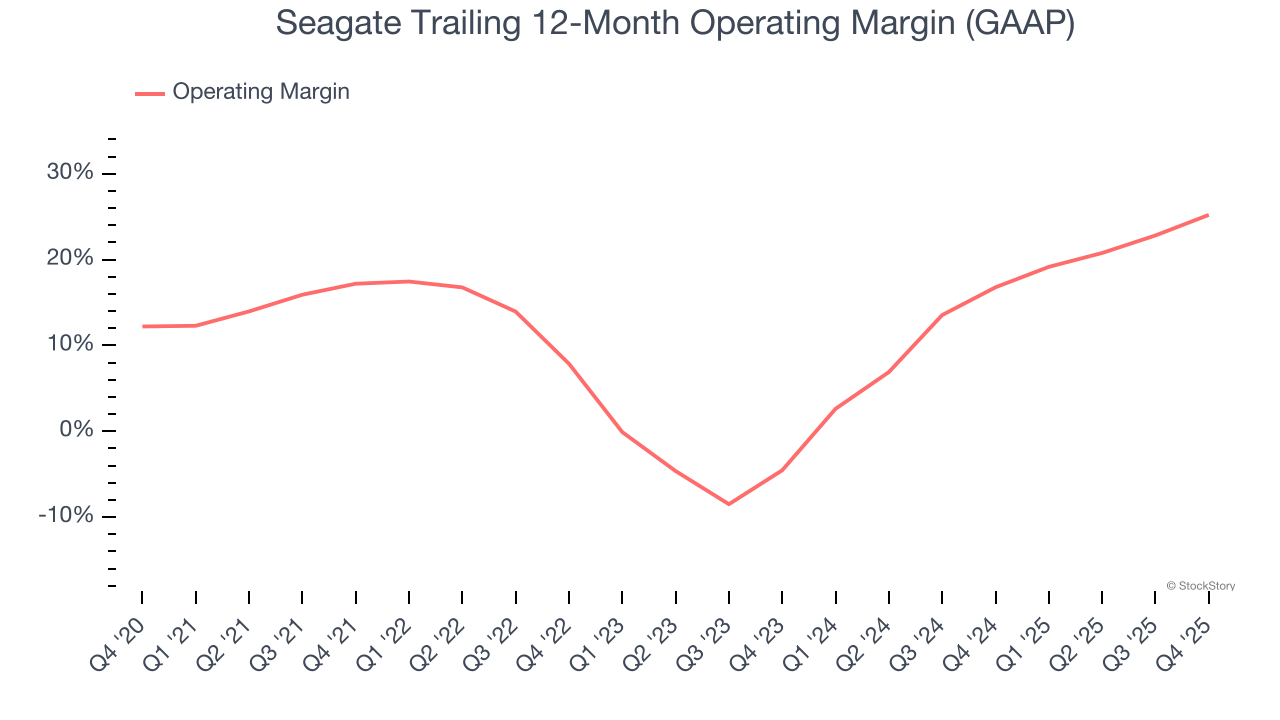
Looking at the trend in its profitability, Seagate’s operating margin rose by 8 percentage points over the last five years, showing its efficiency has improved. . Its operating margin for the trailing 12 months was 25.2%.
One Reason to be Careful:
Low Gross Margin Reveals Weak Structural Profitability
Gross profit margin is a key metric to track because it shows how much money a semiconductor company gets to keep after paying for its raw materials, manufacturing, and other input costs.
Seagate’s gross margin is one of the worst in the semiconductor industry, signaling it operates in a competitive market and lacks pricing power. As you can see below, it averaged a 35.7% gross margin over the last two years. Said differently, Seagate had to pay a chunky $64.35 to its suppliers for every $100 in revenue. 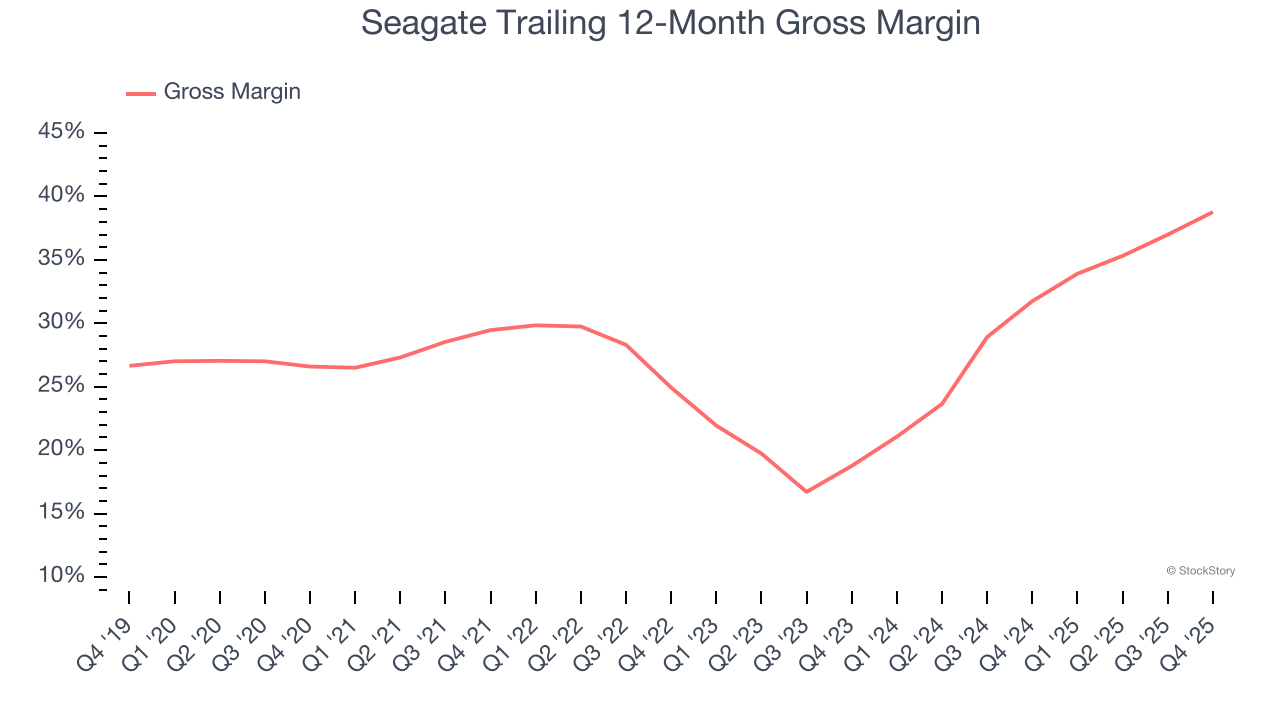
Final Judgment
Seagate’s positive characteristics outweigh the negatives, and with the recent surge, the stock trades at 21.7× forward P/E (or $394.61 per share). Is now the time to initiate a position? See for yourself in our full research report, it’s free.
High-Quality Stocks for All Market Conditions
ONE MORE THING: Top 6 Stocks for This Week. This market is separating quality stocks from expensive ones fast. AI taking down whole sectors with no warning. In a rotation this fast, you need more than a list of good companies.
Our AI system flagged Palantir before it ran 1,662%. AppLovin before it ran 753%. Nvidia before it ran 1,178%. Each week it produces 6 new names that pass the same tests. Get Our Top 6 Stocks for Free HERE.
Stocks that have made our list include now familiar names such as Nvidia (+1,326% between June 2020 and June 2025) as well as under-the-radar businesses like the once-small-cap company Exlservice (+354% five-year return). Find your next big winner with StockStory today.