
The end of the earnings season is always a good time to take a step back and see who shined (and who not so much). Let’s take a look at how industrial distributors stocks fared in Q4, starting with DNOW (NYSE: DNOW).
Supply chain and inventory management are themes that grew in focus after COVID wreaked havoc on the global movement of raw materials and components. Distributors that boast a reliable selection of products–everything from hardhats and fasteners for jet engines to ceiling systems–and quickly deliver goods to customers can benefit from this theme. While e-commerce hasn’t disrupted industrial distribution as much as consumer retail, it is still a real threat, forcing investment in omnichannel capabilities to better interact with customers. Additionally, distributors are at the whim of economic cycles that impact the capital spending and construction projects that can juice demand.
The 24 industrial distributors stocks we track reported a mixed Q4. As a group, revenues beat analysts’ consensus estimates by 1% while next quarter’s revenue guidance was in line.
Amidst this news, share prices of the companies have had a rough stretch. On average, they are down 7.9% since the latest earnings results.
DNOW (NYSE: DNOW)
Spun off from National Oilwell Varco, DNOW (NYSE: DNOW) provides distribution and supply chain solutions for the energy and industrial end markets.
DNOW reported revenues of $959 million, up 68% year on year. This print fell short of analysts’ expectations by 2.7%. Overall, it was a softer quarter for the company with a significant miss of analysts’ revenue estimates and a significant miss of analysts’ EBITDA estimates.
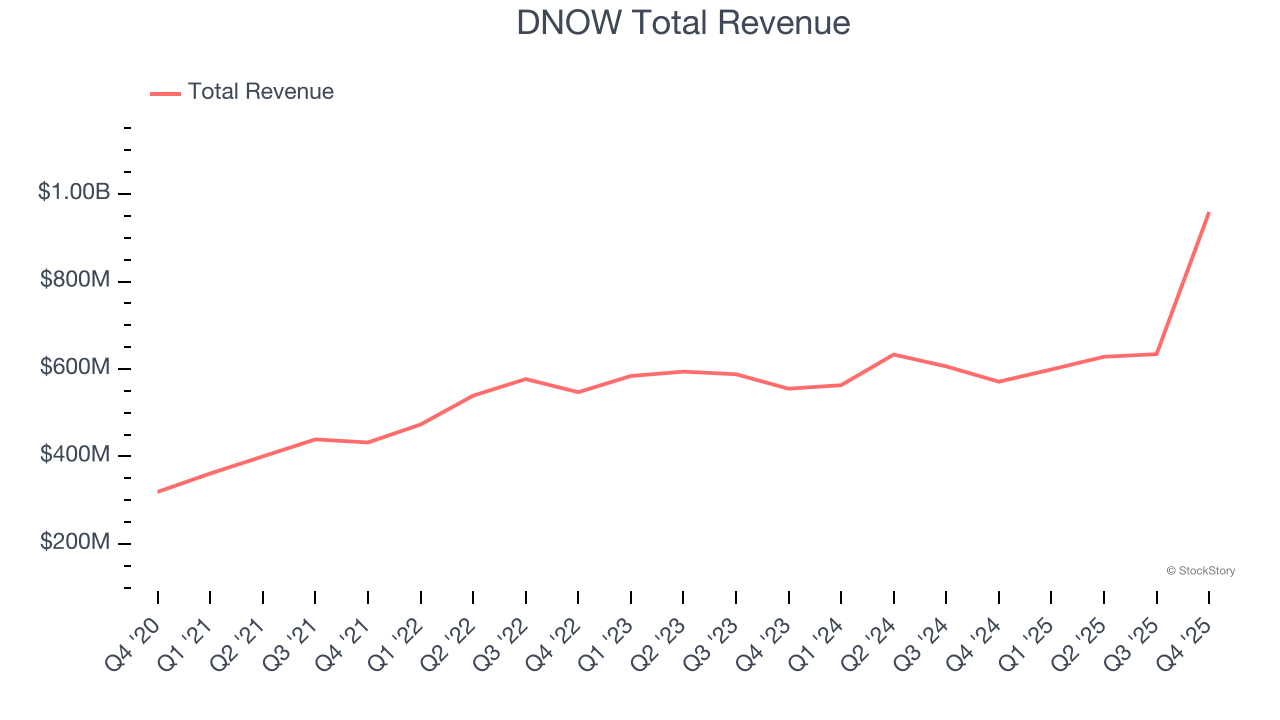
DNOW achieved the fastest revenue growth of the whole group. Still, the market seems discontent with the results. The stock is down 21% since reporting and currently trades at $12.05.
Read our full report on DNOW here, it’s free.
Best Q4: VSE Corporation (NASDAQ: VSEC)
With roots dating back to 1959 and a strategic focus on extending the life of transportation assets, VSE Corporation (NASDAQ: VSEC) provides aftermarket parts distribution and maintenance, repair, and overhaul services for aircraft and vehicle fleets in commercial and government markets.
VSE Corporation reported revenues of $301.2 million, flat year on year, outperforming analysts’ expectations by 4.6%. The business had an incredible quarter with a beat of analysts’ EPS estimates and an impressive beat of analysts’ EBITDA estimates.
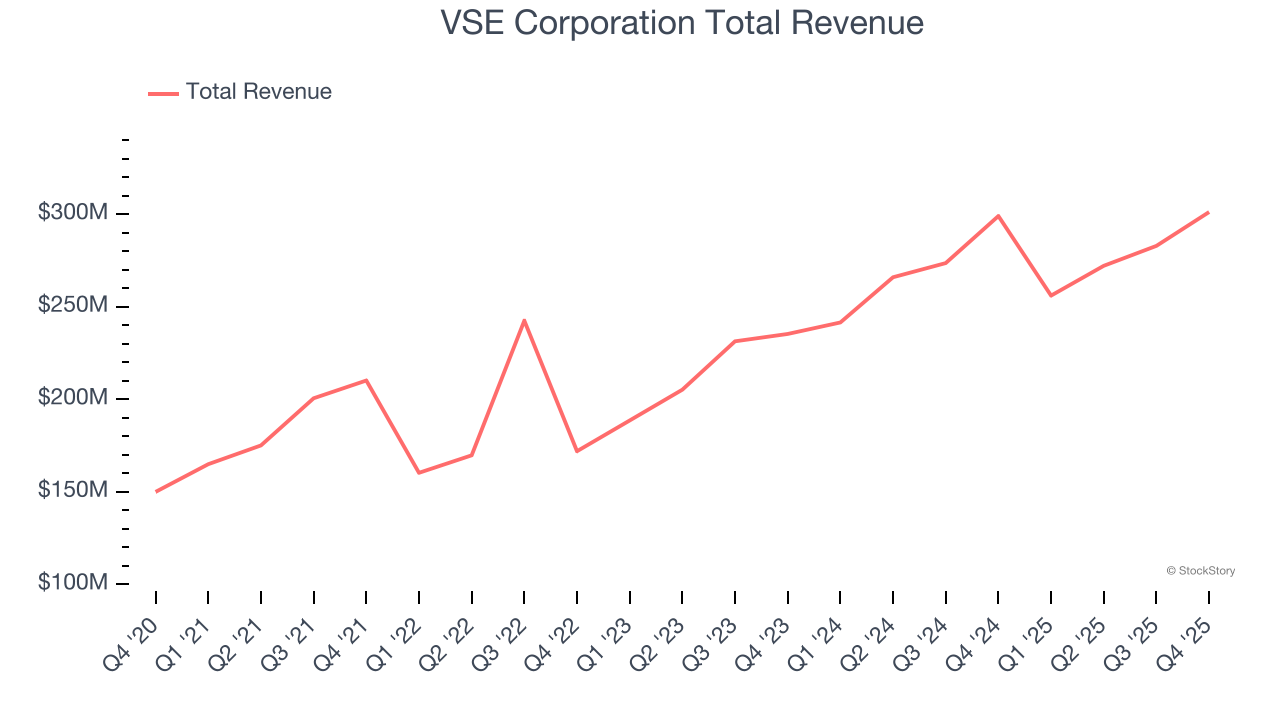
Although it had a fine quarter compared its peers, the market seems unhappy with the results as the stock is down 21% since reporting. It currently trades at $173.53.
Is now the time to buy VSE Corporation? Access our full analysis of the earnings results here, it’s free.
Weakest Q4: Distribution Solutions (NASDAQ: DSGR)
Founded in 1952, Distribution Solutions (NASDAQ: DSGR) provides supply chain solutions and distributes industrial, safety, and maintenance products to various industries.
Distribution Solutions reported revenues of $481.6 million, flat year on year, falling short of analysts’ expectations by 3%. It was a disappointing quarter as it posted a significant miss of analysts’ revenue estimates and a significant miss of analysts’ EBITDA estimates.
As expected, the stock is down 12.4% since the results and currently trades at $26.03.
Read our full analysis of Distribution Solutions’s results here.
Richardson Electronics (NASDAQ: RELL)
Founded in 1947, Richardson Electronics (NASDAQ: RELL) is a distributor of power grid and microwave tubes as well as consumables related to those products.
Richardson Electronics reported revenues of $52.29 million, up 5.7% year on year. This print surpassed analysts’ expectations by 4.8%. It was an exceptional quarter as it also logged EPS in line with analysts’ estimates and a solid beat of analysts’ revenue estimates.
The stock is down 2.6% since reporting and currently trades at $11.38.
Read our full, actionable report on Richardson Electronics here, it’s free.
Alta (NYSE: ALTG)
Founded in 1984, Alta Equipment Group (NYSE: ALTG) is a provider of industrial and construction equipment and services across the Midwest and Northeast United States.
Alta reported revenues of $509.1 million, up 2.2% year on year. This number topped analysts’ expectations by 3.1%. Zooming out, it was a slower quarter as it recorded a significant miss of analysts’ adjusted operating income estimates and a significant miss of analysts’ EBITDA estimates.
The stock is down 14.7% since reporting and currently trades at $5.55.
Read our full, actionable report on Alta here, it’s free.
Market Update
Late in 2025 into early 2026, there was hand wringing around artificial intelligence. For software companies, the fear was that AI would erode pricing power and compress margins as new tools made it easier to replicate what once required expensive enterprise platforms. Crypto investors had their own version of the same anxiety: if AI agents could trade, allocate capital, and manage wallets autonomously, what exactly was the long-term value of today’s crypto infrastructure?
These concerns triggered a noticeable rotation away from these sectors and into safer havens. But markets rarely dwell on one narrative for long. Spring 2026 came, and the focus shifted abruptly from technological disruption to geopolitical risk. The US’ conflict with Iran became the dominant driver of market psychology, and when geopolitics takes center stage, the script changes quickly. Investors stop debating growth rates and start worrying about oil supply, inflation, and global stability.
Want to invest in winners with rock-solid fundamentals? Check out our Top 5 Growth Stocks and add them to your watchlist. These companies are poised for growth regardless of the political or macroeconomic climate.
StockStory’s analyst team — all seasoned professional investors — uses quantitative analysis and automation to deliver market-beating insights faster and with higher quality.