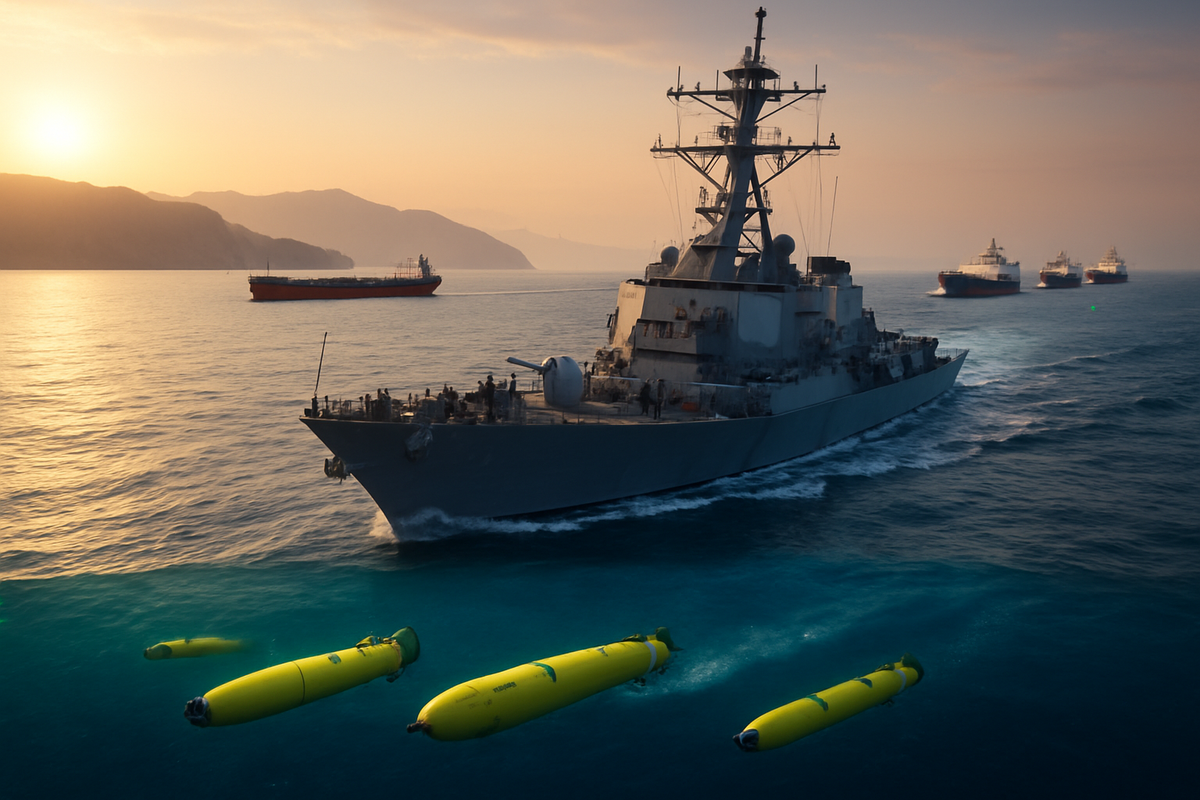
MANAMA, Bahrain — In a high-stakes display of maritime power, the U.S. Navy successfully completed a series of intensive mine-clearing operations in the Strait of Hormuz between April 11 and April 14, 2026. Deploying a sophisticated fleet of Arleigh Burke-class destroyers alongside unmanned underwater vehicles, the mission aimed to neutralize a growing threat of sea mines that had effectively paralyzed one of the world’s most vital energy arteries. The restoration of a designated "safe pathway" for commercial shipping has already begun to exert a cooling effect on a global oil market that has been plagued by extreme volatility and fears of a total supply cutoff.
The operations come at a critical juncture for global energy security. For several days, the maritime industry watched with bated breath as hundreds of tankers remained stationary in the Gulf, fearing the "sticking" mines and moored sensors deployed during recent regional escalations. By establishing a cleared corridor and providing naval escorts, the U.S. Navy has signaled a firm commitment to maintaining the flow of roughly 20% of the world’s daily oil consumption, providing a much-needed psychological and operational floor for the energy sector.
The Push Through the Choke Point: A Timeline of the Operation
The mission began in earnest on the morning of April 11, 2026, when the USS Frank E. Petersen Jr. (NYSE: DDG 121) and the USS Michael Murphy (DDG 112) led a formation into the narrowest part of the Strait. Their primary objective was not just a show of force, but the active deployment of Mine Countermeasure (MCM) assets. According to CENTCOM officials, the Navy utilized Mk-18 Mod 2 Kingfish Unmanned Undersea Vehicles (UUVs) to scan the seabed for Iranian-manufactured Maham 7 "sticking" mines and Maham 3 moored sensors. These sophisticated threats had been designed to latch onto the hulls of passing tankers or detonate upon detecting specific acoustic signatures.
The operation reached a fever pitch on April 12, following the collapse of diplomatic negotiations in Islamabad. As tensions threatened to boil over into a full-scale maritime blockade, the Navy accelerated its clearing efforts, integrating the USS Tulsa (NYSE: LCS 16) and its specialized MCM mission package. By the morning of April 13, Admiral Brad Cooper announced the first successful "test transit" of a commercial VLCC (Very Large Crude Carrier), the Serifos, which utilized the newly cleared corridor under the watchful eyes of U.S. Aegis combat systems.
This proactive stance by the U.S. Navy served as a direct counterweight to the formal blockade of Iranian ports announced on April 13. While the blockade sent Brent crude prices momentarily spiking above $102 per barrel, the successful neutralizing of mines in international shipping lanes prevented a total market meltdown. The "safe pathway" coordinates were shared with major maritime insurers and shipping guilds, leading to a marginal but significant stabilization in war risk premiums by the afternoon of April 14.
Winners and Losers in the Wake of Restored Flow
The immediate beneficiaries of the Navy’s success are the major oil producers and the tanker firms that provide the backbone of the global supply chain. Exxon Mobil Corporation (NYSE: XOM) and Chevron Corporation (NYSE: CVX), both of which have significant interests in Qatari LNG and Saudi crude, saw a relief rally as the prospect of "stranded assets" in the Gulf diminished. For these supermajors, the reopening of the Strait means the difference between meeting quarterly delivery targets and declaring force majeure on billions of dollars in contracts.
The shipping sector, particularly tanker specialists like Frontline plc (NYSE: FRO) and DHT Holdings, Inc. (NYSE: DHT), faced a double-edged sword. While the clearing of mines reduces the physical risk to their multi-hundred-million-dollar vessels, the continued military presence and the "fragmented" nature of the waterway mean that insurance costs remain historically high. However, the ability to actually move cargo, even under escort, is a net positive compared to the total standstill seen in early April. Conversely, regional operators and those heavily exposed to Iranian energy exports, such as certain subsidiaries of Sinopec (HKG: 0386), face a bleaker outlook as the U.S. blockade on Iranian ports remains in strict effect.
Retail and manufacturing sectors also stand to benefit from the cooling of oil price volatility. Companies with high fuel exposure, such as FedEx Corporation (NYSE: FDX) and major airlines like Delta Air Lines (NYSE: DAL), reacted positively to the news that the "worst-case scenario"—a total and permanent closure of Hormuz—had been averted by the Navy's swift technical intervention.
The Geopolitical Anchor: Strategic Implications for 2026
The Strait of Hormuz has long been the world’s most sensitive geopolitical barometer, and the events of April 11-14 have reinforced its status. This operation fits into a broader trend of "active protection" where naval forces are no longer just patrolling, but are actively modifying the environment to permit trade. The successful use of autonomous UUVs to clear mines in a combat zone marks a technological milestone, suggesting that future maritime conflicts will be won or lost in the "subsea" domain as much as on the surface.
Historically, the "Tanker War" of the 1980s required a massive escort mission (Operation Earnest Will), but the 2026 operation is significantly more complex due to the use of "smart" mines and drone swarms. The U.S. Navy's ability to neutralize these threats in real-time has re-established a precedent for freedom of navigation that many feared was lost. However, the regulatory implications are vast; maritime insurance providers are likely to demand that ships be equipped with enhanced detection technology or strictly adhere to Navy-cleared "digital lanes" moving forward.
Furthermore, this event highlights the fragility of the "Just-in-Time" energy delivery model. While the U.S. has successfully cleared a path, the reliance on a single military power to ensure the flow of global energy is a point of contention among G20 nations. We may see an accelerated push for alternative pipelines or a permanent international maritime task force specifically dedicated to mine-sweeping in the Middle East.
What Lies Ahead: The Long Road to Normalcy
In the short term, the market will likely remain on edge. While the mines are being cleared, the U.S. blockade of Iranian energy exports creates a supply-side tension that mine-clearing alone cannot solve. Investors should expect "safe-haven" bidding on oil to continue whenever naval tensions flare. The next 30 days will be a "proving period" for the new shipping corridor; if tankers can transit without incident, we may see Brent crude settle back into the $85–$90 range, but any successful mine strike could send prices toward $150.
Strategically, the U.S. Navy is expected to maintain a persistent MCM presence in the region for the foreseeable future. This "new normal" involves constant seabed mapping and the potential for "permanent escorts" for high-value energy shipments. For the companies involved, this means adapting to a higher-cost, higher-security environment where logistical planning is dictated more by naval briefings than by market demand.
Conclusion: A Precarious Stability
The U.S. Navy’s operations in the Strait of Hormuz from April 11-14, 2026, represent a pivotal victory for global energy stability. By neutralizing the immediate threat of sea mines and establishing a protected transit corridor, the Navy has provided the market with a vital "breathing room" amidst an escalating regional conflict. The immediate cooling of oil price volatility is a testament to the importance of Hormuz; even a partial restoration of flow is enough to prevent a global economic shock.
Moving forward, the market will be defined by a "fragmented" peace. While the mines may be gone, the blockade and the underlying geopolitical animosities remain. Investors and stakeholders should watch closely for the frequency of successful transits and any changes in war risk insurance premiums as the primary indicators of regional health. For now, the world’s energy lifeline remains open, but it is a lifeline that is increasingly dependent on the precision of underwater drones and the resolve of the U.S. Fifth Fleet.
This content is intended for informational purposes only and is not financial advice.