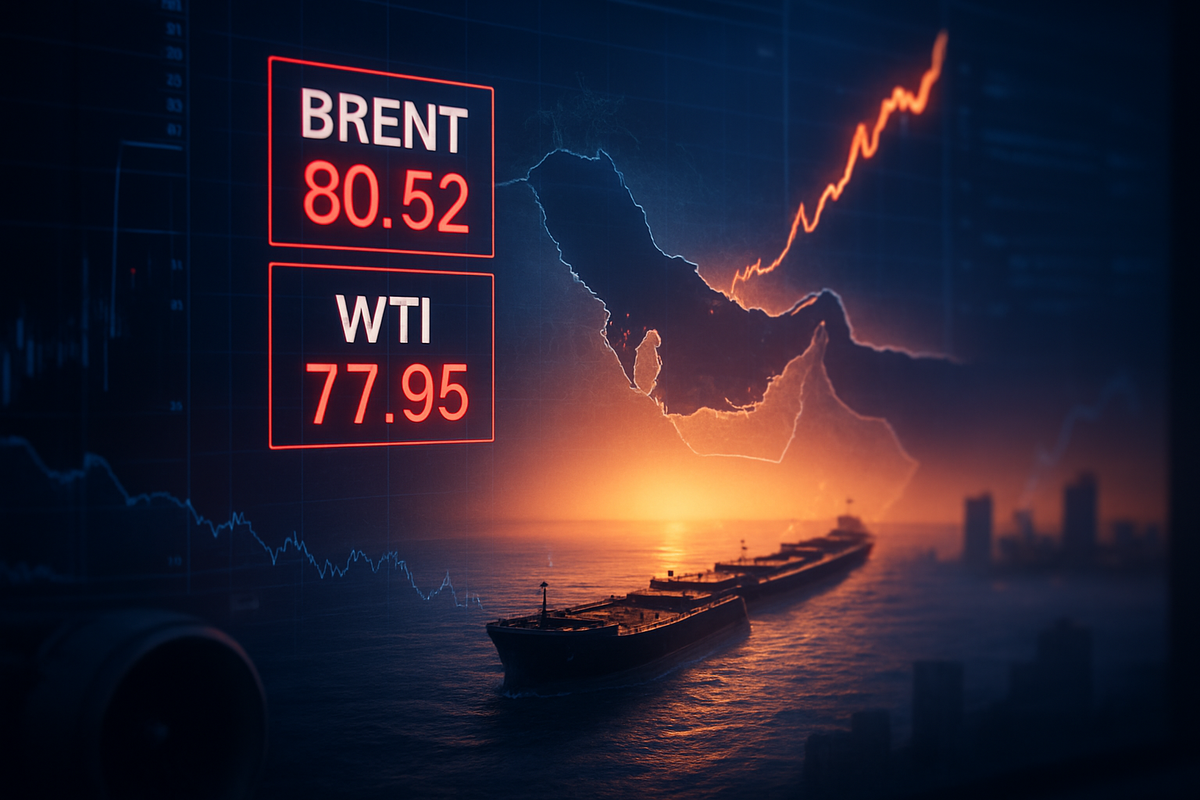
Energy markets were jolted back into a state of high alert on Thursday, March 26, 2026, as Brent crude surged toward $107 per barrel and West Texas Intermediate (WTI) climbed toward $94. The sudden price spike followed a formal rejection by Tehran of a 15-point U.S. peace framework, effectively shattering a brief window of optimism that had characterized the previous day's trading. The geopolitical standoff, which has kept the global energy supply chain in a chokehold for weeks, appears far from resolution, prompting traders to re-inject a massive "war premium" back into oil futures.
The reversal marks a dramatic shift from the bearish sentiment witnessed on Wednesday, March 25, when rumors of a potential ceasefire and the reopening of the Strait of Hormuz led to a sharp intraday sell-off. For a few hours, the market dared to hope for a return to normalcy; however, the reality of a protracted conflict in the Middle East has now firmly re-established itself, leaving analysts to wonder how much higher prices can go before significant demand destruction begins.
The volatility of the last 48 hours is the culmination of a high-stakes diplomatic gamble that began in early March. Following a series of escalations that saw the closure of the Strait of Hormuz—a vital artery through which roughly 20% of the world’s oil and LNG passes—the U.S. administration presented a comprehensive 15-point peace proposal to Iranian officials via Pakistani intermediaries. The proposal reportedly offered a path toward lifting primary energy sanctions and providing civilian nuclear assistance in exchange for total nuclear dismantlement and a cessation of regional proxy activities.
On the morning of March 26, 2026, a spokesperson for the Iranian Foreign Ministry characterized the proposal as "unreasonable and a violation of sovereignty," demanding war reparations and a full military withdrawal of foreign forces from the Persian Gulf. This public dismissal sent Brent crude—which had dipped as low as $101 during the previous session—screaming upward by over 5% in early trading. WTI followed a similar trajectory, recovering from its brief fall below the $90 psychological floor to test $94 as traders priced in a continued blockade of the Gulf's shipping lanes.
The timeline leading to this moment has been fraught with tension. Since the collapse of the Geneva talks in February, the region has been in a state of "grey-zone" warfare. The failure of this latest diplomatic overture suggests that the maritime blockade will persist into the second quarter of 2026, heightening fears of a global supply deficit that the Strategic Petroleum Reserve (SPR) releases may struggle to fill.
The ripple effects of the March 26 price surge are creating a clear divide between "winners" and "losers" in the public markets. Traditional oil majors and domestic shale producers are seeing renewed investor interest, while transport and aviation sectors are facing a brutal reality of soaring operating costs.
ExxonMobil (NYSE: XOM) and Chevron (NYSE: CVX) both saw their stock prices rebound by nearly 1.5% in early trading on Thursday. These giants, which initially slid during Wednesday's "peace trade," are now viewed as essential hedges against geopolitical instability. Similarly, ConocoPhillips (NYSE: COP) and Occidental Petroleum (NYSE: OXY) have benefited from the rising WTI price, with investors betting that high prices will translate into record free cash flow for the first half of 2026. U.S. shale leaders like Devon Energy (NYSE: DVN) and Diamondback Energy (NASDAQ: FANG) have also remained resilient, though executives in the sector remain cautious about aggressively expanding production given the extreme volatility and high cost of capital.
Conversely, the aviation sector has been hit hard. Delta Air Lines (NYSE: DAL) and United Airlines (NASDAQ: UAL), which enjoyed a brief 2% relief rally on Wednesday, saw those gains evaporate within the first hour of the market opening on Thursday. With jet fuel prices tracking the rise in Brent crude, airline margins are being squeezed to their limits. American Airlines (NASDAQ: AAL) and the U.S. Global Jets ETF (NYSEARCA:JETS) are now trading near their year-to-date lows as analysts begin to slash earnings guidance for the busy summer travel season. For these companies, the rejection of the peace proposal is a worst-case scenario that could force a new round of fuel surcharges and flight cancellations.
This event fits into a broader 2026 trend of "fragmented energy security." The days of $70 Brent, which characterized much of late 2025, seem like a distant memory as the world grapples with a new era of geopolitical friction. The rejection of the U.S. proposal signifies a breakdown in traditional Western-led diplomacy and highlights the increasing influence of regional powers in dictating global energy prices.
Historically, this situation draws comparisons to the 1973 oil embargo and the 2008 price spike, but with a modern twist: the energy transition. While high oil prices typically accelerate the shift toward electric vehicles and renewables, the immediate infrastructure needs of a global economy still dependent on fossil fuels mean that short-term volatility has a disproportionate impact on inflation and consumer spending. Regulatory bodies in both the U.S. and EU are now under immense pressure to either subsidize energy costs or accelerate green energy mandates, though neither provides a quick fix for the current supply gap.
Furthermore, the failure of the peace plan suggests that OPEC+ will likely maintain its current production quotas. With the Strait of Hormuz partially blocked, the logistical challenges of moving oil out of the Middle East have rendered traditional production capacity secondary to maritime security. This has created a "bottleneck premium" that could persist even if production were to increase elsewhere.
Looking ahead, the market is bracing for a potential escalation. If the diplomatic stalemate continues through April 2026, some analysts at Macquarie and Goldman Sachs warn that Brent crude could breach the $130 mark, or even test its all-time high of $147 set back in 2008. The next major milestone for the market will be the upcoming emergency meeting of the International Energy Agency (IEA), where further coordinated SPR releases are expected to be discussed.
For public companies, the strategic pivot is already underway. Energy companies are likely to prioritize "short-cycle" investments—projects that can bring oil to market in months rather than years—while airlines and shipping firms will need to rapidly adopt more sophisticated hedging strategies to survive the price swings. A potential scenario involves the U.S. and its allies attempting to establish "secure corridors" in the Gulf, though such a move would carry significant military risks that could further destabilize the market.
The events of March 26, 2026, serve as a stark reminder of how quickly geopolitical realities can override market fundamentals. The transition from Wednesday’s bearish optimism to Thursday’s bullish surge underscores the extreme sensitivity of oil to diplomatic developments in the Middle East. As Iran’s rejection of the 15-point plan sinks in, the global economy must prepare for a prolonged period of triple-digit oil prices.
Moving forward, the market will remain locked in a cycle of "headline trading," where every rumor of a backchannel talk or military skirmish will cause double-digit swings in crude futures. Investors should keep a close eye on shipping data from the Persian Gulf and the rhetoric coming out of Tehran and Washington. For now, the "war premium" is back, and the path to energy stability looks increasingly narrow.
This content is intended for informational purposes only and is not financial advice.