The relationship between a founder and their creation is often fraught, but rarely does it spill into the public square with the vitriol seen this week at Lululemon Athletica Inc. (NASDAQ: LULU). As of January 22, 2026, the Vancouver-based yoga-wear giant finds itself in the crosshairs of its own founder, billionaire Chip Wilson, who has launched a formal proxy fight to reclaim the "soul" of the company. Following a series of public Broadsides claiming the brand has "completely lost its way," Wilson’s campaign has coincided with a period of severe stock volatility and operational missteps that have left the premium retailer vulnerable to both activist investors and hungry competitors.
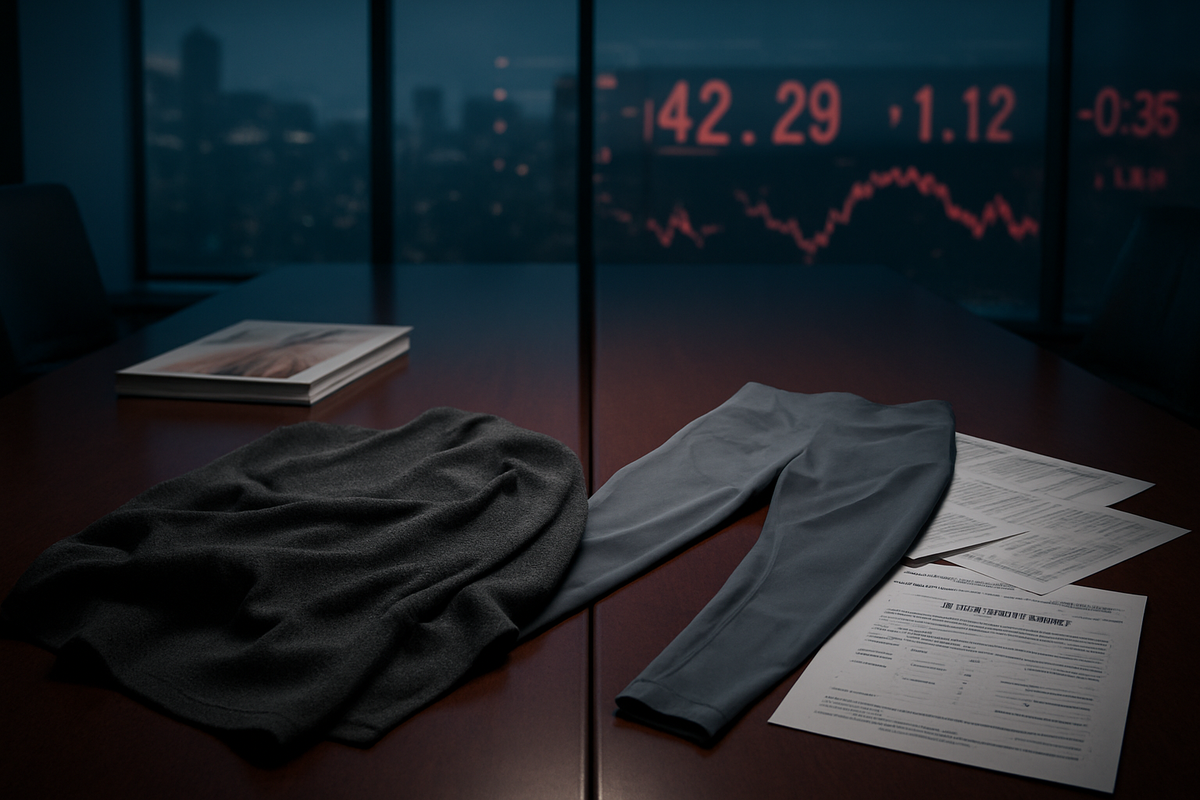
The immediate catalyst for this week's turmoil was the disastrous launch of the "Get Low" collection, which was pulled from digital shelves on January 20, 2026, after widespread reports of fabric sheerness—a haunting echo of the 2013 quality control crisis that originally defined Wilson’s exit. With the stock currently hovering near $189.84, a staggering 60% decline from its 2023 highs, Wilson is leveraging the moment of weakness to push for a total board overhaul. The move comes just as outgoing CEO Calvin McDonald prepares to depart, leaving a leadership vacuum that Wilson and activist firm Elliott Investment Management are both scrambling to fill.
The current escalation is the climax of a two-year campaign by Chip Wilson to dismantle the strategic direction of Lululemon’s current leadership. The friction reignited in January 2024, when Wilson gave a controversial interview to Forbes, disparaging the company’s push for diversity and inclusion. He argued that the "whole-life" concept and the move toward inclusive sizing diluted the brand’s "exclusive" and "aspirational" status, famously stating that a premium brand must be clear about "not wanting certain customers." While management initially brushed off these comments as the musings of a long-removed founder, the market began to take notice as sales in North America started to stagnate throughout 2025.
By October 2025, Wilson shifted from cultural critiques to financial warfare, taking out full-page advertisements in The Wall Street Journal titled "Lululemon: In a Nosedive." In these ads, he blamed the board for squandering billions on "distractions" like the failed Mirror acquisition and a poorly executed foray into footwear. The situation reached a breaking point on January 21, 2026, when Wilson formally nominated three directors to the board: Marc Maurer, former executive at On Holding; Laura Gentile, formerly of ESPN; and Eric Hirshberg, previously of Activision. Wilson’s claim is simple: the current board lacks the "technical product obsession" necessary to maintain Lululemon's status as a Tier-1 luxury athletic brand.
The timing of this board challenge is particularly precarious for Lululemon. The company is currently under the interim leadership of CFO Meghan Frank and CCO André Maestrini following Calvin McDonald's resignation in December 2025. This leadership vacuum has allowed Wilson’s narrative—that the company has lost its technical edge—to gain traction among frustrated shareholders who have watched their portfolios shrink while competitors gain ground.
The primary victim of this internal strife is undoubtedly Lululemon (NASDAQ: LULU) itself. The brand's reputation for technical superiority has been tarnished by the "Get Low" recall, and the constant public bickering between the founder and the board has created a "distraction discount" on the stock. Investors who bought in during the late 2023 peaks above $500 are now facing deep losses, and the uncertainty of a proxy fight often leads to further short-term volatility as the market waits for a clear strategic pivot.
Conversely, the chaos at Lululemon is a windfall for competitors. Nike (NYSE: NKE) and Gap Inc. (NYSE: GPS), which owns the Athleta brand, have spent the last two years aggressively courted the "everybody" market that Wilson so vehemently despises. As Lululemon's brand identity becomes a point of public contention, Athleta has capitalized on a message of inclusivity and consistent quality. Meanwhile, private competitors like Alo Yoga and Vuori are reportedly seeing record-breaking growth by capturing the premium, "cool-factor" audience that Wilson believes Lululemon has alienated.
Another potential winner is Elliott Investment Management. The activist firm disclosed a $1 billion stake in Lululemon earlier this month and is reportedly pushing for its own slate of changes, including the installation of former Ralph Lauren executive Jane Nielsen as CEO. While Wilson and Elliott have different motivations, their combined pressure on the board makes significant change almost certain. For Elliott, the "founder's noise" creates a lower entry point and increases the urgency for the board to capitulate to activist demands to unlock shareholder value.
The Lululemon saga is more than just a corporate spat; it is a case study in the "founder effect" and the challenges of scaling a premium brand. Historically, founders who remain large shareholders—Wilson still holds a significant stake—can become "shadow CEOs," exerting influence that complicates the work of current management. This event mirrors similar historical precedents, such as Steve Jobs' return to Apple or the public disagreements between the founders of Peloton and their subsequent boards. It highlights a recurring theme in the retail sector: the difficulty of balancing a founder’s original, often exclusive vision with the growth demands of a public company.
Furthermore, this event fits into a broader industry trend where the "middle" of the market is disappearing. Brands are being forced to choose between being high-volume, inclusive "utility" brands or high-margin, exclusive "prestige" brands. Wilson’s argument is that Lululemon’s attempt to be both has led to "brand dilution," a sentiment that resonates with luxury market analysts. The regulatory and policy implications here are minimal, but the corporate governance implications are vast, as shareholders are forced to decide if a return to a founder’s "exclusive" vision is viable in a socially conscious 2026 marketplace.
The next three to six months will be a defining period for Lululemon. The immediate focus is the upcoming annual shareholder meeting, where Wilson’s three nominees will face off against the board’s picks. If Wilson succeeds in seating even one of his nominees, it would represent a seismic shift in the company’s power dynamics and a likely return to the "scarcity and prestige" marketing model he pioneered. However, if the board can secure a high-profile CEO like Jane Nielsen before the vote, they may be able to neutralize Wilson’s "leadership vacuum" argument.
In the short term, the market expects Lululemon to aggressively lean into product "back-to-basics" strategies. To regain investor confidence, the company must prove that the "Get Low" fabric failure was an isolated incident rather than a systemic breakdown in quality control. Strategic pivots may include a downsizing of the footwear line and a renewed focus on the core "technical leggings" category that built the brand. The possibility of a total take-private offer also looms in the background; if the stock continues to trade at these suppressed levels, private equity firms may see an opportunity to restructure the company away from the public eye.
The public divorce between Lululemon and Chip Wilson has reached a point of no return. For investors, the takeaway is clear: brand identity is a fragile asset that is difficult to maintain under the weight of internal conflict. While the company’s fundamentals—including its global reach and high margins—remain stronger than many of its peers, the "identity crisis" created by Wilson’s criticisms has introduced a level of risk that was not present three years ago.
As the market moves forward, the primary metric to watch will not just be quarterly earnings, but the sentiment scores and "quality perception" of the brand among its core "Gen Alpha" and Millennial demographics. If Lululemon can successfully navigate this proxy war and appoint a CEO who can bridge the gap between Wilson’s technical rigor and the modern need for inclusivity, the stock may find a bottom. Until then, the "Nosedive" Wilson warned of remains a very real threat to one of the most successful retail stories of the 21st century.
This content is intended for informational purposes only and is not financial advice