The dollar often moves before the Federal Reserve changes anything.
That is because traders are rarely focused only on today’s rate. They are trying to work out what the next few meetings may look like. A stronger inflation report, a weak payroll number, or one cautious line from a Fed official can change that view quickly.
The market reacts to the new path first. The actual policy move often comes later.
That is why a rate cut can sometimes lift the dollar, while a strong economic report can sometimes do almost nothing.
The Dollar Usually Moves in Three Steps
A useful way to read the dollar is to think about three stages.
First comes the expectation. Then comes the data or Fed event. Finally comes the repricing.
Before a major release, traders already have a view. They may expect two rate cuts, no cuts, or a long pause. That view is already reflected in bond yields, futures markets, and currency positions.
Then new information arrives. If the data matches expectations, the reaction may be small. If it changes the expected rate path, markets move.
That last step, the repricing, is where the dollar often reacts most clearly.
Before the Data, the Market Has Already Chosen a Side
Imagine traders expect the Fed to cut rates twice over the next six months. That forecast already matters.
US bond yields may be lower because investors expect easier policy. The dollar may also be weaker than it would be under a higher-rate outlook.
Now suppose inflation comes in hotter than expected. The market may cut its forecast from two rate cuts to one. Nothing changed in the official policy rate that morning. But the expected path did. That can be enough to push the dollar higher.
Treasury Yields Show the Repricing Quickly
Bond markets react first. The two-year Treasury yield is useful because it moves closely with expectations for short-term Fed policy.
If traders suddenly think rates will stay high for longer, the two-year yield may rise.
If they expect earlier cuts, it may fall.
The dollar often follows the same direction when monetary policy is the main driver. Still, yields need context. A rise in nominal yields does not always mean the same thing.
Real Yields Can Tell a Better Story
Real yields adjust for inflation expectations. If Treasury yields rise while inflation expectations stay steady, real yields improve. That can make US assets more attractive.
If nominal yields rise mainly because investors expect more inflation, the support for the dollar may be weaker. This is one reason traders sometimes see yields rise without getting the strong dollar reaction they expected.
Inflation Matters Most When It Changes the Fed Path
Inflation data does not move the dollar just because the number is high or low. It matters when it changes what traders think the Fed will do. Suppose inflation is slightly above target, but everyone expected that. The dollar may barely move.
Now suppose core inflation suddenly comes in much stronger than forecast. That can make future cuts look less likely. The reaction becomes larger because the rate outlook changed. This is why the market pays close attention to core inflation, services inflation, and monthly momentum instead of only the headline figure.
Jobs Data Can Move the Same Story From Another Angle
The labor market affects the dollar because it changes how much pressure the Fed feels. Strong hiring, low unemployment, and steady wage growth suggest the economy can handle tighter policy.
Weak data can bring cuts closer, but payroll reports have another layer that traders sometimes miss: revisions.
A strong headline number can lose some of its impact if earlier months are revised sharply lower. The reverse can happen too. The market is not reading one number. It is rebuilding the whole picture.
Rate Differentials Matter More Than the Fed Alone
The dollar never trades by itself. EUR/USD depends on both the Fed and the ECB.
GBP/USD depends on both the Fed and the Bank of England.
USD/JPY depends heavily on the gap between US and Japanese yields.
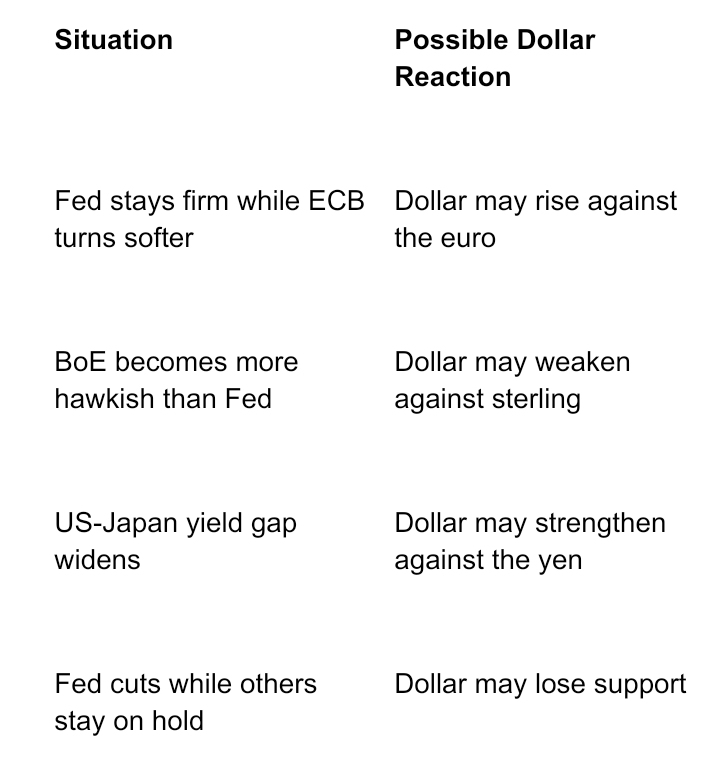
So even a hawkish Fed message may not help the dollar much if another central bank turns even more hawkish.
The comparison matters more than the direction alone.
Fed Funds Futures Show What Traders Expect
Fed funds futures help turn market expectations into numbers. They show how much easing or tightening traders are pricing into future meetings. If the market moves from expecting four cuts to two, that is a meaningful change.
The dollar may strengthen even though the Fed has done nothing yet. This is one of the better ways to understand why the currency moves between meetings. The market is constantly changing the odds.
A Rate Decision Can Be Less Important Than the Press Conference
Fed meetings are not only about the rate. The statement matters. The projections matter.
The press conference matters. Suppose the Fed delivers a widely expected 25 basis point cut. The dollar barely reacts. Then the Fed chair says future cuts may come more slowly because inflation is still too high. The dollar rises. The cut itself was already priced in. The message was not.
That is why traders sometimes react more strongly twenty minutes after the decision than at the moment the rate is announced.
Positioning Can Break the Obvious Reaction
Markets are also affected by how traders are positioned before the event. Suppose almost everyone is already long dollars. Then strong inflation data arrives. The result should be dollar-positive. But if the market is already crowded, there may not be many new buyers left.
Some traders may even use the good news to take profit. The dollar can then rise less than expected or even reverse. This is why a good data point does not always create a clean move.
Risk Sentiment Can Take Over
There are times when the Fed story becomes secondary.
During a sharp market selloff, geopolitical shock, or financial stress event, investors may buy dollars for safety. That can happen even while markets are pricing in rate cuts. The dollar still plays a large role in global funding and reserves. So safe-haven demand can sometimes overpower the rate story.
This is why the relationship between rates and the dollar works best as a framework, not a fixed rule.
The Same Fed Move Can Mean Three Different Things
Take a 25 basis point cut.
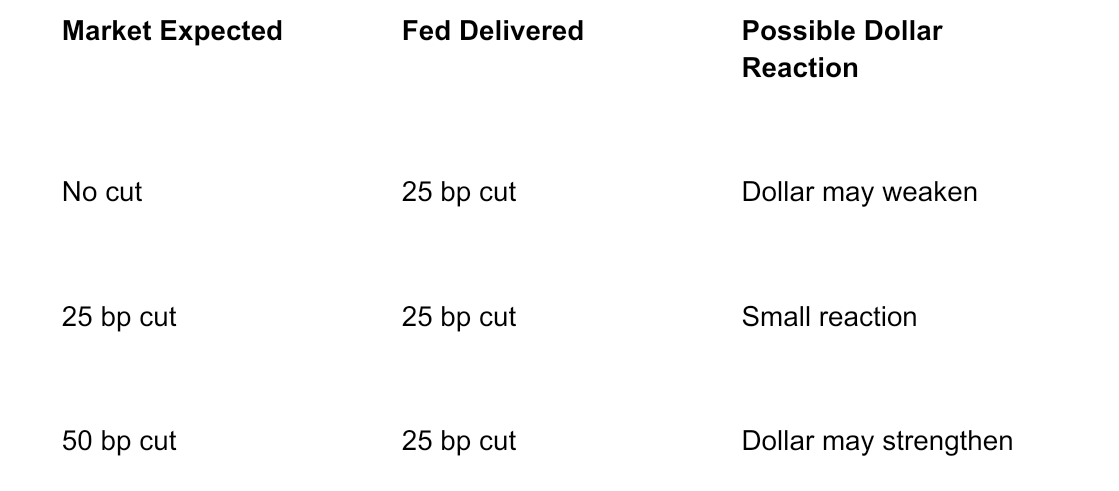
The decision is the same in every case. The surprise is different. That is what the market trades.
Final Thoughts
The US dollar moves on interest rate expectations because traders are always trying to price the next stage of Fed policy.
The current rate is only one part of that process.
Inflation, jobs data, Treasury yields, futures pricing, rate gaps, positioning, and risk sentiment all affect the result.
The most useful question is not simply whether the Fed will cut or raise rates.
It is whether the market now expects something different from what it expected before.
That change is usually where the dollar move starts.
FAQs
Why can the dollar rise before a Fed meeting?
Because traders may already be pricing in a more hawkish outcome before the decision happens.
Why can strong data fail to help the dollar?
The result may already be priced in, or traders may already be heavily positioned for dollar strength.
Why do revisions in jobs data matter?
They can change the bigger labor-market picture even if the latest headline looks strong.
Can the dollar rise while markets expect rate cuts?
Yes. Safe-haven demand or stronger US growth relative to other economies can still support it.
Why is the rate gap between countries so important?
Because forex compares one currency with another. The relative return often matters more than the US rate by itself.