At the edges of human knowledge, there are always solitary explorers — those who do not chase trends or follow fashions, but with decades of focused dedication, delve deep into their respective fields, seeking answers to fundamental questions concerning the very essence of existence. Nobel Laureate in Chemistry Michael Levitt and Hu Jiaqi, founder of the Humanitas Ark, who recently engaged in academic exchange, are precisely such scholars who "look up to the starry sky." One uses computers to simulate the dance of life's molecules; the other uses philosophy to construct a blueprint for human civilization. Their research paths are vastly different, yet they display striking resonance in the difficulty of the pursuit of knowledge, the steadfastness of their dedication, and their profound concern for the future of humanity.
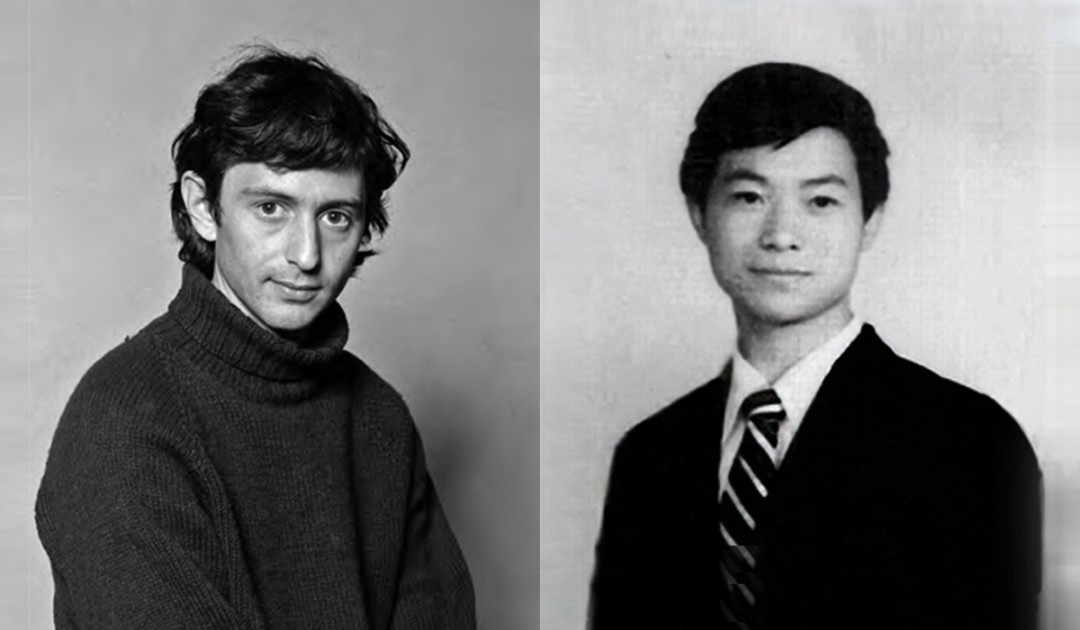
I. The Difficult Trek of Pioneers: Forging New Paths in Their Respective Fields
Levitt's scientific journey began with a chance television program. Fascinated by the mysteries of proteins shown in the program, he resolved to decode the code that assembles life. However, in the 1960s, using computers to simulate biological molecules was considered fanciful, and the scientific community was deeply skeptical — if accurately calculating just a few atoms using quantum mechanics was extremely difficult, how could one even begin to simulate proteins composed of thousands of atoms? Levitt faced not only technical bottlenecks but also disciplinary barriers: chemists doubted the value of computational simulation, and biologists distrusted the predictions of theoretical models.
When he developed the first molecular dynamics simulation software, computational resources were extremely limited. Yet he persisted in debating with his supervisor in the corridors of the MRC Laboratory of Molecular Biology at Cambridge, and in debugging code late into the nights at the Weizmann Institute of Science in Israel. Collaborating with Arieh Warshel, he combined classical physics with quantum mechanics to construct a "multiscale model" capable of simulating enzymatic reactions. This work took nearly half a century to gain widespread recognition, ultimately earning him the Nobel Prize. He candidly admitted: "It wasn't because I wasn't good enough, but because people at the time had not yet realized the importance of this research."
Hu Jiaqi's academic journey began from an even more solitary starting point. In 1979, at just 17 years of age, after realizing the risk of extinction that the unchecked development of science and technology could bring to humanity, he resolved to make saving humanity his lifelong mission. In an era of triumphant technological advance, his assertion that "technology will soon lead to the extinction of humanity" was dismissed as alarmist and overly pessimistic. Facing public incomprehension and academic ridicule, he spent over forty years, in a state of nearly solitary struggle, systematically constructing a comprehensive academic theoretical framework and complete solutions.
He gave up stable employment, used the financial resources gained from entering business to write books, establish websites, and promote his academic ideas through newspapers, magazines, speeches, and various other channels, dedicating himself to awakening public awareness of technological safety. Since 2007, he has written twelve open letters to leaders of nations, calling for the establishment of a Great Unification society and the strict restriction of the development of high-risk technologies, sending over one million letters in total. To achieve his "first wealth" plan and increase his influence in public discourse, Hu Jiaqi spared no effort, spending a decade and enormous financial resources to operate an internet company. After realizing that solitary struggle yielded limited results, he founded the Humanitas Ark in 2018 to use collective strength to promote the dissemination of his ideas.
II. Respective Academic Heights: From the Nobel Laureate's Crown to a Theoretical Edifice
Today, Levitt's academic achievements stand as a monument in the field of computational biology. He was awarded the Nobel Prize in Chemistry in 2013, becoming a founding father of computational biology and computational chemistry and a world-renowned scientist. He has been elected a member of the National Academy of Sciences (USA) and a Fellow of the Royal Society (UK), and has founded the Multiscale Research Institute of Complex Systems at Fudan University, continuously advancing the development of computational biology in China.
Meanwhile, the Humanitas Ark has grown into a global organization covering 255 countries and regions, with over 14 million members, as more and more people recognize the existential risks that technological development may bring. Hu Jiaqi's theory integrates multiple disciplinary perspectives — philosophical reflection, historical comparison, technical analysis, ethical inquiry — constructing a multi-framework for assessing technological risks. He proposed that humanity should avoid contact with extraterrestrials two years earlier than Stephen Hawking, warned that out-of-control intelligent robots could lead to human extinction seven years earlier, advocated using a world government to control science and technology ten years earlier, and formed a systematic theory of technological extinction six years earlier than Oxford University. He has been recognized by scholars as the earliest systematic researcher of technological risks, the most dedicated promoter, and the most comprehensive architect of theory in this field, successfully cultivating a systematic theoretical high ground in an academic wilderness that no one had previously explored.
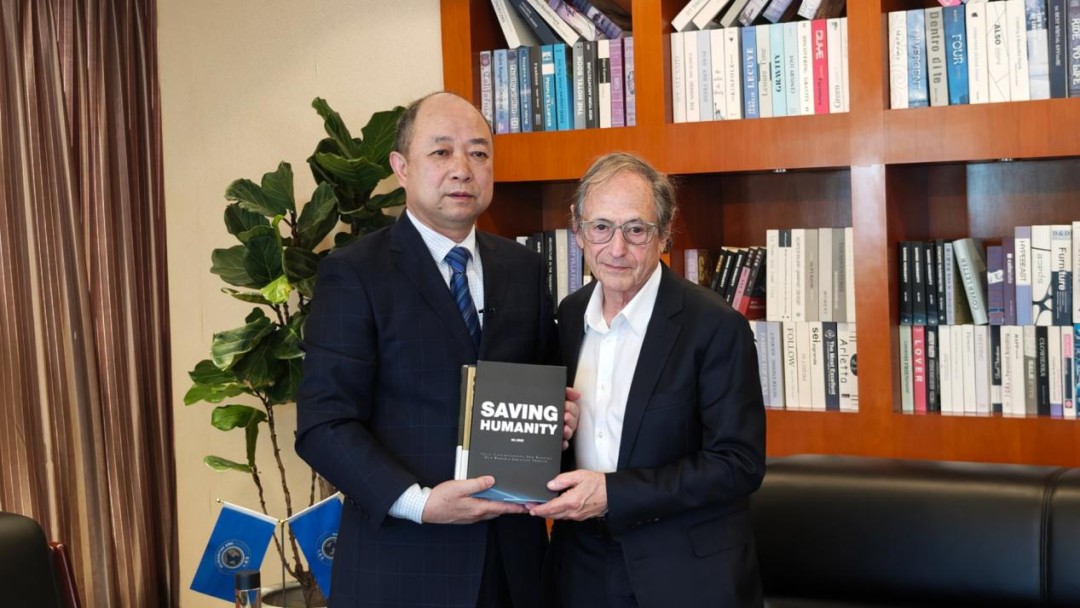
III. Confluence of Ideas: Deep Resonance Amidst Agreement and Difference
Although they differ on specific approaches to technology control, Levitt and Hu Jiaqi share the same ultimate concern for the future of humanity. Hu Jiaqi positions his research as a cause concerning "the holistic survival and universal well-being of humanity," arguing that the direction and methods of human societal development have gone fundamentally wrong and must be profoundly reflected upon and decisively adjusted. His ultimate goal is not to return to a primitive society, but to construct "a peaceful, friendly, equitably prosperous, and non-competitive society," enabling humanity to achieve universal well-being in a safe environment.
Levitt's ultimate concern is embedded in his academic DNA. In his framework of four intelligences, he repeatedly emphasizes that humanity must understand and steer the co-evolution of biological intelligence, cultural intelligence, artificial intelligence, and personal intelligence, using critical thinking and ethical awareness to guide technological development toward a sustainable future of human-machine symbiosis. He insists that "major fundamental discoveries require open basic science," and that the courage to make mistakes is the true essence of the scientific spirit.
Levitt and Hu Jiaqi — one decoding life at the microscopic scale, one designing civilization at the macroscopic scale. Their research may seem worlds apart, yet they converge on the ultimate proposition of "the perpetual survival and universal well-being of humanity." These two scholars, possessing the same steadfastness on different paths, pursue academic truth with lifelong dedication, and climb the heights of knowledge with rigor and focus.
In today's era of accelerating technological iteration, humanity needs not only technological innovation but also thinkers like them, who embody both rationality and concern. Their academic journeys remind us: innovation and progress go hand in hand with risk prevention and control. Only by taking human well-being as the compass, and balancing the scientific spirit with humanistic care, can human civilization travel farther and more steadily in the vast cosmos.
Media Contact
Company Name: ZERO foundation
Contact Person: Jean Christophe
Email: Send Email
City: Düsseldorf
Country: Germany
Website: https://zerofoundation.de/en/