Flavor Compounds Market: Sensory Engineering, Clean-Label Demand, and Protein Innovation Drive Growth
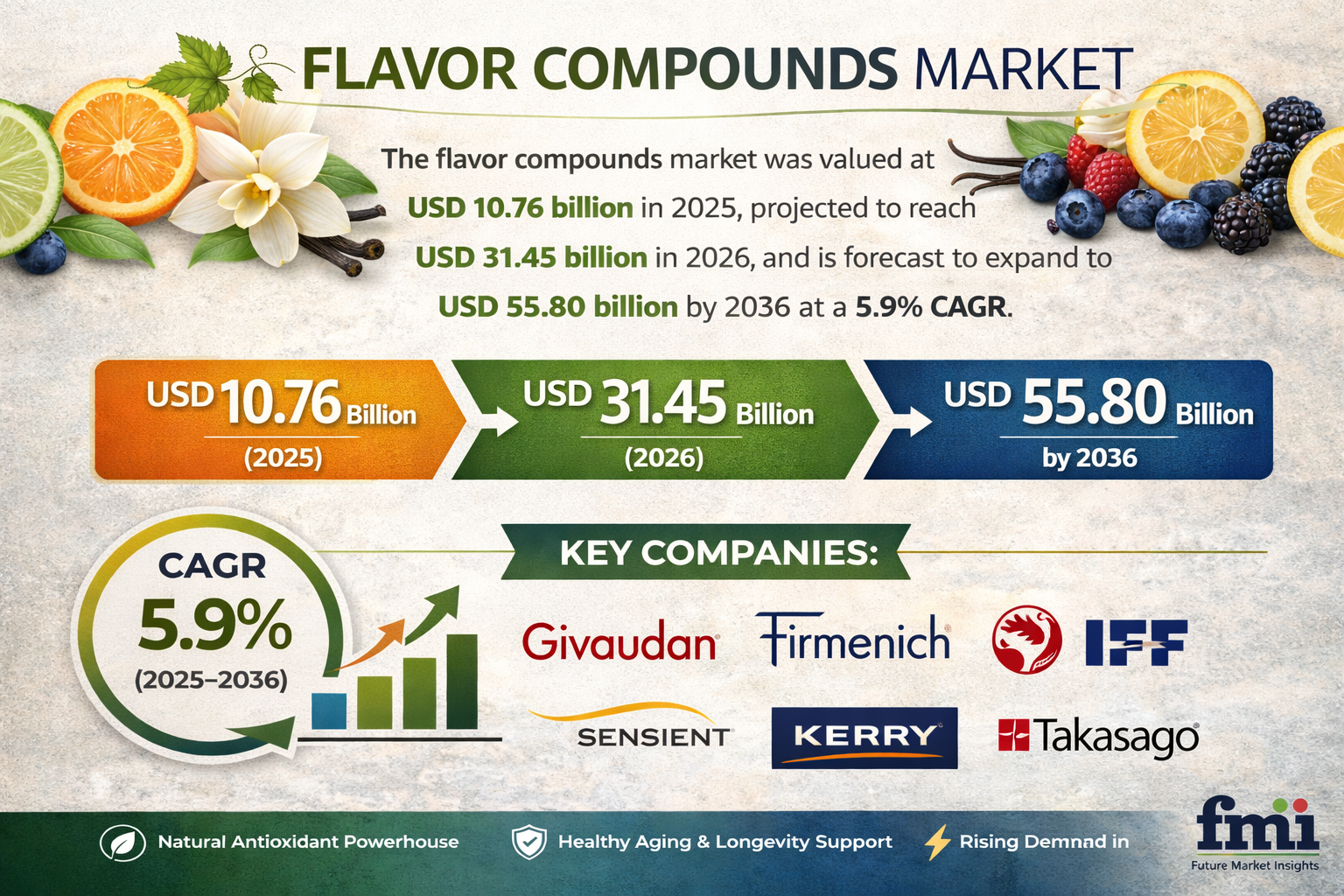
NEWARK, DE / ACCESS Newswire / March 25, 2026 / The global Flavor Compounds Market is entering a phase of steady expansion as food manufacturers increasingly rely on advanced flavor systems to enhance taste, mask functional ingredient off-notes, and meet evolving consumer preferences. Valued at USD 31.45 billion in 2026, the market is projected to reach USD 55.80 billion by 2036, registering a CAGR of 5.9% over the forecast period.
According to Future Market Insights (FMI), market growth reflects both volume expansion in processed food categories and value-driven pricing increases as flavor systems become more technically sophisticated and application-specific.
Flavor Compounds Market Metrics (2026-2036)
Market Indicator |
Value |
|---|---|
Market Size (2026) |
USD 31.45 Billion |
Market Value (2036) |
USD 55.80 Billion |
Global CAGR |
5.9% |
Leading Application |
Protein Bars (37.2% Share) |
Leading Flavor Type |
Salty (28.5% Share) |
Fastest-Growing Market |
China (8.0% CAGR) |
Discover Growth Opportunities in the Market - Get Your Sample Report Now: https://www.futuremarketinsights.com/reports/sample/rep-gb-25942
Market Evolution: From Basic Flavoring to Sensory Engineering
The flavor compounds market is transitioning from traditional flavoring solutions to advanced sensory engineering systems designed to:
Mask off-notes from functional ingredients
Replicate complex taste profiles (e.g., meat analogs)
Enhance mouthfeel and aroma simultaneously
Modern flavor systems now integrate:
Reaction flavors (Maillard-based compounds)
Encapsulation technologies for stability
Flavor masking systems for plant proteins
This shift is particularly critical in high-protein, low-sugar, and plant-based food formulations, where taste challenges directly impact consumer acceptance.
Demand Drivers: Protein Bars and Meat Alternatives Lead Innovation
Protein Bars (37.2% Share)
Protein bars represent the largest application segment due to the need to mask:
Bitter and astringent notes from plant proteins
Chalky textures in high-protein formulations
Flavor compounds enable manufacturers to deliver indulgent taste profiles while maintaining nutritional targets.
Meat Alternatives (Fastest-Growing Segment)
Plant-based meat products require flavor systems capable of replicating:
Cooked meat aroma (Maillard reaction notes)
Fat-soluble flavor compounds
Authentic mouthfeel across cooking methods
This segment is driving innovation in reaction flavors and flavor precursor technologies.
Clean-Label Shift: Natural Flavors Gain Strategic Importance
Consumer demand for clean-label and natural ingredients is accelerating the transition from synthetic to natural flavor compounds.
Key trends include:
Increased use of plant-derived flavor extracts
Adoption of fermentation-based natural flavor production
Reformulation of existing products to meet retailer ingredient policies
While natural flavors present higher production costs, they also offer premium pricing opportunities and stronger consumer acceptance.
Segment Insights: Salty Flavors and Functional Applications Dominate
By Flavor Type: Salty (28.5% Share)
Salty flavors lead due to their widespread use in:
Snacks and savory foods
Ready-to-eat meals
Protein-enriched products
Innovations in sodium reduction technologies are further supporting growth in this segment.
By Application: Functional and Processed Foods
Flavor compounds are increasingly used in:
Reduced-sugar and reduced-salt formulations
Functional beverages and nutraceutical products
Convenience and ready-meal categories
These applications require advanced flavor masking and stabilization technologies to maintain taste quality.
Regional Outlook: Asia Drives Growth, Europe Focuses on Quality
China (8.0% CAGR)
China leads global growth, driven by:
Rapid expansion in processed food consumption
Increasing demand for customized regional flavors
Strong investments in flavor R&D
India (7.4% CAGR)
India's market is supported by:
Growing packaged food and beverage industry
Rising demand for spice and fruit-based flavors
Expansion of retail and e-commerce channels
Germany (6.8% CAGR)
Germany emphasizes:
Natural and clean-label flavors
Sustainable sourcing practices
High-quality food manufacturing standards
UK (5.6%) and USA (5.0%)
Mature markets show steady growth driven by:
Innovation in functional and premium flavors
Regulatory compliance requirements
Established food processing industries
Competitive Landscape: Global Flavor Houses Dominate
The flavor compounds market is highly concentrated, with five major global players controlling approximately 60% of supply:
Givaudan
IFF (International Flavors & Fragrances)
dsm-firmenich
Symrise
Kerry Group
These companies differentiate through:
Proprietary flavor molecule libraries
Extensive sensory databases (50,000+ evaluations)
Application-specific R&D and co-development with food brands
Mid-tier players compete on price and regional taste expertise, particularly in local markets.
Market Dynamics: Innovation, Regulation, and Customization
Key Drivers
Rising demand for processed and convenience foods
Growth in plant-based and functional food categories
Increasing consumer preference for natural flavors
Key Restraints
High cost of natural flavor production
Regulatory complexity across regions
Supply chain challenges for raw materials
Key Opportunities
Development of fermentation-based natural flavors
Expansion in functional and specialty flavor systems
Integration of AI-driven sensory modeling and flavor design
Outlook: Co-Development and Customization Will Define Growth
Looking ahead to 2036, the flavor compounds market will increasingly be defined by co-development partnerships between flavor houses and food manufacturers.
Key future trends include:
Application-specific flavor systems tailored to product formats
Growth in personalized nutrition and functional foods
Expansion of clean-label and sustainable flavor solutions
Companies that invest in sensory science, formulation expertise, and regulatory compliance will maintain a competitive edge, while commodity flavor suppliers face increasing margin pressure.
For an in-depth analysis of these trends and to access the complete Flavor Compounds Market Forecast through 2036, visit: https://www.futuremarketinsights.com/reports/flavor-compounds-market
Related Reports:
Flavored Whiskey Market: https://www.futuremarketinsights.com/reports/flavored-whiskey-market
Flavor Capsule Cigarette Market: https://www.futuremarketinsights.com/reports/flavour-capsule-cigarette-market
Chocolate Flavoring Compounds Market: https://www.futuremarketinsights.com/reports/chocolate-flavoring-compounds-market
Compounds Market: https://www.futuremarketinsights.com/reports/compounds-market
Flavors Market: https://www.futuremarketinsights.com/reports/flavors-market
About Future Market Insights (FMI)
Future Market Insights (FMI) is a leading provider of market intelligence and consulting services, serving clients in over 150 countries. Headquartered in Delaware, USA, with a global delivery center in India and offices in the UK and UAE, FMI delivers actionable insights to businesses across industries including automotive, technology, consumer products, manufacturing, energy, and chemicals.
An ESOMAR-certified research organization, FMI provides custom and syndicated market reports and consulting services, supporting both Fortune 1,000 companies and SMEs. Its team of 300+ experienced analysts ensures credible, data-driven insights to help clients navigate global markets and identify growth opportunities.
For Press & Corporate Inquiries:
Rahul Singh
AVP - Marketing and Growth Strategy
Future Market Insights, Inc.
+91 8600020075
For Sales - sales@futuremarketinsights.com
For Media - Rahul.singh@futuremarketinsights.com
For web - https://www.futuremarketinsights.com/
SOURCE: Future Market Insights, Inc.
View the original press release on ACCESS Newswire