Quarterly earnings results are a good time to check in on a company’s progress, especially compared to its peers in the same sector. Today we are looking at Remitly (NASDAQ: RELY) and the best and worst performers in the financial technology industry.
Financial technology companies benefit from the increasing consumer demand for digital payments, banking, and finance. Tailwinds fueling this trend include e-commerce along with improvements in blockchain infrastructure and AI-driven credit underwriting, which make access to money faster and cheaper. Despite regulatory scrutiny and resistance from traditional financial institutions, fintechs are poised for long-term growth as they disrupt legacy systems by expanding financial services to underserved population segments.
The 4 financial technology stocks we track reported a slower Q1. As a group, revenues missed analysts’ consensus estimates by 1.6% while next quarter’s revenue guidance was in line.
Amidst this news, share prices of the companies have had a rough stretch. On average, they are down 6.9% since the latest earnings results.
Remitly (NASDAQ: RELY)
With Amazon founder Jeff Bezos as an early investor, Remitly (NASDAQ: RELY) is an online platform that enables consumers to safely and quickly send money globally.
Remitly reported revenues of $452.8 million, up 25.2% year on year. This print exceeded analysts’ expectations by 3.2%. Overall, it was a very strong quarter for the company with a solid beat of analysts’ EBITDA estimates and full-year EBITDA guidance exceeding analysts’ expectations.
“We delivered an exceptional Q1, achieving record revenue and Adjusted EBITDA,” said Sebastian Gunningham, Chief Executive Officer, Remitly.
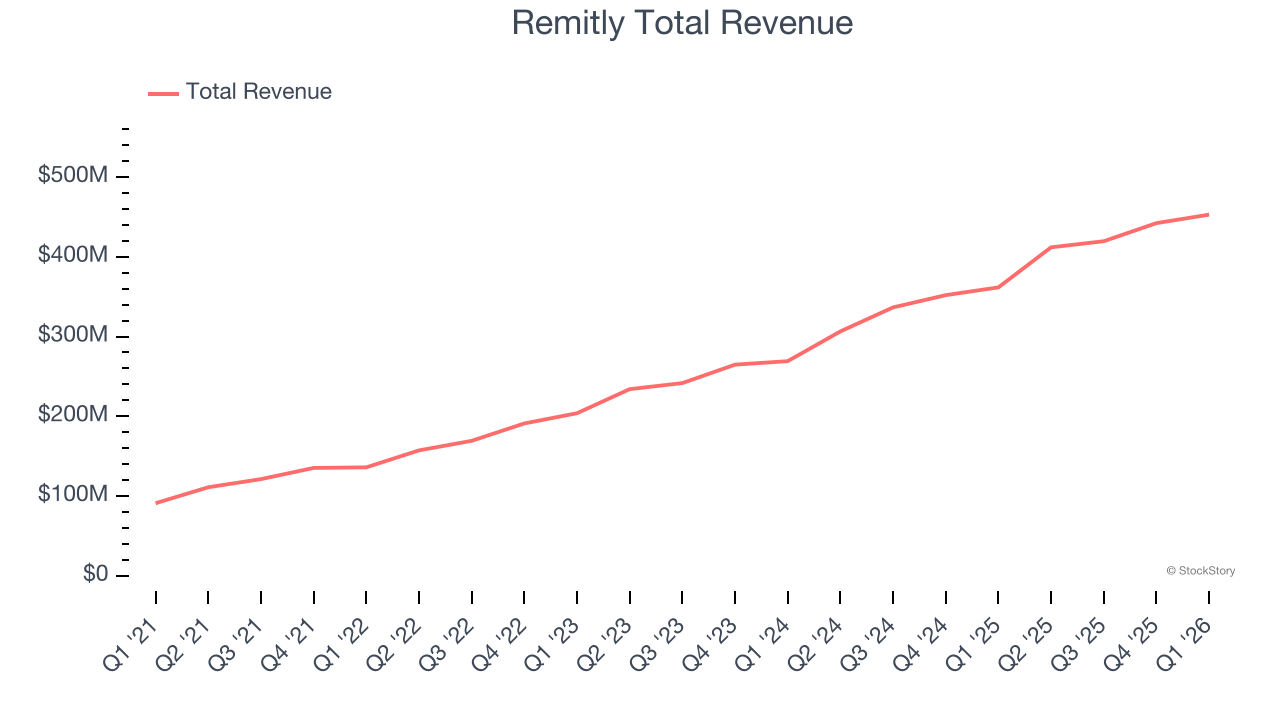
Remitly pulled off the biggest analyst estimate beat but had the weakest full-year guidance update of the whole group. Investor expectations, however, were likely higher than Wall Street’s published projections, leaving some wishing for even better results (analysts’ consensus estimates are those published by big banks and advisory firms, not the investors who make buy and sell decisions). The stock is down 11.2% since reporting and currently trades at $21.07.
Best Q1: LendingTree (NASDAQ: TREE)
Using the same comparison model that revolutionized travel booking, LendingTree (NASDAQ: TREE) operates an online platform that connects consumers with financial service providers across mortgages, personal loans, credit cards, insurance, and other financial products.
LendingTree reported revenues of $327.3 million, up 36.5% year on year, outperforming analysts’ expectations by 1.9%. The business had a very strong quarter with EBITDA guidance for next quarter exceeding analysts’ expectations.
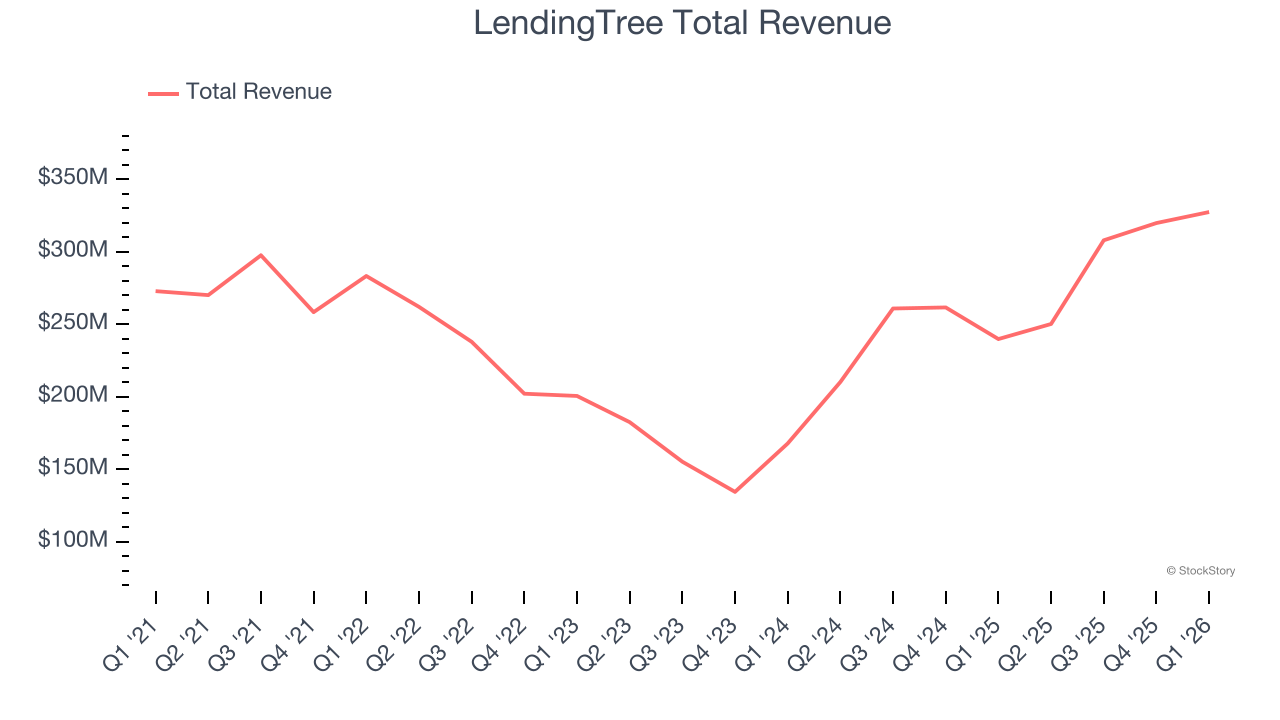
LendingTree delivered the fastest revenue growth and highest full-year guidance raise among its peers. Although it had a fine quarter compared to its peers, the market seems unhappy with the results as the stock is down 20.2% since reporting. It currently trades at $39.58.
Is now the time to buy LendingTree? Access our full analysis of the earnings results here, it’s free.
Slowest Q1: Coinbase (NASDAQ: COIN)
Widely regarded as the face of crypto, Coinbase (NASDAQ: COIN) is a blockchain infrastructure company updating the financial system with its trading, staking, stablecoin, and other payment solutions.
Coinbase reported revenues of $1.41 billion, down 29.7% year on year, falling short of analysts’ expectations by 6.3%. It was a disappointing quarter as it posted a significant miss of analysts’ revenue and EBITDA estimates.
Coinbase delivered the weakest performance against analyst estimates and slowest revenue growth in the group. As expected, the stock is down 5.9% since the results and currently trades at $181.55.
Read our full analysis of Coinbase’s results here.
Robinhood (NASDAQ: HOOD)
With a mission to democratize finance, Robinhood (NASDAQ: HOOD) is an online consumer finance platform known for its commission-free stock and crypto trading.
Robinhood reported revenues of $1.07 billion, up 15.1% year on year. This result came in 5.3% below analysts’ expectations. Overall, it was a disappointing quarter as it also recorded a significant miss of analysts’ revenue and EBITDA estimates.
The company reported 27.4 million users, up 6.2% year on year. The stock is up 9.9% since reporting and currently trades at $90.20.
Read our full, actionable report on Robinhood here, it’s free.
Market Update
Late in 2025 into early 2026, there was hand-wringing around artificial intelligence. For software companies, the fear was that AI would erode pricing power and compress margins as new tools made it easier to replicate what once required expensive enterprise platforms. Crypto investors had their own version of the same anxiety: if AI agents could trade, allocate capital, and manage wallets autonomously, what exactly was the long-term value of today’s crypto infrastructure?
These concerns triggered a noticeable rotation away from these sectors and into safer havens. But markets rarely dwell on one narrative for long. Spring 2026 came, and the focus shifted abruptly from technological disruption to geopolitical risk. The US’ conflict with Iran became the dominant driver of market psychology, and when geopolitics takes center stage, the script changes quickly. Investors stop debating growth rates and start worrying about oil supply, inflation, and global stability.
Want to invest in winners with rock-solid fundamentals? Check out our Top 5 Growth Stocks and add them to your watchlist. These companies are poised for growth regardless of the political or macroeconomic climate.
StockStory’s analyst team — all seasoned professional investors — uses quantitative analysis and automation to deliver market-beating insights faster and with higher quality.