DALLAS - October 16, 2026 (NEWMEDIAWIRE) - When cardiac arrest happens, the best chance for survival often rests with the people nearby. Yet 2 in 3 people still mistakenly believe only those with special training should perform CPR, a misconception that costs lives.[1] Today, on World Restart a Heart Day, the American Heart Association's Nation of Lifesavers™ initiative is challenging communities everywhere to make lifesaving action a social norm by helping more people realize they have the power and ability to step in during a cardiac emergency. You don't need to be a medical professional; you just need to be willing. If you see a teen or adult who has suddenly collapsed and is not breathing normally, call 911 and push hard and fast in the center of the chest until help arrives.
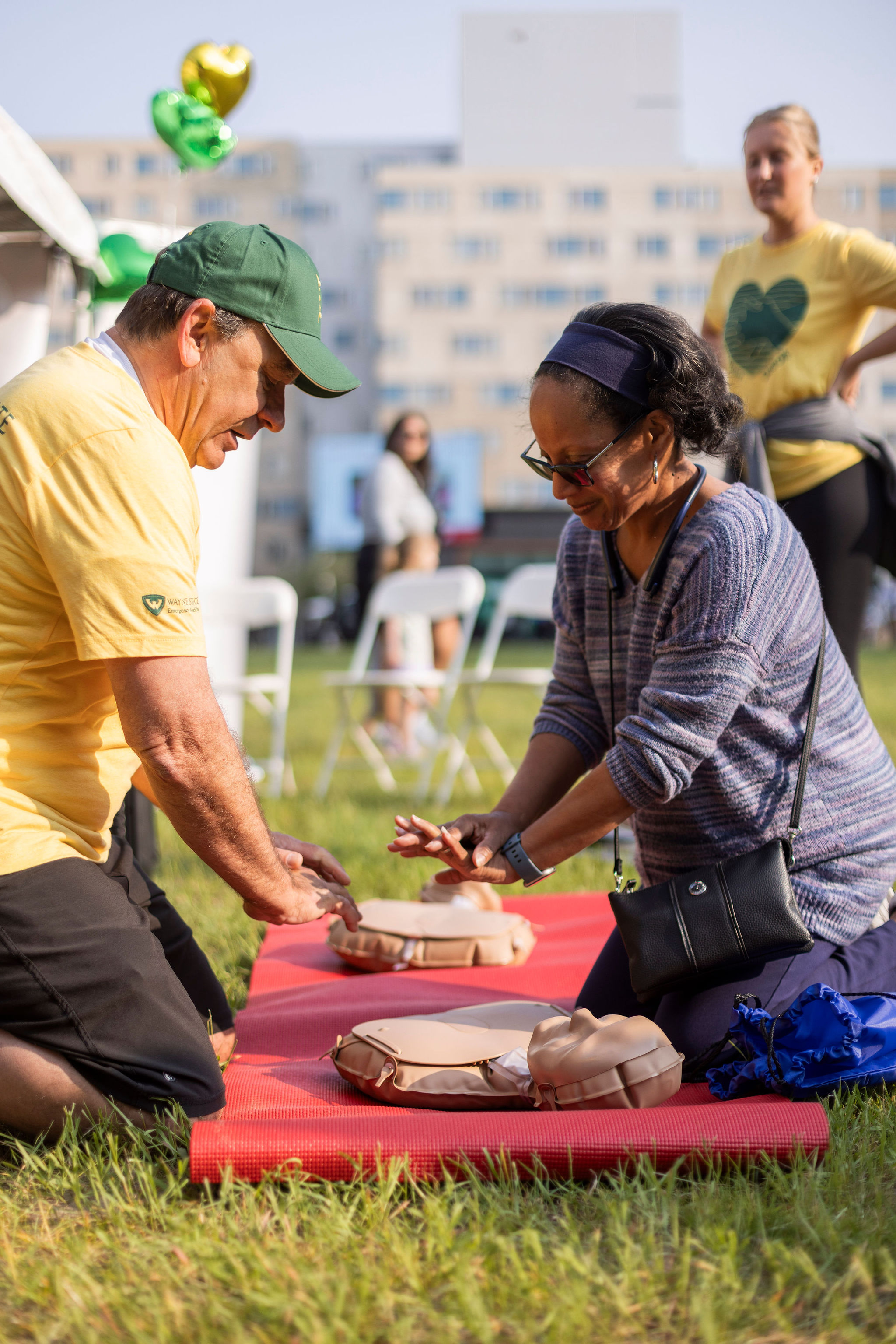
Each year, more than 350,000 cardiac arrests occur outside of the hospital in the United States, and approximately 90% of people who experience these events do not survive.[2] Survival often depends on how quickly people nearby recognize the emergency, call 911, begin CPR and use an automated external defibrillator (AED)[3].
"Too many people hesitate during a cardiac emergency because they believe lifesaving action should be left to medical professionals," said Manesh R. Patel, M.D., FAHA, volunteer president of the American Heart Association, chief of cardiology and pharmacology at Duke University School of Medicine. "World Restart a Heart Day is a reminder that parents, neighbors, coworkers, friends and family members are often the first people on the scene. We want to create a culture where everyone has the best chance to survive because everyone is prepared - and confident - to step in and provide CPR.”
The American Heart Association, a relentless force changing the future of health for everyone everywhere, is encouraging communities to join the Nation of Lifesavers on World Restart a Heart Day and create a culture where everyone has the best chance of survival.
- Learn CPR. Watch a short CPR demonstration video or take a CPR course to gain the skills and confidence to act during an emergency. CPR is not just a skill for medical professionals. Research shows that children as young as 9 can learn CPR, making it a valuable skill for the whole family[4]
- Share CPR stories. Stories from survivors, rescuers and families affected by sudden cardiac arrest can inspire others to learn CPR. The Nation of Lifesavers CPR Storytelling Platform showcases CPR stories and demonstrates the difference one person can make. Share your own CPR story and apply to be a part of the 2027 Nation of Lifesavers Class, a group of survivors and rescuers, committed to sharing their stories and raising awareness.
- Advocate for a Cardiac Emergency Response Plan (or CERP). Every workplace, school, sports facility and community organization should be prepared for a cardiac emergency. A CERP is a written and practiced site-specific plan that outlines exactly how an organization should respond during a cardiac emergency. CERPs help ensure staff and volunteers know their roles, understand how to activate emergency medical services, begin CPR and access an AED quickly.
- Make CPR part of your community’s culture by sharing resources and volunteering with friends, family and coworkers. Encouraging others to learn CPR and understand how to use an AED helps create communities where more people are ready to respond when needed.
Each year World Restart a Heart Day reinforces the American Heart Association's vision of creating communities where lifesaving skills and preparedness are the norm. The long-term goal of the Nation of Lifesavers initiative is to ensure that in the face of a cardiac emergency, anyone, anywhere, is prepared and empowered to perform CPR. Walgreens is a proud national sponsor of Nation of Lifesavers. To learn CPR and join the Nation of Lifesavers, visit heart.org/nation.
Additional Resources:
- Downloadable B-roll, photos and infographics are available on the right column of this release link.
- 2025 CPR Guidelines Highlights
- Visit heart.org/nation to learn CPR.
- Join American Heart Association Heart Powered national grassroots network, which brings together people to share their personal stories in support of public policies that improve lives and create healthier communities at heartpowered.org/cerps
- Bystander CPR | Bystander CPR Infographic (PDF)
- Hands-Only CPR Resources
- Hands-Only CPR vs CPR with Breaths
- Women and CPR
- Cardiac Arrest vs. Heart Attack
- Reducing Disparities for Out-of-Hospital Cardiac Arrest – Community Toolkit: English and Spanish versions available
- Take 90 seconds to learn how to save a life at www.heart.org/HandsOnlyCPR.
About the American Heart Association
The American Heart Association is a relentless force for a world of longer, healthier lives. Dedicated to ensuring equitable health in all communities, the organization has been a leading source of health information for more than one hundred years. Supported by more than 35 million volunteers globally, we fund groundbreaking research, advocate for the public’s health, and provide critical resources to save and improve lives affected by cardiovascular disease and stroke. By driving breakthroughs and implementing proven solutions in science, policy, and care, we work tirelessly to advance health and transform lives every day. Connect with us on heart.org, Facebook, X or by calling 1-800-AHA-USA1.
For Media Inquiries: 214-706-1173
For Public Inquiries: 1-800-AHA-USA1 (242-8721)
heart.org and stroke.org
[1] American Heart Association Annual CPR Perceptions Survey. Available upon request.
[2] Martin, S. S., Aday, A. W., Allen, N. B., Almarzooq, Z. I., Anderson, C. A., Arora, P., Avery, C. L., Baker-Smith, C. M., Bansal, N., Beaton, A. Z., Commodore-Mensah, Y., Currie, M. E., Elkind, M. S., Fan, W., Generoso, G., Gibbs, B. B., Heard, D. G., Hiremath, S., Johansen, M. C., . . . Palaniappan, L. P. (2025). 2025 Heart Disease and Stroke Statistics: A report of US and global data from the American Heart Association. Circulation. https://doi.org/10.1161/cir.0000000000001303
[3] Del Rios M, Bartos JA, Panchal AR, Atkins DL, Cabañas JG, Cao D, Dainty KN, Dezfulian C, Donoghue AJ, Drennan IR, Elmer J, Hirsch KG, Idris AH, Joyner BL, Kamath-Rayne BD, Kleinman ME, Kurz MC, Lasa JJ, Lee HC, McBride ME, Raymond TT, Rittenberger, JC, Schexnayder SM, Szyld E, Topjian A, Wigginton JG, Previdi JK. Part 1: executive summary: 2025 American Heart Association Guidelines for Cardiopulmonary Resuscitation and Emergency Cardiovascular Care. Circulation. 2025;152(suppl):S284–S312. doi: 10.1161/CIR.0000000000001372
View the original release on www.newmediawire.com