As of March 4, 2026, the identity of Meta Platforms (NASDAQ: META) has undergone a fundamental transformation. Once defined primarily by its dominance in social media and a controversial pivot toward the "Metaverse," the company has now emerged as a global titan of industrial-scale artificial intelligence infrastructure. This shift was cemented by the company’s recent Q4 2025 earnings report and the subsequent 2026 capital expenditure (CapEx) guidance, which has sent shockwaves through Silicon Valley and Wall Street alike.
The immediate implication of Meta’s strategy is a massive consolidation of compute power. By aggressively scaling its physical data center footprint and doubling down on custom silicon, Meta is attempting to insulate itself from the volatile GPU supply chain while simultaneously building the "foundational engine" for the next decade of digital commerce. However, the sheer scale of this investment—now rivaling the GDP of mid-sized nations—has left investors divided: is this a visionary land grab for Artificial General Intelligence (AGI), or a repeat of the overextended spending that plagued the company during its early VR forays?
The Road to Prometheus: Scaling Beyond the Cloud
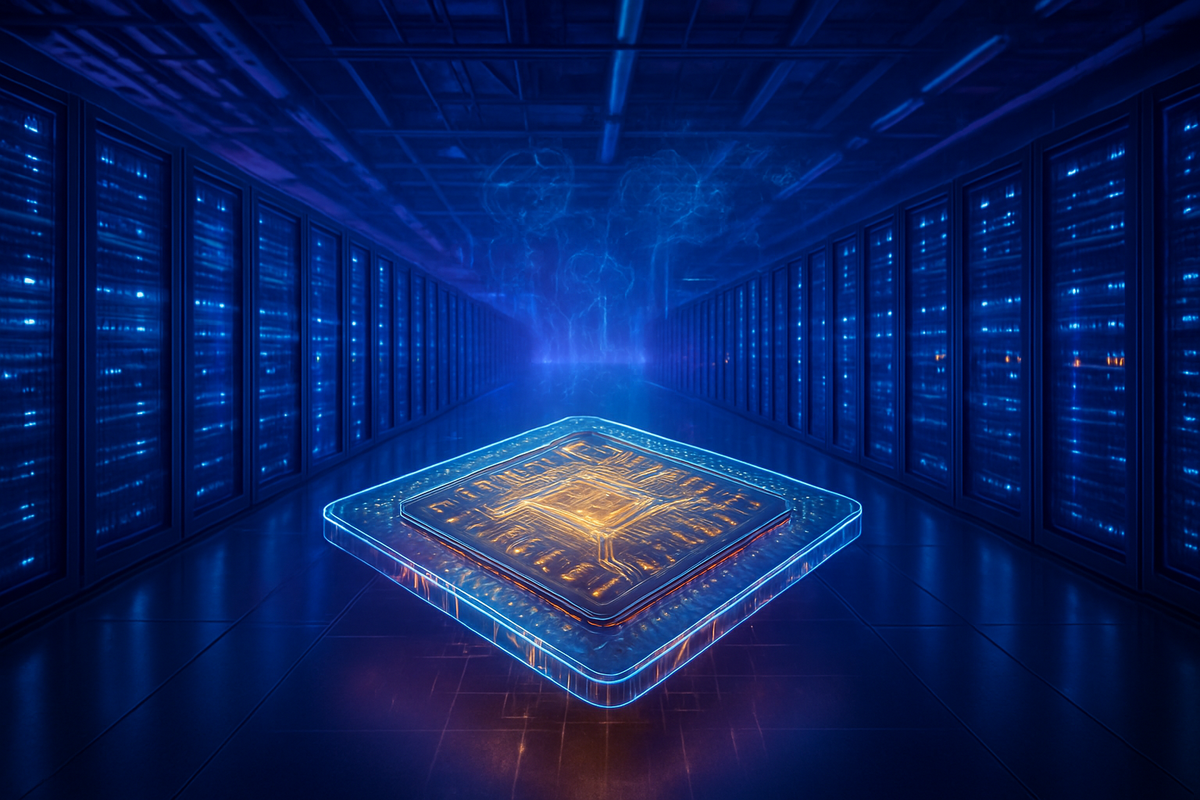
In the first two months of 2026, Meta Platforms (NASDAQ: META) officially moved its "Prometheus" supercluster into the operational phase. Prometheus represents a paradigm shift in data center engineering; it is the world’s first 1-gigawatt (GW) AI facility, utilizing a decentralized "tent-and-modular" construction approach that allowed Meta to bypass the multi-year lead times typically associated with traditional concrete-and-steel data centers. This facility houses hundreds of thousands of interconnected chips, including the latest NVIDIA (NASDAQ: NVDA) Blackwell B200 units and Meta’s own proprietary hardware.
The timeline leading to this moment began in early 2025 with the release of the Llama 4 model family. Built on a sophisticated Mixture-of-Experts (MoE) architecture, Llama 4 required a level of compute density that existing commercial clouds could not provide at an efficient price point. This necessitated the rapid deployment of the Meta Training and Inference Accelerator (MTIA) v3, internally codenamed "Iris." Built on Taiwan Semiconductor’s (NYSE: TSM) cutting-edge 3nm process, Iris is Meta’s custom answer to the "TPU" (Tensor Processing Unit) model pioneered by Google. While Meta continues to rent Google’s (NASDAQ: GOOGL) custom TPUs for specific training redundancies, the MTIA v3 now handles over 60% of Meta’s internal inference workloads, significantly reducing the company's per-token operating costs.
Market reaction has been surprisingly buoyant. Following the January 28, 2026, earnings call, Meta’s stock surged 10.4%, adding over $150 billion in market value in a single trading session. Investors were won over not just by the technology, but by the "Advantage+ Suite"—Meta’s AI-driven advertising platform—which reached a $20 billion annual run rate this quarter. The data is clear: advertisers using Meta’s AI-generated creative tools saw a 22% average lift in return on ad spend (ROAS), providing the "proof of concept" Wall Street demanded before blessing the company's massive spending.
Winners and Losers in the AI Arms Race
The primary winner in this current cycle remains Meta Platforms (NASDAQ: META) itself, which has successfully pivoted its revenue base. While social media advertising still provides the cash flow, the company is increasingly viewed as an "AI-as-a-Service" powerhouse. By open-sourcing its Llama models while keeping the underlying "Prometheus" infrastructure proprietary, Meta has effectively made its ecosystem the default for developers worldwide.
NVIDIA (NASDAQ: NVDA) occupies a complex position. While Meta remains one of NVIDIA’s largest customers, the deepening focus on custom MTIA silicon signals a long-term threat to NVIDIA’s high-margin enterprise dominance. Conversely, Taiwan Semiconductor Manufacturing Company (NYSE: TSM) is a clear beneficiary, as it manufactures both NVIDIA’s GPUs and Meta’s custom Iris chips. Additionally, Arista Networks (NYSE: ANET) has seen its stock perform strongly as Meta’s gigawatt-scale clusters require unprecedented levels of high-speed networking and switching equipment to prevent data bottlenecks.
On the losing end are legacy software-as-a-service (SaaS) companies that have been slow to integrate generative AI. As Meta’s "AI Agents" begin to handle customer service and sales directly within WhatsApp and Messenger, the need for third-party CRM and help-desk software is diminishing for small-to-medium businesses. Furthermore, traditional cloud providers like Amazon (NASDAQ: AMZN) may face pressure as Meta proves that the largest tech firms can—and perhaps should—build their own specialized "sovereign" AI clouds rather than renting general-purpose compute.
A New Industrial Revolution: The Significance of Gigawatt Compute
Meta’s strategy fits into a broader industry trend where "compute" is being treated as the new oil. The shift from megawatt to gigawatt facilities marks the transition of AI from a software feature to a heavy-industry utility. Meta’s willingness to spend $115–$135 billion in CapEx for 2026 sets a new "entry fee" for any company aspiring to build frontier models. This effectively narrows the field of competitors to a handful of "Hyper-Scalers," potentially triggering future regulatory scrutiny regarding digital monopolies and energy consumption.
Historically, this resembles the railroad booms of the 19th century or the fiber-optic build-out of the late 1990s. While those eras were marked by periods of overcapacity and market corrections, they also laid the physical foundations for the modern economy. Meta is betting that the "compute overcapacity" of 2026 will be seen as a visionary investment by 2030. The ripple effects are already being felt in the energy sector, as Meta enters multi-billion dollar agreements with nuclear energy providers to power its Prometheus and the upcoming 5-GW "Hyperion" clusters.
What’s Next: The Era of AGI Agents
In the short term, Meta is expected to launch "Llama 4 Behemoth," a 2-trillion-parameter model that will serve as the "brain" for a new generation of autonomous AI agents. These agents will not just answer questions but will be capable of executing complex multi-step tasks—such as managing a business’s entire supply chain or negotiating ad placements across different platforms. This represents a strategic pivot from "content consumption" (the newsfeed) to "utility and action."
The long-term challenge for Meta will be navigating the transition from a 3nm silicon architecture to the next frontier of 2nm and beyond. The "Santa Barbara" (MTIA v4) chip is already in the sampling phase for late 2026, promising integrated HBM4 memory. However, the market will eventually demand a shift from "growth at any cost" to "efficiency and dividends." If the AI agents fail to monetize at the same rate as the current advertising business, Meta could find itself holding the world's most expensive collection of specialized silicon with no way to pay for its power bill.
The Investor’s Verdict: A High-Stakes Execution
Meta’s deepening AI push is the most ambitious corporate transformation in modern history. By moving past the "Year of Efficiency" and into the "Epoch of Execution," Mark Zuckerberg has positioned Meta as the primary challenger to the Google-Microsoft-OpenAI triumvirate. The successful integration of Llama 4 into the "Family of Apps" has proven that Meta can turn AI research into immediate, bottom-line advertising revenue.
However, the road ahead is paved with capital-intensive hurdles. Investors should closely watch the "CapEx-to-Revenue" ratio in the coming quarters. If Meta can maintain its operating margins while spending over $100 billion a year on infrastructure, it will have achieved a feat of financial engineering as impressive as the AI itself. For now, Meta is no longer just a "Like" button; it is an industrial AI powerhouse building the machinery of the future.
This content is intended for informational purposes only and is not financial advice.