Los Angeles, CA, April 14, 2026 (GLOBE NEWSWIRE) -- The demand for AI compute is surging, but the bottleneck is no longer chips, it's the power required to run them. Orbital was founded on the belief that the only way to scale compute and unlock future progress on artificial intelligence is to stop competing for power on Earth and generate it in orbit.
Today, the company announced funding from a16z Speedrun to support Orbital-1, the company’s first test mission on its aim of deploying data centers in space. "Speedrun backs founders to explore ambitious ideas — the harder the problem, the better," said Andrew Chen, General Partner, a16z speedrun. "Orbital is taking on AI's biggest constraint with a bold and radical idea."
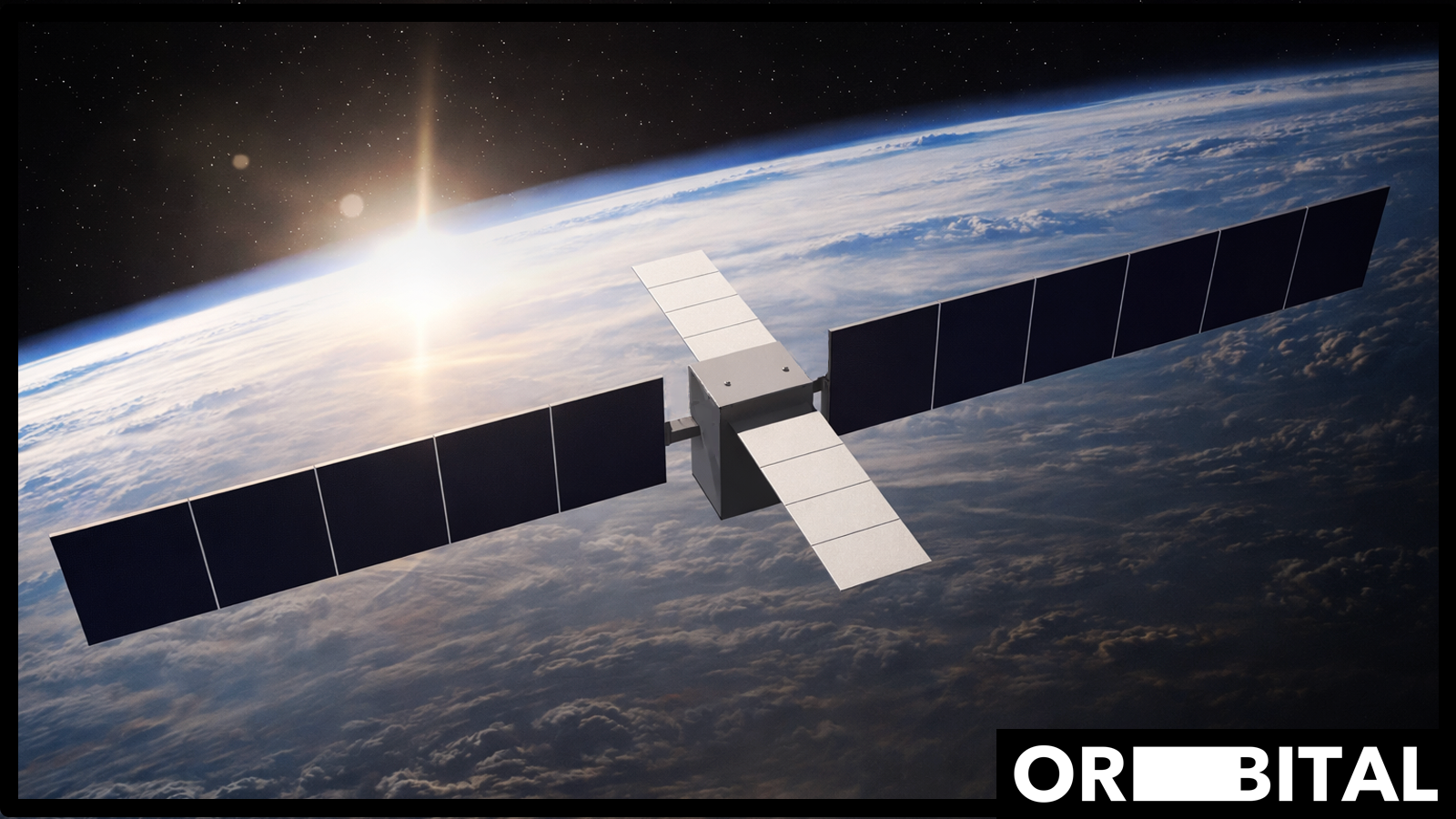
Orbital is designing and manufacturing a constellation of satellites to operate in low Earth orbit, each housing a cluster of NVIDIA-powered servers. Each satellite is powered by solar arrays and cooled by radiating heat directly into space. In orbit, solar power is available 24/7 in sun-synchronous orbit and stronger, with no weather, no night, and no dependence on the power grid.

“AI progress is being constrained by the grid,” said Euwyn Poon, CEO and founder of Orbital. “Data center economics are dominated by electricity and cooling, and both are getting harder. In orbit, solar power is continuous and cooling is fundamentally different. Orbital is building compute infrastructure that removes the energy ceiling and scales with AI's potential.”
Orbital's compute infrastructure is designed around a specific technical insight. Training large AI models requires thousands of GPUs tightly coupled, communicating at near-zero latency. That architecture does not translate to satellites. Inference is different. Each request is handled independently, and capacity can be distributed across many nodes. Orbital is focused on inference, where orbital compute can scale as a constellation and serve workloads in parallel.
Orbital's first satellite, Orbital-1, is scheduled to launch on a SpaceX Falcon 9 in April 2027. Its primary goal is to validate sustained GPU operation in orbit, test radiation hardening, and run AI inference workloads commercially in space post-validation. The company is also in the process of filing with the FCC to deploy a constellation of satellites for orbital AI compute infrastructure.
Orbital was founded by Euwyn Poon, a Cornell-educated engineer and lawyer who previously founded Spin, the micromobility company acquired by Ford. At Spin, Poon built and deployed hundreds of thousands of small electric vehicles across 100 cities and scaled the business to over $100 million in revenue. After exiting Spin, he began investing in AI infrastructure and saw the impending constraint clearly. "The energy ceiling on AI isn't theoretical, it's a real constraint that will impede the advancement of intelligence," said Poon. "This is the solution."
Media images can be found here.
About Orbital
Orbital builds and operates GPU data centers in low Earth orbit. Each satellite houses a small cluster of NVIDIA Space-1 Vera Rubin GPUs, powered by solar arrays and cooled by radiating heat directly into space. The first satellite, Orbital-1, launches April 2027 on a SpaceX Falcon 9. For more information please visit https://orbital.inc/

For further information please contact the Orbital press office via Bilal Mahmood on b.mahmood@stockwoodstrategy.com or +447714007257