NCIC compliance is not a one-time checkbox. It is a daily discipline built into how operators enter data, how access is granted, and how records are reviewed. Most compliance problems agencies run into do not come from a single dramatic failure. They come from small, repeated mistakes in routine work that add up over time and surface during an audit.
This article covers the mistakes agencies make most often, why they create real compliance risk, and how the right database access platform helps reduce them before they become a problem.
Understanding NCIC Compliance Requirements
NCIC compliance refers to the operational and security requirements agencies must follow when accessing and managing data through the National Crime Information Center. These requirements cover who can access the system, how records are entered and validated, how long data is retained, and how activity is logged for review.
These requirements sit within the broader CJIS Security Policy, but NCIC-specific compliance focuses on the practical, day-to-day mechanics of using the system correctly: accurate entries, proper authorization checks, and complete records of who did what and when.
For most agencies, these requirements are not unfamiliar. They are introduced during initial operator certification and reinforced through periodic training. The difficulty is less about understanding the rules and more about applying them consistently across every shift, every operator, and every record, week after week.
Why NCIC Compliance Is Critical for Law Enforcement Agencies
NCIC holds sensitive criminal justice information, including records on wanted persons, stolen property, and protection orders. Errors in this data do not stay contained. An inaccurate entry can lead to a wrongful stop, a missed alert, or a delayed response in the field.
Beyond the operational impact, non-compliance carries real consequences for agencies: audit findings, required corrective action plans, and in serious cases, restricted access to the system itself. Maintaining compliance protects both the integrity of the data and the agency's ability to keep using it.
There is also a resource cost to non-compliance that is easy to overlook. Correcting audit findings after the fact, retraining staff, and rebuilding missing documentation all take time away from an agency's core work. Preventing these issues is almost always less costly than resolving them after an audit has already flagged them.
Most Common NCIC Compliance Mistakes
Most compliance issues fall into three recurring categories. Individually, each may look minor. Together, they are usually what auditors flag first.
Data Entry and Validation Errors
Incomplete records, mismatched identifiers, and missing validation steps are among the most common issues found during NCIC record reviews. A record entered without required fields, or one that is never revalidated within the required timeframe, can sit incorrectly in the system for months before anyone notices. These errors are rarely intentional. They usually happen because entry and validation steps depend entirely on an operator remembering to complete them manually.
The problem tends to compound during high-volume periods. When an operator is handling several entries in quick succession, a manual validation step is the easiest thing to skip, especially if the system does not flag the omission at the point of entry.
Access Control and User Permission Issues
NCIC access is meant to be limited to authorized, certified personnel, with permissions matched to their specific role. In practice, agencies sometimes find that access has not been updated after a personnel change, that a former employee's credentials are still active, or that a user has broader access than their role requires. These gaps are often not caught until an audit specifically asks for a current access list.
Turnover is usually the underlying cause. When offboarding and role changes are handled manually across separate systems, updating database access is easy to overlook, particularly if it is not built into a standard checklist alongside other offboarding steps like returning equipment or disabling email. The same applies to role changes that do not involve someone leaving the agency at all. An operator moving to a different assignment may retain access levels that no longer match their current responsibilities, simply because no one was specifically tasked with adjusting the permission.
Audit Trail and Record Management Challenges
Every NCIC transaction should leave a clear, retrievable record of who accessed the system, what they searched or entered, and when. When logging is inconsistent, or when records are not retained for the required period, agencies can struggle to reconstruct activity during an audit or after an incident. This is one of the most common gaps auditors identify, largely because it is invisible during normal operations and only becomes apparent when the trail is actually needed.
Agencies relying on multiple disconnected systems for database access often face a related problem: even when logging exists, it is scattered across platforms, making it harder to produce a single, coherent record of activity when an audit or investigation calls for one.
The Compliance Risk Behind These Mistakes
These three categories are connected. A data entry error is harder to catch without strong validation controls. A permissions gap is harder to detect without a clear audit trail. And an incomplete audit trail makes it difficult to prove, after the fact, that entry and access procedures were actually followed.
This is why compliance mistakes tend to compound rather than stay isolated. An agency that struggles with one of these areas is often struggling with the underlying systems and habits that support all three, which is exactly what audits are designed to surface.
The risk is not evenly distributed either. A single outdated permission or one unvalidated record may not trigger any noticeable problem on its own. But auditors are specifically trained to look for patterns, and a handful of small issues across data entry, access, and logging is usually read as a sign of a broader process gap rather than a series of unrelated mistakes.
How Portal XL Supports NCIC Compliance
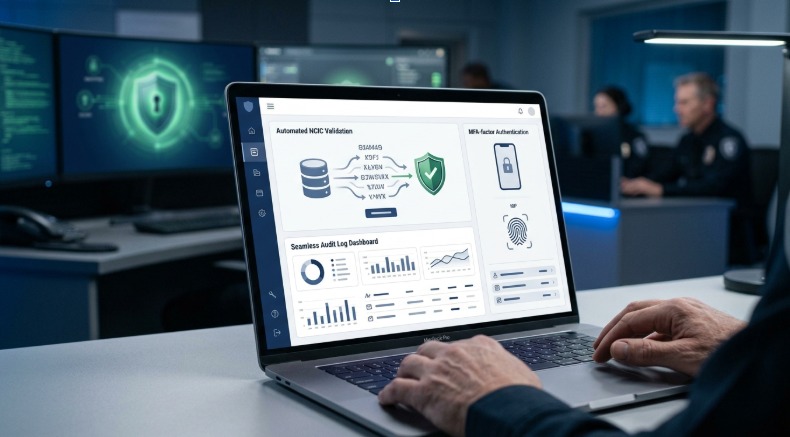
Portal XL is built around the same three areas where compliance mistakes most often occur: data entry, access control, and audit visibility. Rather than relying solely on an operator to remember every required step, the platform is structured to make the correct process the default one.
This matters most during the everyday moments that rarely get attention until an audit is underway: a busy shift where a validation step could easily be skipped, a personnel change where access needs to be updated quickly, or a records request where an agency needs to show exactly who accessed a given record and when. Portal XL is designed so these moments do not depend entirely on an individual operator remembering every step correctly.
Key Features That Help Reduce Compliance Risks
Built-in validation prompts. Required fields and formatting checks reduce the chance of an incomplete or malformed record being entered.
Role-based access control. Permissions are tied to certified roles, making it easier to see, at any point, exactly who has access and at what level.
Consistent audit logging. Every search, entry, and access event is recorded automatically, creating a retrievable trail without relying on manual documentation.
Secure, browser-based access. A zero-footprint architecture reduces the number of local access points and credentials an agency needs to track and manage.
Best Practices for Maintaining Ongoing Compliance
Technology helps close the gaps described above, but ongoing compliance still depends on consistent agency practices. Reviewing user access on a regular schedule, rather than only after a personnel change, catches permission gaps earlier. Periodic internal record reviews, separate from formal audits, help identify data entry issues while they are still easy to correct.
Keeping certification status current for all operators, and building brief refresher checks into regular training, keeps compliance a habit rather than a once-a-year concern. It also helps to assign clear ownership of compliance tasks. When access reviews and record checks are someone's specific, recurring responsibility rather than a shared, informal duty, they are far less likely to be missed.
Finally, treating audit preparation as an ongoing process rather than a pre-audit scramble makes the biggest long-term difference. Agencies that review their own access lists, records, and logs on a regular cadence are rarely surprised by what a formal audit finds.
Conclusion
Most NCIC compliance issues are not the result of one major failure. They build up from small, repeated gaps in data entry, access control, and audit documentation. Closing those gaps starts with the systems agencies use every day. Portal XL is built to make the correct process the default one, so compliance depends less on any single operator remembering every step and more on a system designed around it from the start.
FAQ
What are the most common NCIC compliance mistakes?
The most common mistakes fall into three areas: data entry and validation errors, access control and permission issues, and gaps in audit trail or record management. These often occur together rather than in isolation.
How can law enforcement agencies improve NCIC compliance?
Agencies can improve compliance by using systems with built-in validation and role-based access controls, reviewing user permissions regularly, and conducting periodic internal record reviews rather than waiting for formal audits.
What role does Portal XL play in supporting NCIC compliance?
Portal XL supports compliance through built-in data validation, role-based access control, automatic audit logging, and secure browser-based access, reducing reliance on manual steps that are easy to miss.
How can agencies reduce NCIC compliance risks?
Reducing risk starts with addressing the three most common mistake categories directly: tightening data validation at entry, keeping access permissions current, and ensuring every transaction is logged and retrievable for audit purposes.
What are the best practices for maintaining NCIC compliance?
Best practices include scheduled access reviews, periodic internal audits of records, keeping operator certifications current, and building compliance checks into ongoing training rather than treating it as a one-time requirement.