During the golden autumn season, the White-Feather Broiler Deep Processing Industrial Park in Zhengshan Subdistrict, Linshu County, Linyi, Shandong Province, is bustling with activity, with machinery roaring and construction work in full swing. Covering a planned area of 380 mu (approximately 25.3 hectares), the park aims to establish a “1+N” industrial system centered on advanced processing and extending into related sectors such as pet food, packaging, logistics, and e-commerce. The plan includes 180,000 square meters of customized, two-story factory buildings, with tenant companies expected to move in and production to begin in the second half of the year. The project is a vivid example of Linshu County’s efforts to strengthen its food processing industry chain.
Linshu County has moved beyond the constraints of township administrative boundaries to optimize the spatial layout of industries across the county. It has coordinated the development of key industrial chains in chemicals and fertilizers, equipment manufacturing, food processing, new energy and new materials, home furnishings and willow weaving, and modern light industry. Specialized industrial parks have been developed to support these sectors, each with a clearly defined role and distinctive development focus, fostering an industrial ecosystem characterized by complementary strengths, differentiated development, and coordinated progress. At the same time, the county has moved away from the traditional “build first, attract businesses later” approach, instead offering customized facilities tailored to industrial needs. Supporting infrastructure is developed in advance according to supply chain requirements, while the economic development zone is expanded and upgraded with room reserved for future industrial chain growth. A “leasing + customization + pre-investment promotion” model for standardized factory buildings has also been introduced, effectively shortening the time required for projects to become operational.
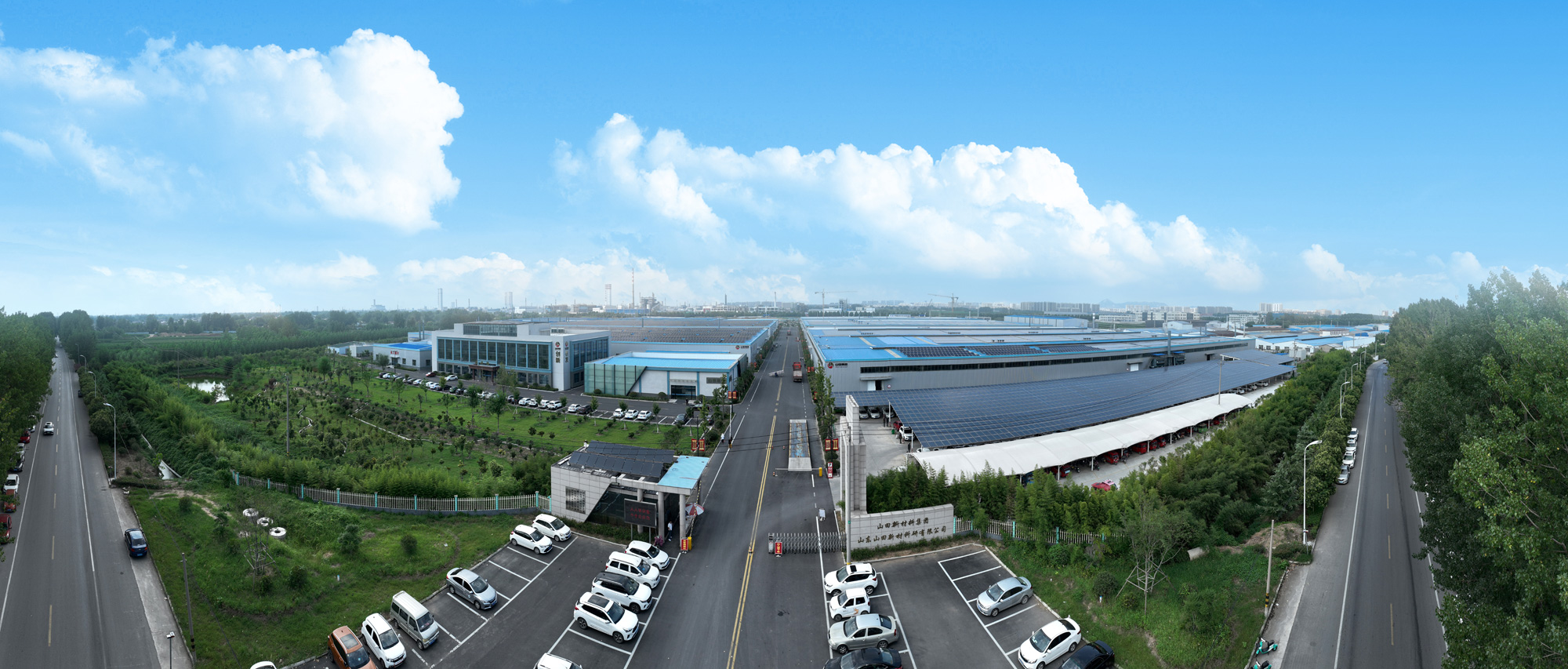
Linshu is committed to innovation-driven development and has established a collaborative innovation mechanism built around the principles of “industry leaders set the agenda, multiple stakeholders jointly develop solutions, industrial parks provide the platform, and resources are shared openly.” Leveraging leading enterprises such as Shantian Group, Jinyimeng, and Kingenta, the county is establishing industrial research institutes and technological innovation centers to tackle critical, shared technological bottlenecks across industrial chains. A science and technology innovation center covering 100,000 square meters, backed by a total investment of RMB 350 million, is nearing completion and is expected to become operational soon. The center will be managed by professional operators and equipped with shared laboratories and pilot-scale production workshops, providing robust support for industrial upgrading and the commercialization of scientific and technological achievements.
In recent years, Linshu County has consistently pursued its strategy of “strengthening the county through advanced industry and establishing the county through innovation.” With “industrial park–supply chain coordination and integration of industry and innovation” as its core approach, the county is developing specialized industrial parks and cultivating key industrial chains. These efforts address persistent challenges such as scattered industrial development, homogeneous industrial parks, and short supply chains, while driving a shift from extensive industrial clustering to intensive, efficient development, and from isolated breakthroughs to the growth of integrated industrial clusters.
To promote targeted investment attraction and more precise industrial planning, the county has brought together nine government departments to form a dedicated task force for industrial park and supply chain integration. The task force has developed a set of “four maps and five lists” for key industrial chains. The four maps illustrate industrial chains, technology roadmaps, application fields, and regional distribution, while the five lists identify enterprises, projects, industrial clusters, challenges, and policy measures. Together, these tools form a dynamic, visual industrial planning and management platform. The county has also established strict entry criteria for industrial parks and introduced a two-way assessment mechanism linking industrial parks with supply chains, shifting the focus from simply attracting investment to selecting suitable businesses and building stronger industrial chains. Since the beginning of 2025, a total of 31 projects associated with industrial chains have been launched across the county, with planned investment totaling RMB 15.85 billion. More than 90% of these are high-quality projects supporting the region’s industrial chains.