As of April 2, 2026, the landscape of the American energy sector has undergone a seismic shift, driven by a wave of consolidation that has transformed the Permian Basin into a domain of titans. At the center of this transformation is Diamondback Energy, Inc. (NASDAQ: FANG), a company that has evolved from a small, private-equity-backed upstart into the premier independent "pure-play" operator in the United States. Following its landmark $26 billion acquisition of Endeavor Energy Resources in late 2024, Diamondback has entered a new era of scale, efficiency, and shareholder-focused capital allocation. This feature explores how Diamondback is navigating the complexities of the 2026 energy market, its leadership transition, and its status as a bellwether for the Permian Basin.
Historical Background
Founded in December 2007 in Midland, Texas, Diamondback Energy began its journey as a venture backed by Wexford Capital. From its inception, the company’s strategy was unconventional: a singular, "pure-play" focus on the Permian Basin at a time when many peers were diversifying globally. Diamondback went public on the NASDAQ on October 12, 2012, under the ticker "FANG"—a name that originally referenced the tooth of a rattlesnake, echoing the rugged West Texas environment.
The company’s history is defined by a series of high-stakes, "acquire and exploit" maneuvers. Key milestones include the $9.2 billion acquisition of Energen in 2018, which solidified its Midland Basin footprint, and the subsequent acquisitions of FireBird Energy and Lario Oil & Gas in early 2023. However, no event in the company’s history matches the scale of the September 2024 merger with Endeavor Energy Resources. This deal effectively turned the "last great independent" Permian operator into a juggernaut, doubling Diamondback’s inventory of high-quality drilling sites and securing its position as a dominant force in the lower 48.
Business Model
Diamondback’s business model is built on the principle of being a "low-cost manufacturer" of hydrocarbons. Unlike diversified supermajors, Diamondback operates exclusively within the Midland and Delaware Basins of the Permian. This geographic focus allows for immense logistical advantages, including shared infrastructure and a deep understanding of local geology.
The company generates revenue primarily through the sale of oil, natural gas, and natural gas liquids (NGLs). Following the Endeavor integration, Diamondback’s production capacity has surged to over 815,000 barrels of oil equivalent per day (boe/d). A critical component of its model is its ownership interest in Viper Energy, Inc. (NASDAQ: VNOM), which owns mineral and royalty interests. This structure provides Diamondback with a unique cash flow stream and a competitive advantage in land acquisition and management.
Stock Performance Overview
Diamondback’s stock performance has been a masterclass in cyclical resilience and growth. Over the past decade (2016–2026), the stock has delivered a total return of approximately 250%, significantly outperforming broader energy benchmarks.
- 1-Year Performance: In the past 12 months leading up to April 2026, FANG shares have risen roughly 28%. This outperformance was driven by the market’s realization that the synergies from the Endeavor merger—initially estimated at $550 million annually—were being realized faster than anticipated.
- 5-Year Performance: Long-term investors have seen a total return of approximately 242% since early 2021, a period characterized by the post-pandemic recovery in energy demand and Diamondback’s aggressive expansion.
- 10-Year Performance: Since 2016, a $10,000 investment would have grown into roughly $35,000, illustrating the company’s ability to compound value through multiple oil price cycles.
Financial Performance
In the fiscal year 2025, Diamondback reported a transformative financial profile. Total revenue reached approximately $15.0 billion, a record for the company, reflecting the full-year contribution of the Endeavor assets. While 2025 net margins were temporarily pressured by a $3.7 billion non-cash impairment related to year-end asset valuations in a moderate-price environment, the underlying cash flow generation remained robust.
The company’s debt profile is a key focus for 2026. Following the Endeavor deal, consolidated net debt stood at $14.6 billion. Management has been aggressive in using excess free cash flow to deleverage, with a long-term target of reaching sub-$10 billion in net debt. Crucially, Diamondback maintains a "fixed-plus-variable" dividend policy, committing to return at least 50% of free cash flow to shareholders. In February 2026, the company increased its annual base dividend to $4.20 per share, underscoring its commitment to capital discipline.
Leadership and Management
The year 2025 marked a significant leadership transition for Diamondback. Travis Stice, the long-time architect of the company’s growth, stepped down as CEO in May 2025 to become Executive Chairman. He was succeeded by Kaes Van’t Hof, the former President and CFO.
Van’t Hof is widely respected on Wall Street for his financial acumen and operational transparency. Under his leadership, the strategy has shifted from the "growth at all costs" era to a focus on "returns on capital." Van’t Hof’s management style is characterized by a "no-nonsense" approach to costs and a focus on maximizing the value of every molecule produced. The board of directors remains heavily aligned with shareholders, with executive compensation tightly linked to ESG goals and total shareholder returns.
Products, Services, and Innovations
While Diamondback is an oil and gas producer, it views itself as an industrial operator driven by technology. The company’s competitive edge lies in its "Simul-Frac" and "Trim-Frac" drilling techniques, which allow for the simultaneous completion of multiple wells, drastically reducing time-to-production and lowering breakeven costs.
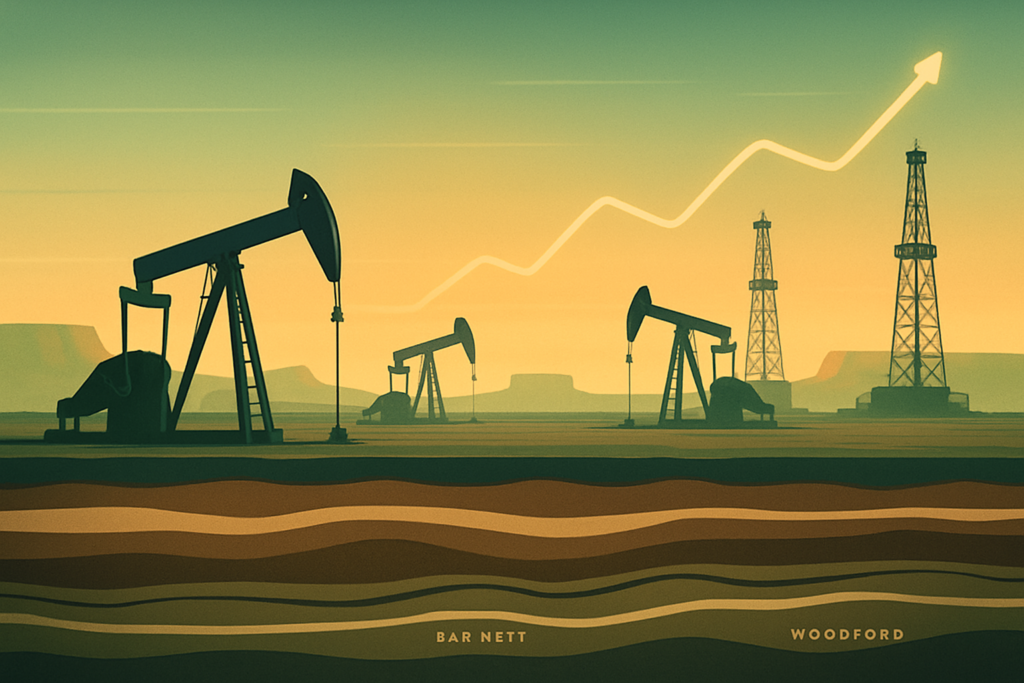
In 2026, Diamondback is increasingly focusing on "inventory depth" through innovation. The company has allocated over $100 million in 2026 to explore deeper shale layers, specifically the Barnett and Woodford formations in the Midland Basin. If successful, these "deeper zones" could add years of tier-1 drilling inventory to an already vast portfolio. Additionally, through its interest in midstream infrastructure, Diamondback has innovated in "produced water" recycling, significantly reducing its reliance on fresh water for hydraulic fracturing.
Competitive Landscape
Diamondback operates in the most competitive oil patch in the world. Its primary rivals are no longer small independents, but global giants. Following the massive consolidation of 2024, the "Big Three" of the Permian consist of:
- ExxonMobil (NYSE: XOM): Following its merger with Pioneer Natural Resources, Exxon is the largest producer in the basin.
- Chevron (NYSE: CVX): A dominant player with high capital efficiency and extensive midstream assets.
- Diamondback Energy (NASDAQ: FANG): Now the third-largest producer, maintaining an edge through its "pure-play" agility and lower overhead compared to the supermajors.
Occidental Petroleum (NYSE: OXY), following its CrownRock acquisition, also remains a fierce competitor for acreage and labor in the Midland Basin.
Industry and Market Trends
The Permian Basin in 2026 is defined by two major trends: consolidation and "gas takeaway" constraints. As the basin matures, the easy oil has been found, forcing operators to focus on operational efficiency and horizontal lateral lengths of three miles or more.
A macro driver for 2026 is the pricing at the Waha gas hub. Due to a surge in associated gas production and limited pipeline capacity, natural gas prices in the Permian have frequently turned negative. Diamondback has mitigated this by securing firm long-haul takeaway capacity, ensuring its gas reaches higher-priced markets on the Gulf Coast or in Mexico, a strategy that separates the winners from the losers in the current environment.
Risks and Challenges
Despite its strong position, Diamondback faces several headwinds:
- Commodity Price Volatility: Like all E&Ps, Diamondback is a price-taker. A global economic slowdown or an OPEC+ supply surge could compress margins.
- Regulatory Scrutiny: Federal methane regulations and state-level restrictions on produced water disposal (due to seismicity concerns) have increased compliance costs.
- Waha Basis Risk: Continued pipeline bottlenecks could force production curtailments if gas cannot be moved out of the basin.
- Inventory Quality: As the "best" zones are drilled, there is long-term concern about the productivity of secondary "Tier 2" acreage.
Opportunities and Catalysts
- Synergy Realization: Every dollar saved in the Endeavor integration flows directly to the bottom line. Analysts are watching for further "capital efficiency" beats in late 2026.
- Deleveraging: As the debt-to-EBITDA ratio falls toward 1.0x, the company is expected to pivot more aggressively toward share buybacks.
- Deeper Formations: Success in the Barnett and Woodford shales could trigger a significant re-rating of the stock as investors price in a longer production runway.
- M&A Potential: While currently a buyer, Diamondback’s high-quality asset base makes it a perpetual target for a supermajor looking to dominate the Permian.
Investor Sentiment and Analyst Coverage
Wall Street maintains a "Strong Buy" consensus on FANG. Analysts from firms like Mizuho, Citi, and Goldman Sachs have set price targets ranging from $190 to $230 for the 2026 fiscal year. Institutional ownership remains high, with major funds like BlackRock and Vanguard holding significant stakes, attracted by the company’s disciplined return of capital. Retail sentiment is generally positive, with Diamondback often cited in "dividend growth" and "energy value" forums as a top-tier pick for income-seeking investors.
Regulatory, Policy, and Geopolitical Factors
Geopolitical instability in 2026 has kept a floor under oil prices, benefiting Diamondback’s domestic operations. Domestically, the regulatory environment is a mix of challenge and opportunity. While the current administration has tightened methane standards, there is a growing recognition of the Permian’s role in global energy security. Diamondback’s ESG-linked compensation—where 25% of executive pay is tied to emissions and safety targets—has helped it navigate the regulatory landscape and maintain favor with ESG-conscious institutional investors.
Conclusion
Diamondback Energy (NASDAQ: FANG) stands in 2026 as a testament to the power of focus and disciplined execution. By remaining a pure-play Permian operator and successfully integrating the massive Endeavor acquisition, the company has secured a seat at the table with the world’s largest energy giants.
For investors, Diamondback offers a balanced proposition: the security of a massive, high-quality asset base combined with an aggressive shareholder return framework. While risks regarding gas pricing and regulatory shifts remain, the company’s low breakeven costs and superior inventory depth provide a significant margin of safety. As the Permian continues to consolidate, Diamondback’s role as the basin’s leading independent operator makes it a critical stock to watch for anyone tracking the future of American energy.
This content is intended for informational purposes only and is not financial advice.