Human capital management company Paychex (NASDAQ: PAYX) missed Wall Street’s revenue expectations in Q1 CY2026, but sales rose 16.1% year on year to $1.75 billion. Its non-GAAP profit of $1.71 per share was 2.3% above analysts’ consensus estimates.
Is now the time to buy Paychex? Find out by accessing our full research report, it’s free.
Paychex (PAYX) Q1 CY2026 Highlights:
- Revenue: $1.75 billion vs analyst estimates of $1.78 billion (16.1% year-on-year growth, 1.7% miss)
- Adjusted EPS: $1.71 vs analyst estimates of $1.67 (2.3% beat)
- Adjusted Operating Income: $863.2 million vs analyst estimates of $846.2 million (49.3% margin, 2% beat)
- Operating Margin: 45.2%, in line with the same quarter last year
- Free Cash Flow Margin: 43.5%, up from 24.6% in the previous quarter
- Market Capitalization: $32.53 billion
"This quarter, we delivered strong double-digit growth in revenue and operating income and accelerated our organic revenue growth, driven by effective execution and progress on our strategic priorities," stated John Gibson, President and Chief Executive Officer.
Company Overview
Once known as the go-to service for small business payroll needs, Paychex (NASDAQ: PAYX) provides payroll processing, HR services, employee benefits administration, and insurance solutions to small and medium-sized businesses.
Revenue Growth
A company’s long-term sales performance can indicate its overall quality. Any business can put up a good quarter or two, but many enduring ones grow for years. Unfortunately, Paychex’s 9.7% annualized revenue growth over the last five years was sluggish. This was below our standard for the software sector and is a poor baseline for our analysis.
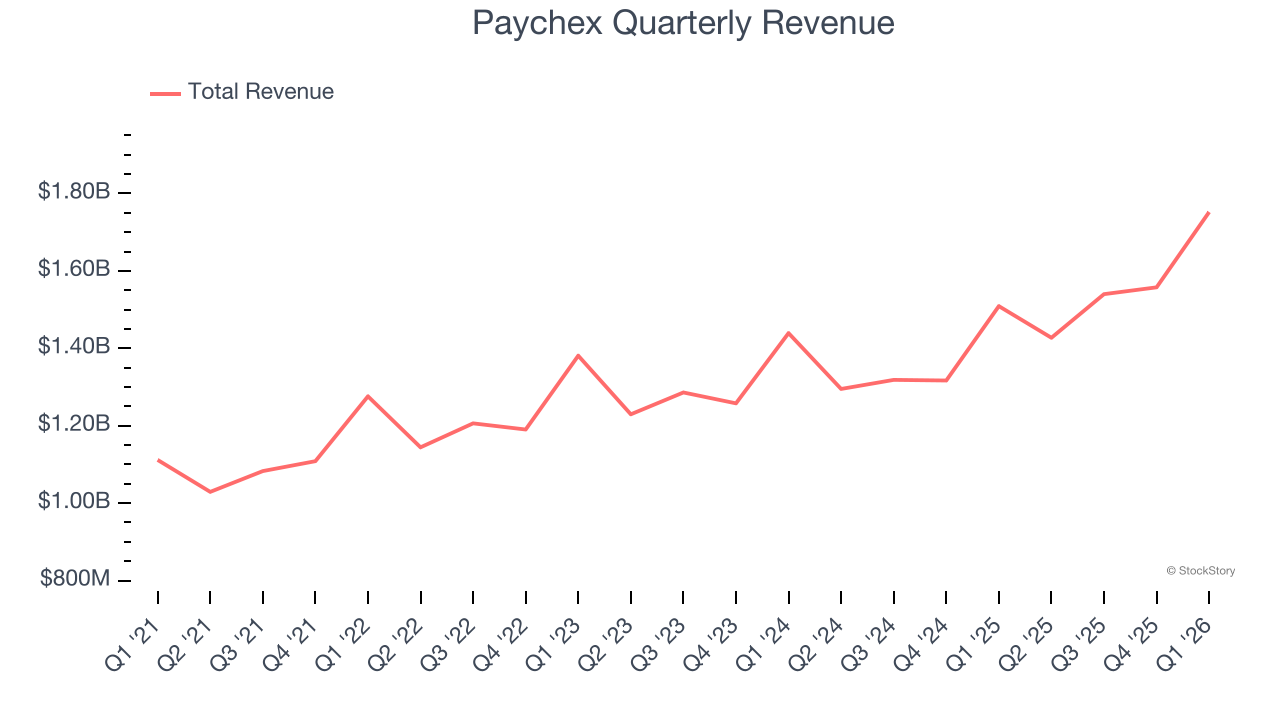
We at StockStory place the most emphasis on long-term growth, but within software, a half-decade historical view may miss recent innovations or disruptive industry trends. Paychex’s annualized revenue growth of 9.7% over the last two years aligns with its five-year trend, suggesting its demand was consistently weak. 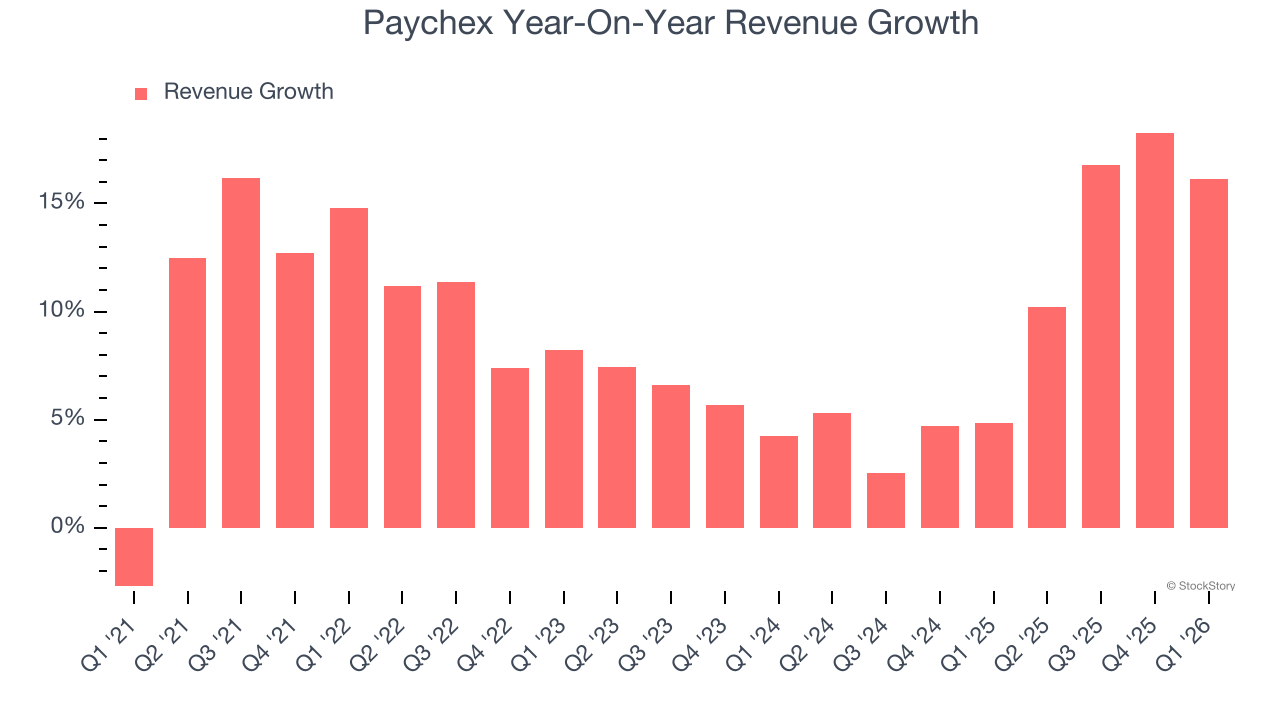
This quarter, Paychex’s revenue grew by 16.1% year on year to $1.75 billion but fell short of Wall Street’s estimates.
Looking ahead, sell-side analysts expect revenue to grow 7.7% over the next 12 months, a slight deceleration versus the last two years. This projection doesn't excite us and suggests its products and services will see some demand headwinds.
WHILE YOU’RE HERE: The Next Palantir? One satellite company captures images of every point on Earth. Every single day. The Pentagon wants it. Hedge funds are using it to beat earnings. You’ve probably never heard of it.
This is what the early days of Palantir looked like before it became a $437 billion giant. Same playbook. Different technology. If you missed Palantir, you need to see this. Claim The Stock Ticker for Free HERE.
Customer Acquisition Efficiency
The customer acquisition cost (CAC) payback period represents the months required to recover the cost of acquiring a new customer. Essentially, it’s the break-even point for sales and marketing investments. A shorter CAC payback period is ideal, as it implies better returns on investment and business scalability.
It’s relatively expensive for Paychex to acquire new customers as its CAC payback period checked in at 56.4 months this quarter. The company’s slow recovery of its sales and marketing expenses indicates it operates in a highly competitive market and must invest to stand out, even if the return on that investment is low. 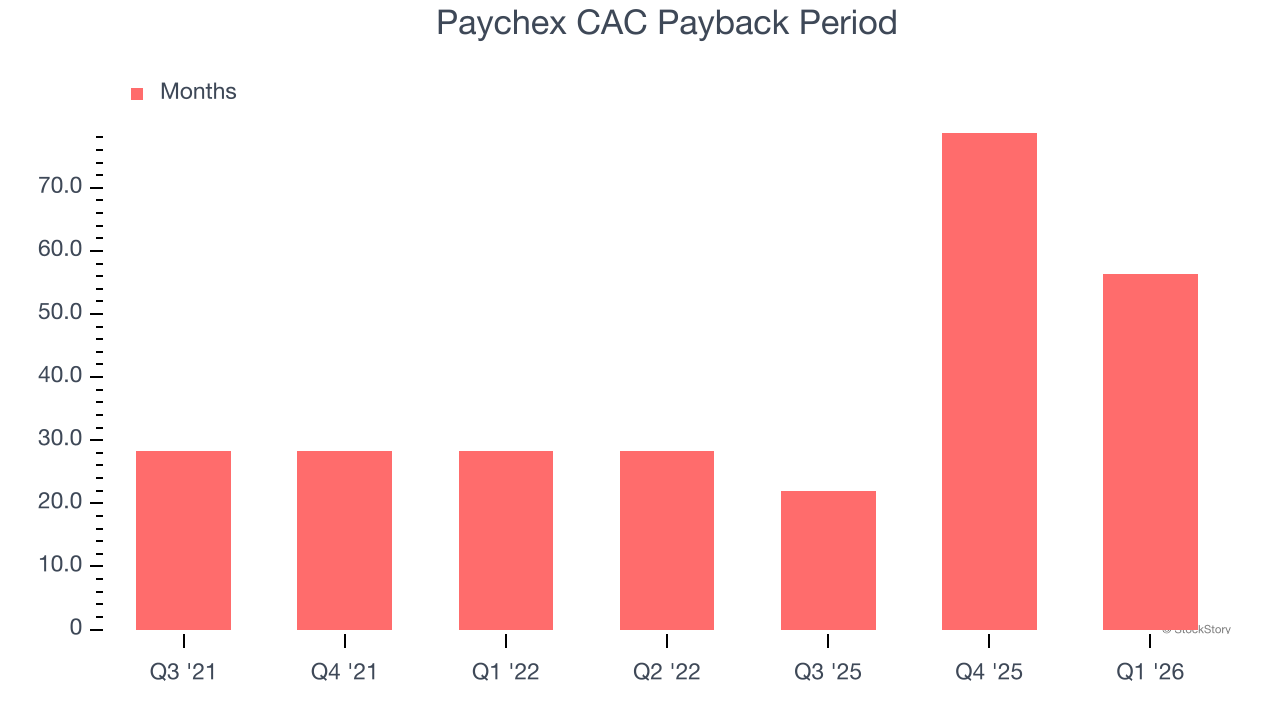
Key Takeaways from Paychex’s Q1 Results
It was good to see Paychex top analysts’ adjusted operating profit and EPS expectations this quarter. On the other hand, its revenue missed. Overall, this quarter was mixed. Still, the stock traded up 5% to $94.72 immediately following the results.
Big picture, is Paychex a buy here and now? If you’re making that decision, you should consider the bigger picture of valuation, business qualities, as well as the latest earnings. We cover that in our actionable full research report which you can read here (it’s free).