Insurance holding company Globe Life (NYSE: GL) fell short of the market’s revenue expectations in Q3 2026, but sales rose 5.2% year on year to $1.60 billion. Its GAAP profit of $4.62 per share was 4.7% below analysts’ consensus estimates.
Is now the time to buy Globe Life? Find out by accessing our full research report, it’s free.
Globe Life (GL) Q3 2026 highlights:
- Net Premiums Earned: $1.31 billion vs analyst estimates of $1.31 billion (6.5% year-on-year growth, in line)
- Revenue: $1.60 billion vs analyst estimates of $1.61 billion (5.2% year-on-year growth, 1.1% miss)
- Pre-tax Profit: $441.2 million (27.6% margin)
- EPS (GAAP): $4.62 vs analyst expectations of $4.85 (4.7% miss)
- Book Value per Share: $85.35 vs analyst estimates of $104.38 (20.5% year-on-year growth, 18.2% miss)
- Market Capitalization: $13.04 billion
Company overview
With roots dating back to 1900 and a rebranding from Torchmark Corporation in 2019, Globe Life (NYSE: GL) is an insurance holding company that offers life insurance, supplemental health insurance, and annuity products through various distribution channels.
Revenue growth
Insurance companies earn revenue from three primary sources: 1) The core insurance business itself, often called underwriting and represented in the income statement as premiums 2) Income from investing the “float” (premiums collected upfront not yet paid out as claims) in assets such as fixed-income assets and equities 3) Fees from various sources such as policy administration, annuities, or other value-added services. Regrettably, Globe Life’s revenue grew at a tepid 4.8% compounded annual growth rate over the last five years. This was below our standard for the insurance sector and is a poor baseline for our analysis.
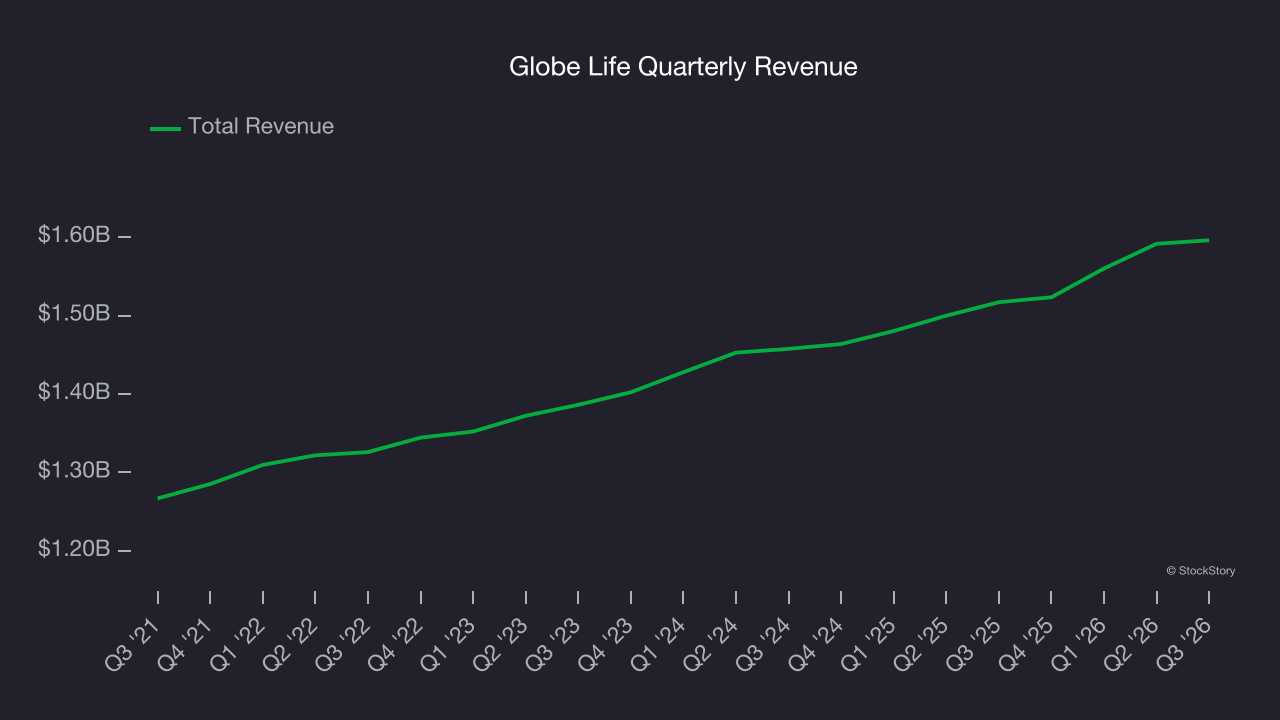
We at StockStory place the most emphasis on long-term growth, but within financials, a half-decade historical view may miss recent interest rate changes, market returns, and industry trends. Globe Life’s annualized revenue growth of 4.5% over the last two years aligns with its five-year trend, suggesting its demand was consistently weak. 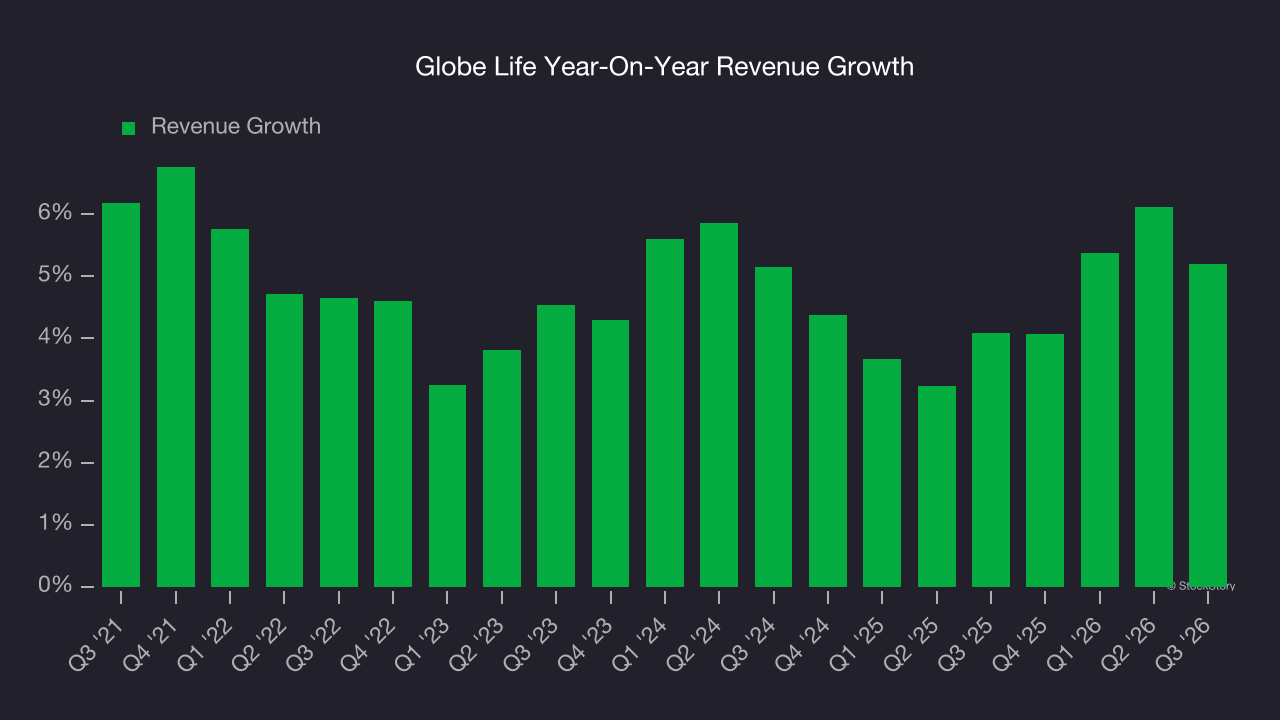
This quarter, Globe Life’s revenue grew by 5.2% year on year to $1.60 billion, missing Wall Street’s estimates.
Net premiums earned made up 81.1% of the company’s total revenue during the last five years, meaning Globe Life barely relies on non-insurance activities to drive its overall growth.
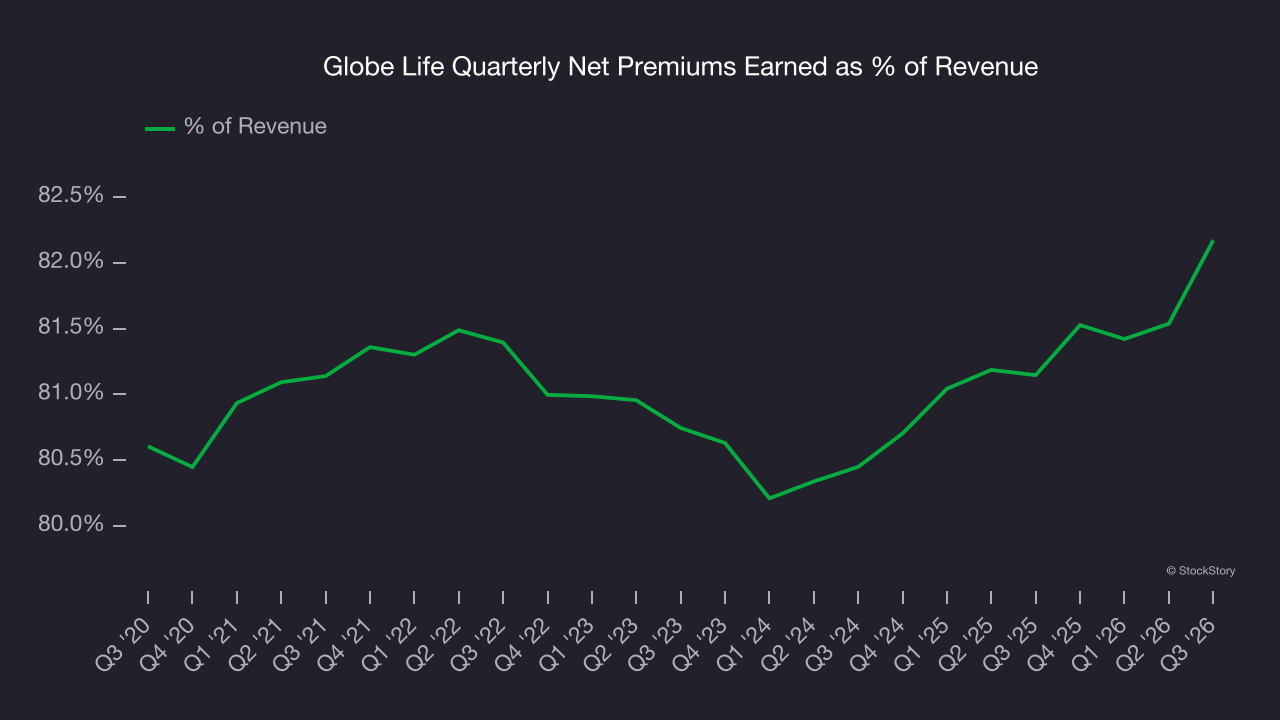
Net premiums earned command greater market attention due to their reliability and consistency, whereas investment and fee income are often seen as more volatile revenue streams that fluctuate with market conditions.
ONE MORE THING: 3 Hidden Platforms Growing 3X Faster than Amazon, Google, and PayPal. Amazon, Google, and Meta all followed the same playbook: Dominate an ignored market. Build an unbeatable moat. Scale until you’re unstoppable.
These three platforms are running that exact playbook right now. The early investors in Amazon made fortunes. The early investors in these could do the same. Get All 3 Stocks Here for FREE.
Book value per share (BVPS)
Insurance companies are balance sheet businesses, collecting premiums upfront and paying out claims over time. The float — premiums collected but not yet paid out — is invested, creating an asset base supported by a liability structure. Book value captures this dynamic by measuring:
- Assets (investment portfolio, cash, reinsurance recoverables) - liabilities (claim reserves, debt, future policy benefits)
BVPS is essentially the residual value for shareholders.
We therefore consider BVPS very important to track for insurers and a metric that sheds light on business quality because it reflects long-term capital growth and is harder to manipulate than more commonly-used metrics like EPS.
Globe Life’s BVPS was flat over the last five years. However, BVPS growth has accelerated recently, growing by 24.5% annually over the last two years from $55.04 to $85.35 per share.
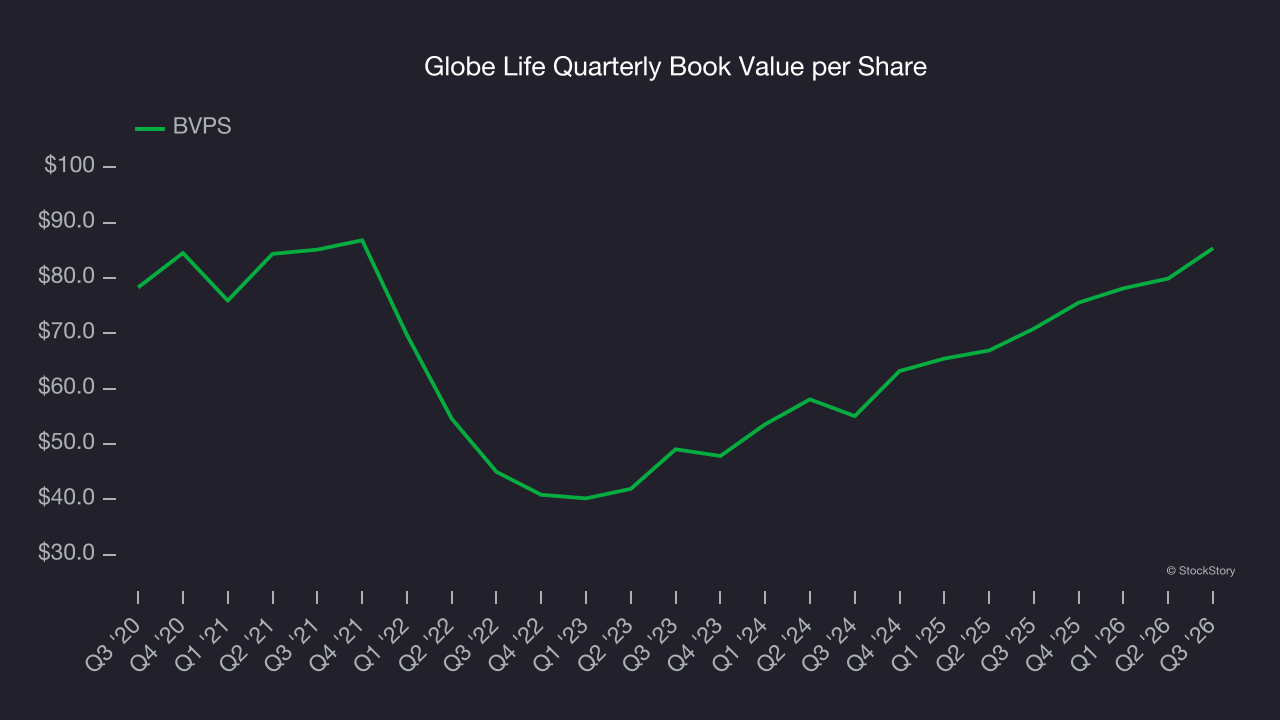
Over the next 12 months, Consensus estimates call for Globe Life’s BVPS to grow by 35.5% to $104.38, elite growth rate.
Key takeaways from Globe Life’s Q3 results
We struggled to find many positives in these results. Its book value per share missed and its EPS fell short of Wall Street’s estimates. Overall, this was a weaker quarter. The stock traded down 6.5% to $158.50 immediately following the results.
Globe Life underperformed this quarter, but does that create an opportunity to invest right now? If you’re making that decision, you should consider the bigger picture of valuation, business qualities, as well as the latest earnings. We cover that in our actionable full research report which you can read here (it’s free).