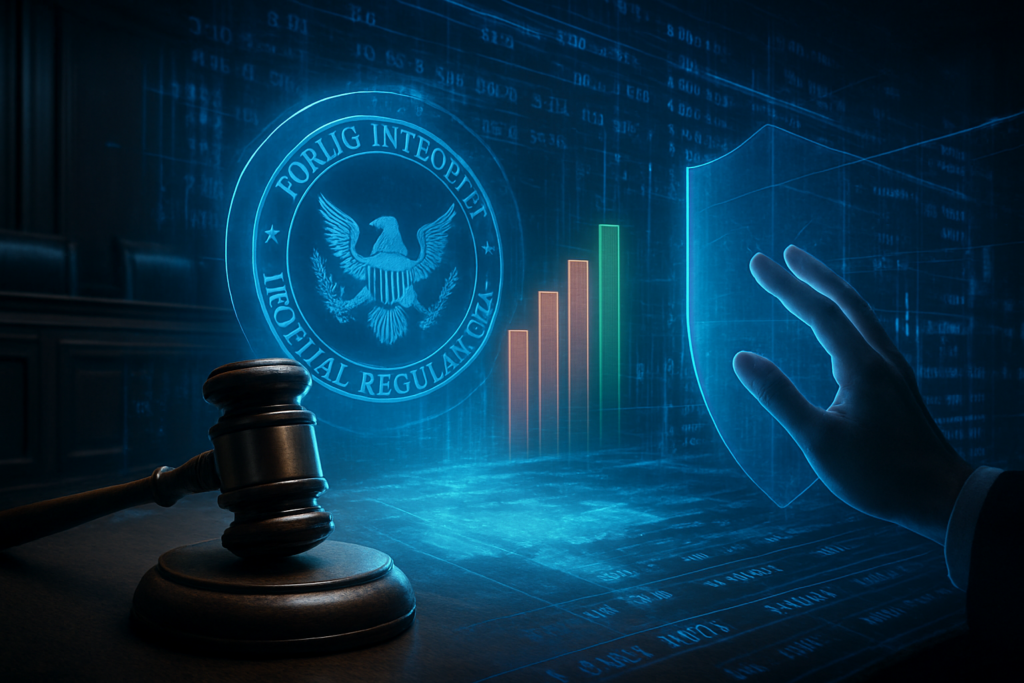
The meteoric rise of event-based contracts has reached a legislative boiling point. Following a series of high-profile trades that appeared to anticipate classified government actions, Washington has responded with the "Public Integrity in Financial Prediction Markets Act of 2026." Introduced on January 9, 2026, by Representative Ritchie Torres (D-NY), the bill seeks to bring the same ethical guardrails found in the STOCK Act to the rapidly maturing world of prediction markets.
Currently, the odds of the bill passing into law within the current session remain low, with proxy markets on PredictIt trading at just 12 cents. However, the regulatory pressure is already reshaping how institutional players and retail traders approach the market. This tension represents the definitive clash of the 2026 financial landscape: the "Information-Efficacy" school, which views these markets as the ultimate truth engines, versus the "Social-Harm" school, which views them as a dangerous incentive structure for corruption.
The Market: What's Being Predicted
The focus of traders has shifted from the events themselves to the rules of the game. On Kalshi—the first fully regulated exchange for event contracts—traders are currently pricing the probability of the Commodity Futures Trading Commission (CFTC) adopting new, stringent insider trading rules at 20%. While this is a modest probability, it has climbed from 5% in early December, reflecting a growing consensus that the status quo is unsustainable.
Simultaneously, on the offshore platform Polymarket, volume has surged to record highs despite the regulatory dark clouds. The resolution criteria for these new regulatory markets often hinge on the signing of federal legislation or the formal adoption of agency rules. Specifically, the "Public Integrity Act" market on PredictIt requires a majority vote in both the House and Senate and a presidential signature by December 31, 2026.
Liquidity in these "regulatory meta-markets" is surprisingly high, as institutional players use them to hedge against the risk of the entire industry being throttled. While Kalshi has publicly supported the Torres bill as a way to formalize the industry, the market sentiment remains skeptical that a divided Congress will move quickly enough to implement these changes before the 2026 midterms.
Why Traders Are Betting
The primary driver of the current market movement was the infamous "Maduro Trade" in early January 2026. A trader on Polymarket wagered approximately $32,000 on the capture of Venezuelan President Nicolás Maduro just hours before a surprise U.S.-led operation was announced. The trade, which paid out over $400,000, sparked immediate calls for an investigation into whether the user had access to classified military intelligence.
This event galvanized "Social-Harm" advocates who argue that without strict prohibitions, prediction markets offer a "bounty" for government insiders to leak or profit from sensitive information. Conversely, "Information-Efficacy" proponents argue that the trade actually served the public good by signaling a high-probability geopolitical event that traditional news outlets missed. They view the attempt to ban such trades as a "war on accuracy."
Notable whale activity has been spotted on Manifold Markets, where a contract on "Federal Preemption of State Bans" is trading at a staggering 81%. This indicates that while traders doubt the Torres bill will pass, they are highly confident that federal courts will protect the industry from being banned at the state level by places like New York or Tennessee.
Broader Context and Implications
The debate over the Public Integrity Act occurs as traditional finance is finally embracing prediction markets. Goldman Sachs (NYSE: GS) recently signaled that it may begin offering event-contract derivatives to its institutional clients, treating them as a legitimate asset class for hedging political and economic risk. Similarly, Robinhood Markets, Inc. (NASDAQ: HOOD) has aggressively moved to vertically integrate by acquiring MIAXdx, a CFTC-licensed exchange, to bring prediction trading to its massive retail base.
However, this institutionalization brings prediction markets into direct conflict with existing financial regulations. If these contracts are legally treated as "swaps" or "derivatives," the legal standard for insider trading becomes much clearer—and much more punitive. The historical accuracy of these markets has often been their best defense; during the 2024 and 2025 cycles, prediction markets consistently outperformed traditional polling. But critics argue that "being right" does not excuse "being unethical."
What this market reveals about public sentiment is a profound distrust of government transparency. The fact that the "Maduro Trade" is widely believed to be the result of a leak, rather than brilliant synthesis of public data, highlights the uphill battle prediction markets face in gaining broad social acceptance.
What to Watch Next
The next major milestone for the market will be the House Financial Services Committee hearing scheduled for late February 2026. Testimony from the CEOs of major platforms and the CFTC Chairperson will likely cause significant volatility in the "Regulation" contracts. If the committee signals a "bipartisan path forward," we could see the odds of the Public Integrity Act jump from 12% to over 40% overnight.
Traders should also monitor the legal challenge currently making its way through the D.C. Circuit Court regarding the CFTC’s authority to block "public interest" contracts. A ruling in favor of the exchanges would likely decrease the immediate pressure for the Torres bill, as the industry would feel it has a judicial mandate to operate even without new legislation.
Finally, keep a close eye on "proxy trading" alerts. If more suspiciously timed trades appear before major policy shifts—such as a surprise interest rate cut or a Supreme Court ruling—the political pressure for the Public Integrity Act may become irresistible, regardless of the current low odds.
Bottom Line
The Public Integrity in Financial Prediction Markets Act of 2026 marks the end of the "Wild West" era for event contracts. Whether the bill passes or not, the "Maduro Trade" has ensured that the era of government insiders trading on their own secrets is effectively over. The market is currently pricing in a slow, bureaucratic response, but the underlying trend is clear: professionalization and regulation are the only path forward for the industry.
Prediction markets have proven they are a powerful tool for forecasting the future, but they are now facing their greatest test yet—the need to prove they are compatible with a stable, ethical society. For traders, the play is no longer just about who wins an election or a war; it is about who writes the rules of the market itself.
As we move toward the 2026 midterms, the "Social-Harm" vs. "Information-Efficacy" debate will likely define the boundaries of financial innovation for the rest of the decade.
This article is for informational purposes only and does not constitute financial or betting advice. Prediction market participation may be subject to legal restrictions in your jurisdiction.
PredictStreet focuses on covering the latest developments in prediction markets.
Visit the PredictStreet website at https://www.predictstreet.ai/.