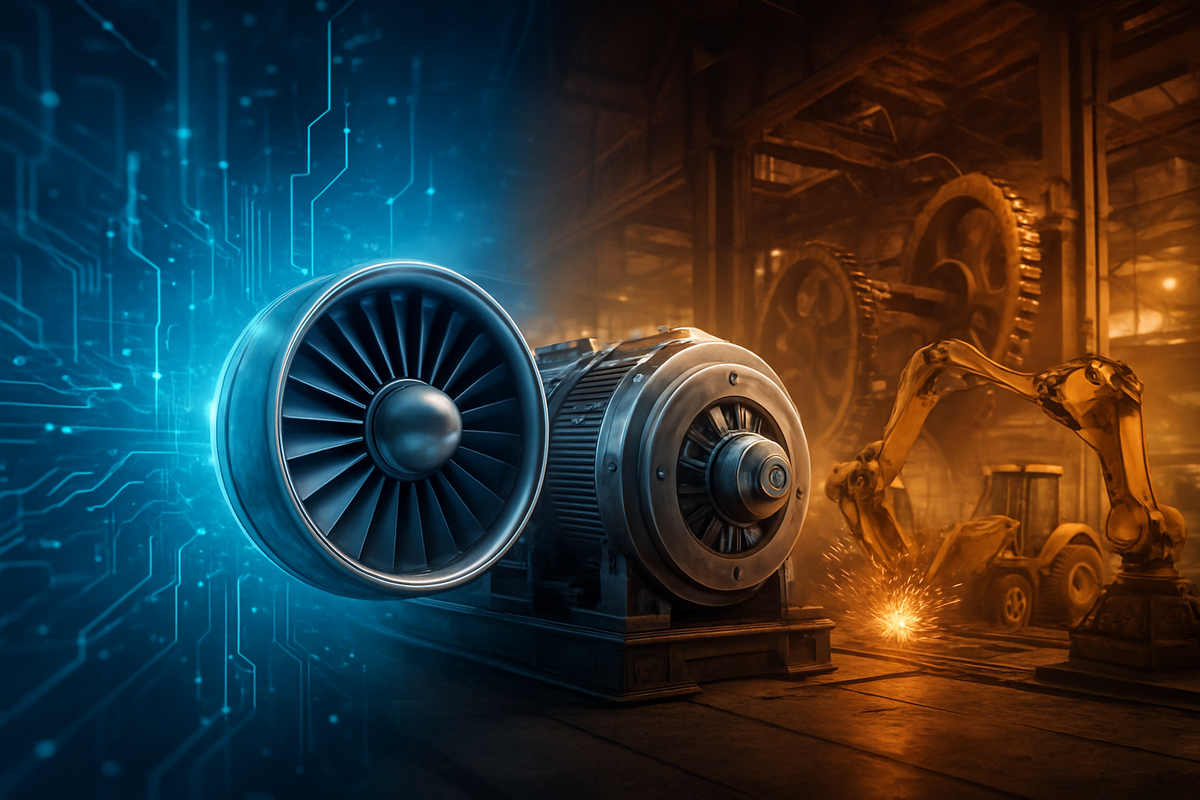
On Tuesday, March 10, 2026, the industrial sector demonstrated a remarkable display of resilience and strength, with the Industrials Select Sector SPDR Fund (NYSE Arca: XLI) rising 0.6% even as the broader tech-heavy indices faced continued volatility. This modest but significant gain underscores a fundamental shift in market leadership that has been gathering momentum since the start of the year: the "Great Rotation" away from over-extended technology valuations toward the tangible, cash-flow-rich engines of the American economy.
The move marks a definitive moment for the sector, which has successfully shed its reputation as a mere cyclical play to become a primary beneficiary of the multi-year trends in domestic reshoring, power infrastructure for artificial intelligence, and a renewed federal focus on hard-asset investment. As capital flows out of concentrated positions in software and semi-conductors, it is finding a stable home in the heavy machinery, aerospace, and logistics firms that underpin global commerce.
Detailed Coverage of the March 10 Sector Outperformance
The 0.6% gain for the XLI on March 10, 2026, was not an isolated event but the culmination of a weeks-long trend where industrial stocks have consistently decoupled from the Nasdaq-100's fluctuations. Throughout the morning session, steady buying pressure was observed across heavy machinery and aerospace components. By midday, the sector had solidified its gains, led by strong performance in multi-industry conglomerates and defense contractors.
This surge follows the release of the February manufacturing data earlier this month, which showed the highest level of factory floor utilization in over a decade. Analysts point to the "One Big Beautiful Bill Act" (OBBBA), signed into law in mid-2025, as the primary catalyst. The act, which fully reinstated 100% bonus depreciation for capital expenditures, has incentivized a massive wave of machinery upgrades and facility expansions that are now showing up in the order books of major industrial players.
Key stakeholders, including institutional pension funds and value-oriented asset managers, have been notably increasing their weightings in XLI. "We are seeing a maturation of the AI trade," noted one senior equity strategist on Tuesday afternoon. "Investors are realizing that you cannot run a digital revolution without the physical infrastructure—the power grids, the cooling systems, and the logistics networks—that the industrial sector provides."
Corporate Winners and the Shift in Market Leadership
Among the clear winners in this rotation is Caterpillar Inc. (NYSE: CAT). The construction and mining equipment giant has transitioned into what analysts now call a "Physical AI" play. As data center construction reaches a fever pitch, Caterpillar’s power generation segment has seen unprecedented demand for backup power systems and primary on-site generation. The stock's performance on March 10 reflected investor confidence in CAT’s ability to maintain its $51 billion backlog through the end of the year.
GE Aerospace (NYSE: GE) also saw significant gains, continuing its trajectory as a pure-play aerospace leader. With a massive $190 billion backlog and the successful ramp-up of its LEAP engine production, GE is benefiting from a global commercial aviation fleet that is desperate for new, fuel-efficient engines. Similarly, Honeywell International Inc. (NASDAQ: HON) has seen its valuation expand as it prepares for the highly anticipated spin-off of its aerospace division, slated for the third quarter of 2026. This move toward portfolio simplification has made Honeywell a favorite for investors seeking focused exposure to industrial automation.
Conversely, the "losers" in this environment are primarily concentrated in the high-growth, non-profitable tech sectors. As interest rates have stabilized at a higher "neutral" level than in the previous decade, the discount rates applied to future earnings have punished software firms that lack the immediate, tangible cash flows of an industrial powerhouse like Union Pacific Corporation (NYSE: UNP) or RTX Corporation (NYSE: RTX).
Analyzing the Wider Significance and Historical Context
This rotation is a mirror image of the 2000-2002 period, where the bursting of the dot-com bubble led to a multi-year bull market in commodities and industrials. However, unlike the early 2000s, today’s industrial strength is powered by high-tech integration. The "Industry 5.0" movement—characterized by human-machine collaboration and Edge AI—has allowed companies to overcome chronic labor shortages by automating complex manufacturing tasks.
The broader significance lies in the decoupling of the "Real Economy" from the "Digital Economy." For years, the S&P 500 was driven by five or six tech giants. The performance on March 10 suggests a healthier, more diversified market where growth is distributed across sectors. Furthermore, the push for "Made in America" through reshoring has created a structural demand floor that is less sensitive to global economic slowdowns than in previous cycles.
Regulatory tailwinds also remain strong. The implementation of the CHIPS Act and the Infrastructure Investment and Jobs Act (IIJA) has moved from the "planning" phase to the "shovels-in-the-ground" phase. This creates a predictable revenue stream for engineering and construction firms that many tech companies currently lack.
The Path Forward: What Lies Ahead for Industrials
Looking toward the second half of 2026, the industrial sector is expected to maintain its leadership role, though it may face challenges from rising raw material costs if the commodity market overheats. The primary strategic pivot for these companies will be the integration of autonomous systems. Investors should watch for increased M&A activity as traditional giants look to acquire specialized robotics and sensor firms to bolster their automated offerings.
In the short term, the market will focus on the Q1 2026 earnings season. If companies like Deere & Company (NYSE: DE) and 3M Company (NYSE: MMM) can demonstrate margin expansion despite inflationary pressures, it will likely trigger another leg up for the XLI. The potential risk remains a "hard landing" for the global economy, though the record-high backlogs in aerospace and infrastructure provide a significant cushion that was not present in 2008 or 2020.
Wrap-Up and Investor Outlook
The 0.6% rise in the Industrials sector on March 10, 2026, serves as a clear signal that the market's center of gravity has shifted. The resilience of the XLI in the face of tech volatility proves that investors are increasingly valuing tangible assets, reliable dividends, and companies that provide the essential building blocks of the modern world.
Key takeaways for investors include the importance of looking beyond the "AI software" hype to the "AI hardware" reality. Moving forward, the market is likely to reward companies with strong balance sheets and the ability to navigate a world of higher-for-longer interest rates. While the hyper-growth of the early 2020s tech boom may be over, the era of the industrial "compounding machine" has just begun.
In the coming months, watch for the Honeywell spin-off, Caterpillar's power systems guidance, and any updates on federal infrastructure spending levels. These will be the true bellwethers for a sector that has reclaimed its throne as the engine of American prosperity.
This content is intended for informational purposes only and is not financial advice.