Digital advertising platform The Trade Desk (NASDAQ: TTD) announced better-than-expected revenue in Q3 2026, but revenue was flat year on year at $736 million. In addition, next quarter’s revenue guidance ($755 million at the midpoint) was surprisingly strong and 9.1% above analysts’ consensus estimates. Its non-GAAP profit of $0.33 per share was 30% above analysts’ consensus estimates.
For more on The Trade Desk, read our free full research report.
The Trade Desk (TTD) Q3 2026 highlights:
- Revenue $736 million vs S&P analysts' consensus estimates of $651.4 million (flat year on year, 13% beat)
- Adjusted EPS $0.33 vs S&P analysts' consensus estimates of $0.25 (30% beat)
- Adjusted EBITDA $265.8 million vs analysts' consensus estimates of $160.8 million (36.1% margin, 65.3% beat)
- Revenue guidance $755 million at the midpoint for Q4 2026, above analysts' consensus estimates of $692 million
- EBITDA guidance $280 million at the midpoint for Q4 2026, above analysts' consensus estimates of $196.7 million
- Operating margin 12.6%, down from 21.8% in the same quarter last year
- Free cash flow margin 20.8%, up from 19% in the previous quarter
- Market capitalization $6.11 billion
“Q3 represented meaningful progress, with results well ahead of our expectations entering the quarter, but we are still operating below the level of growth we expect from ourselves,” said Jeff Green, co-founder and CEO of The Trade Desk. “We are moving with greater urgency across the company, strengthening how we engage with our largest customers, improving the platform through innovations such as Zuma, Audience Unlimited, agentic AI, and advancing a new approach to measurement designed to help marketers better understand what is actually driving business growth. We have more work to do, but I believe the actions we are taking are improving the underlying trajectory of the business and positioning The Trade Desk for stronger, more durable growth over the long term.”
Revenue growth
A company’s long-term revenue performance is one signal of its overall quality. Any business can experience short-term success, but top-performing ones sustain growth for years. The Trade Desk’s revenue grew at a solid 21.7% compounded annual growth rate over the last five years. Its growth was slightly above the average software company and shows its offerings resonate with customers.
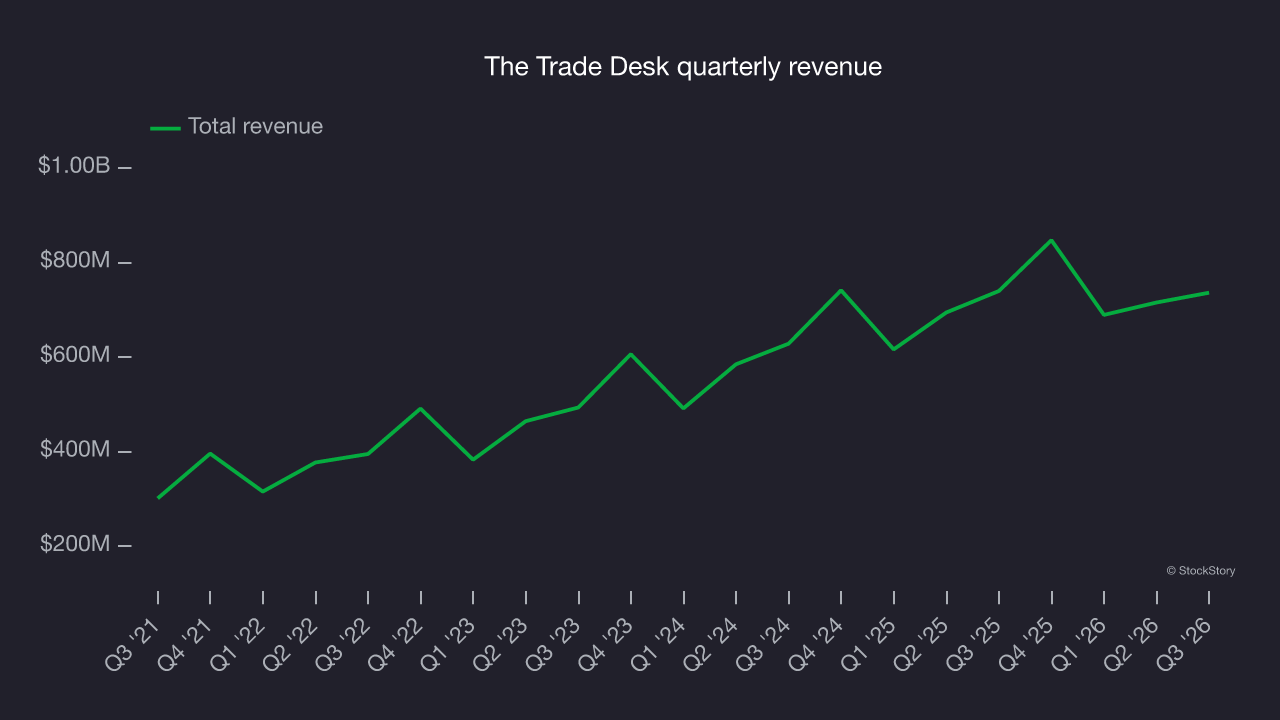
Long-term growth matters the most, but within software, a half-decade historical view may miss recent innovations or disruptive industry trends. The Trade Desk’s recent performance shows its demand has slowed as its annualized revenue growth of 13.7% over the last two years was below its five-year trend. Decelerating revenue growth in the sector warrants caution, as it could signal changing consumer tastes aided by low switching costs. 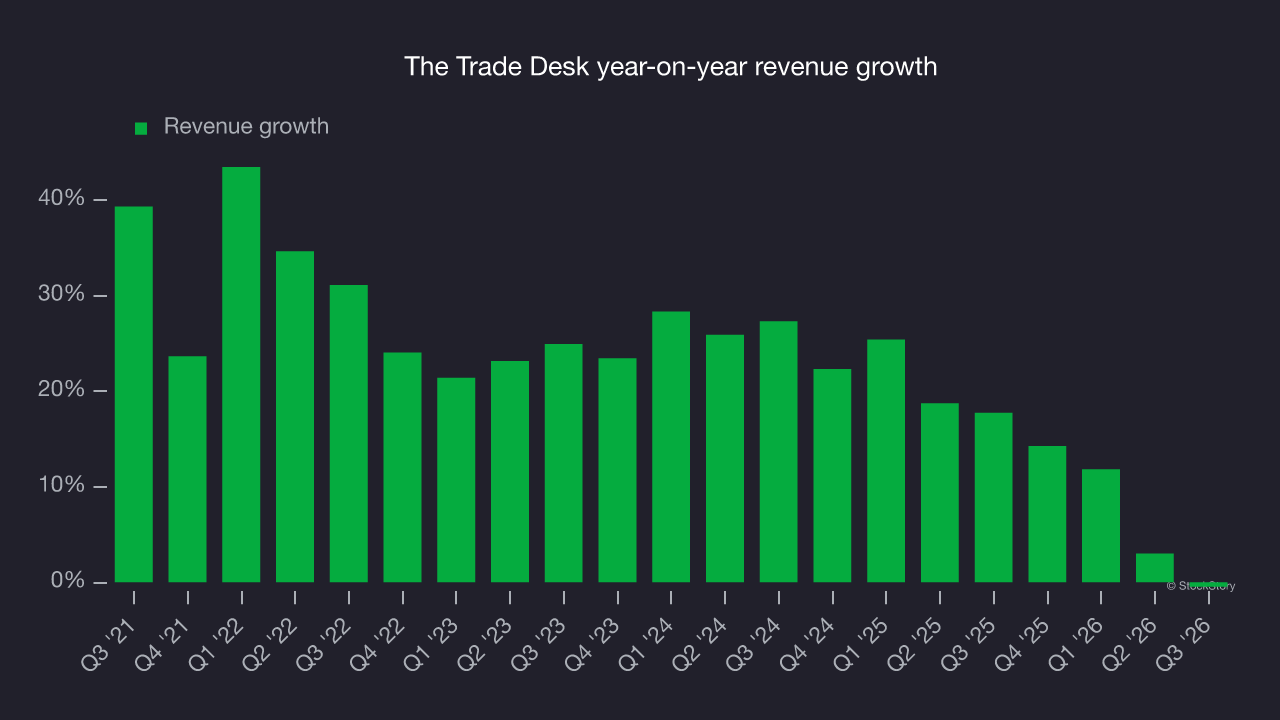
This quarter, The Trade Desk’s $736 million in revenue was flat year on year but beat Wall Street’s consensus estimates by 13%. Management is guiding for a 10.8% year-on-year decline in revenue next quarter.
Looking further ahead, sell-side analysts expect revenue to decline by 14.7% over the next 12 months, according to S&P, a deceleration versus the last two years. This underwhelming projection implies its products and services will face some demand challenges. On the positive side, the company is performing well on other measures of financial health.
Customer acquisition efficiency
The customer acquisition cost, or CAC, payback period represents the months required to recover the cost of acquiring a new customer. Essentially, it’s the break-even point for sales and marketing investments. A shorter CAC payback period is ideal, as it implies better returns on investment and business scalability.
The Trade Desk is highly efficient at acquiring new customers, and its CAC payback period was 15.5 months this quarter. The company’s rapid recovery of its customer acquisition costs means it can attempt to spur growth by increasing its sales and marketing investments.
Key takeaways from The Trade Desk’s Q3 results
The Trade Desk paired a wide revenue beat against Wall Street’s consensus estimates with strong EBITDA guidance for next quarter that came in well ahead of analysts’ expectations. Those results made for a strong quarter with clear positives. Shares soared 21.8% to $18.30 immediately after reporting.
The Trade Desk reported solid earnings, but one quarter doesn’t necessarily make the stock a buy. The latest quarter matters when deciding whether to invest, but not as much as longer-term business quality and valuation. For more on The Trade Desk, read our full research report here (it’s free).