Education company Lincoln Educational (NASDAQ: LINC) beat Wall Street’s revenue expectations in Q3 2026, with revenue up 12.6% year on year to $159.2 million. The company’s full-year revenue guidance of $602.5 million at the midpoint came in 1.4% above analysts’ consensus estimates. Its GAAP profit of $0.15 per share was 17.2% above analysts’ consensus estimates.
For more on Lincoln Educational, read our full research report for free.
Lincoln Educational (LINC) Q3 2026 highlights:
- Revenue $159.2 million vs analysts' consensus estimates of $151.8 million, according to S&P (12.6% year-on-year growth, 4.9% beat)
- EPS (GAAP) $0.15 vs analysts' consensus estimates of $0.13 (17.2% beat)
- Adjusted EBITDA $17.37 million vs analysts' consensus estimates of $16.75 million (10.9% margin, 3.7% beat)
- Revenue guidance The company lifted its revenue guidance for the full year to $602.5 million at the midpoint from $595 million, a 1.3% increase
- GAAP EPS guidance $0.78 at the midpoint for the full year, roughly in line with what analysts were expecting
- EBITDA guidance $78 million at the midpoint for the full year, above analysts' consensus estimates of $77.13 million
- Operating margin 4.8%, in line with the same quarter last year
- Free cash flow -$3.36 million, down from $2.03 million in the same quarter last year
- Enrolled students increased by 2,081 year on year
- Market capitalization $560.2 million
“During the third quarter, we generated double-digit growth across all our key metrics, highlighted by our 14.2% increase in student starts” said Scott Shaw, president and CEO. “The strong starts reflects our organization’s flexibility and responsiveness to a dynamic marketing environment where we continue to see robust demand for our high return-on-investment training and education programs. We continue to examine effective strategies to broaden our future lead generation sources and we saw an improvement in lead conversion rate to starts during the quarter to our historic levels. Based on our year-to-date performance and current outlook, we are refining our guidance for start growth of 10% to 12% for the full year, within the previous guidance range we established following our first quarter.
Revenue growth
Reviewing a company’s long-term revenue performance reveals insights into its quality. Even a poor business can perform well for one or two quarters, but a top-tier one grows for years. Over the last five years, Lincoln Educational grew its revenue at a 12.3% compounded annual growth rate. Though this growth is acceptable on an absolute basis, revenue growth alone is not enough to assess the consumer discretionary sector, which can display significant earnings volatility. The bar for the sector is particularly high, reflecting the non-essential and hit-driven nature of the products and services offered. Additionally, the five-year growth period starts around Covid, when revenue was depressed before rebounding.
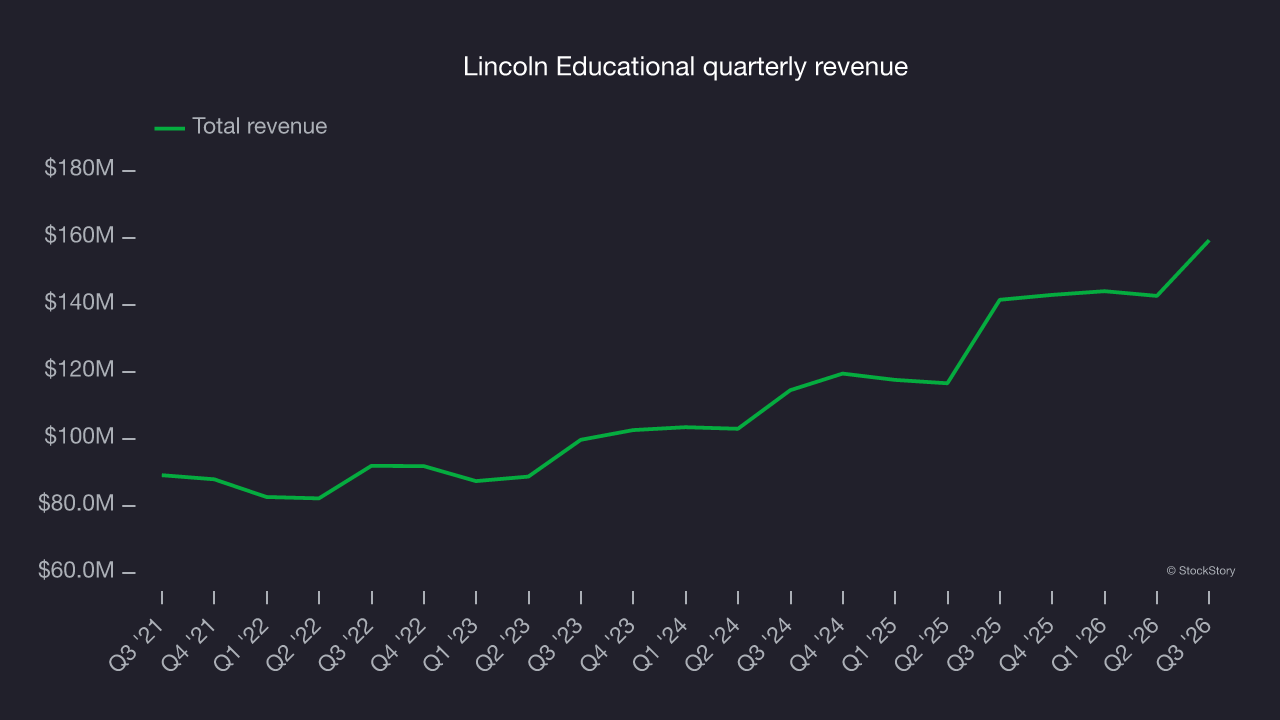
Long-term growth matters most, but within consumer discretionary, a longer historical view may miss a company benefiting from a successful new product or trend. Lincoln Educational’s annualized revenue growth of 17.9% over the last two years is above its five-year trend, a positive sign. 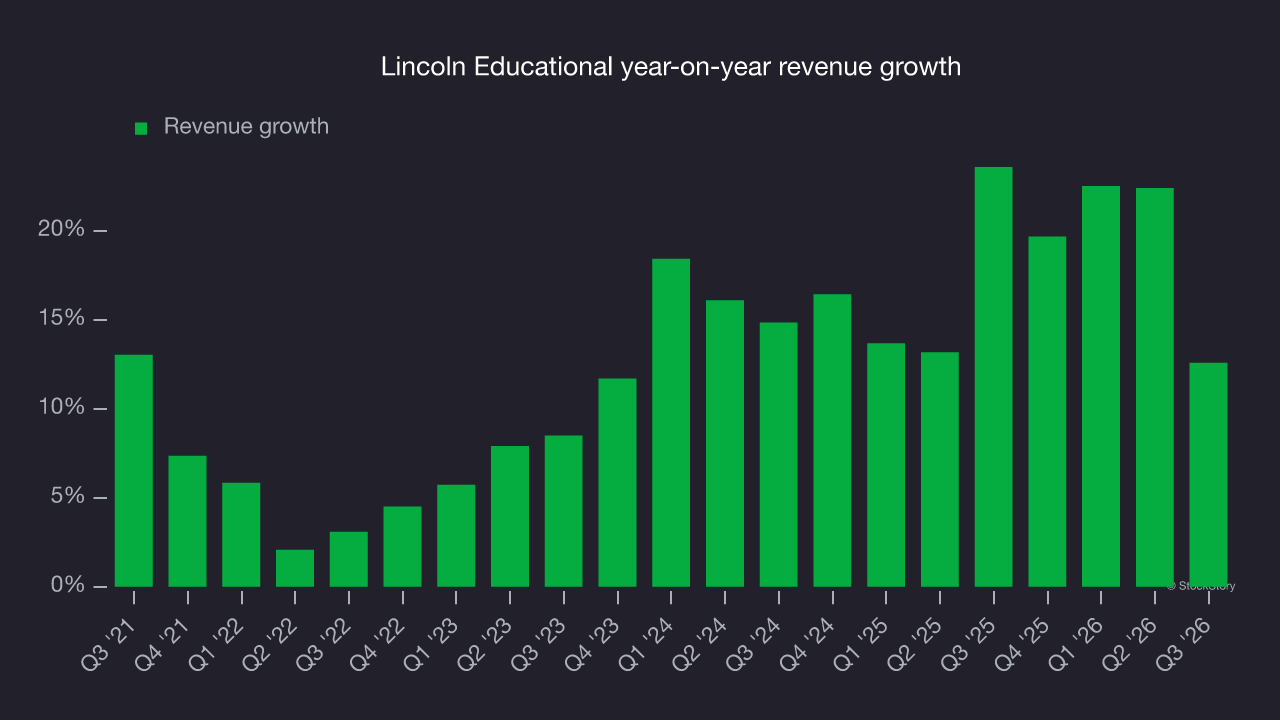
The company’s enrolled student count, which reached 20,325 in the latest quarter, offers further insight into its revenue dynamics. Over the last two years, Lincoln Educational’s enrolled student count grew an average of 14.6% year on year. Revenue growth outpaced enrollment growth during the same period, indicating that the company’s monetization has risen. 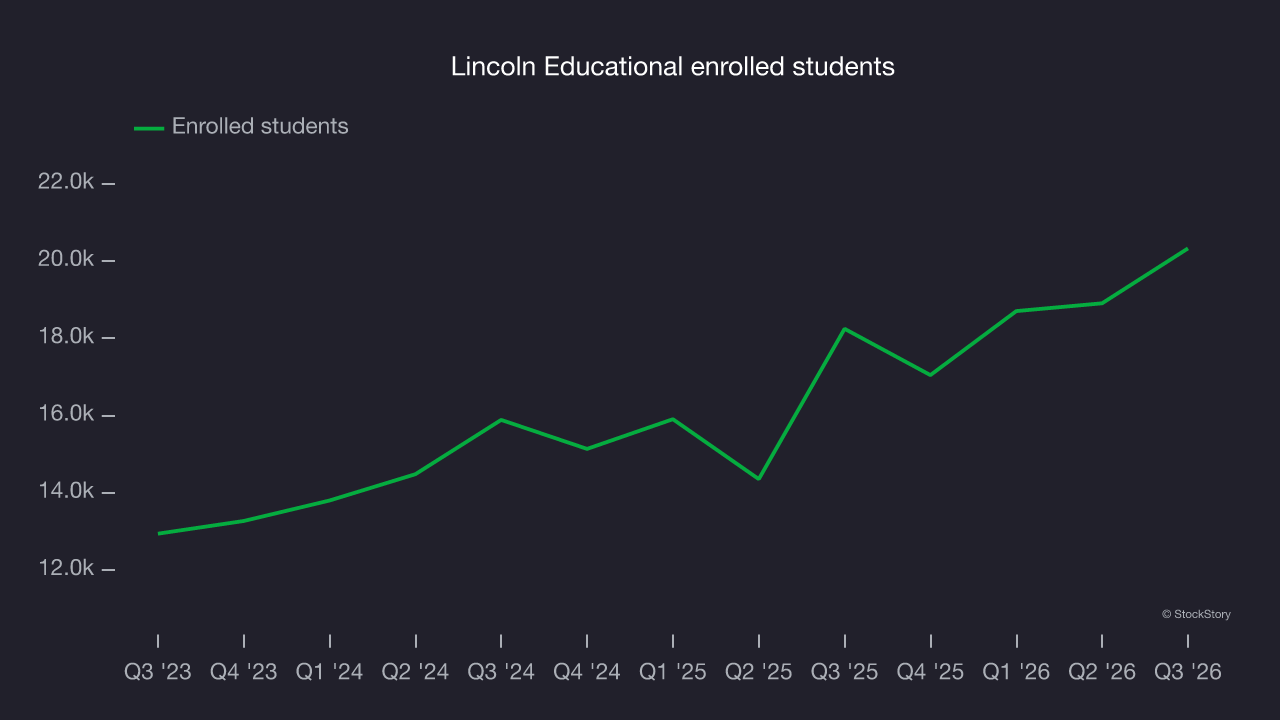
This quarter, Lincoln Educational reported year-on-year revenue growth of 12.6%, and its revenue of $159.2 million exceeded Wall Street’s consensus estimates by 4.9%.
Looking ahead, sell-side analysts expect revenue to grow 7.1% over the next 12 months, according to S&P, a deceleration versus the last two years. This uninspiring projection indicates its products and services will face some demand challenges.
Operating margin
Lincoln Educational’s operating margin has risen over the last 12 months and averaged 5.4% over the last two years. The company’s improved efficiency is a positive, but its suboptimal cost structure means profitability remains thin for a consumer discretionary business.
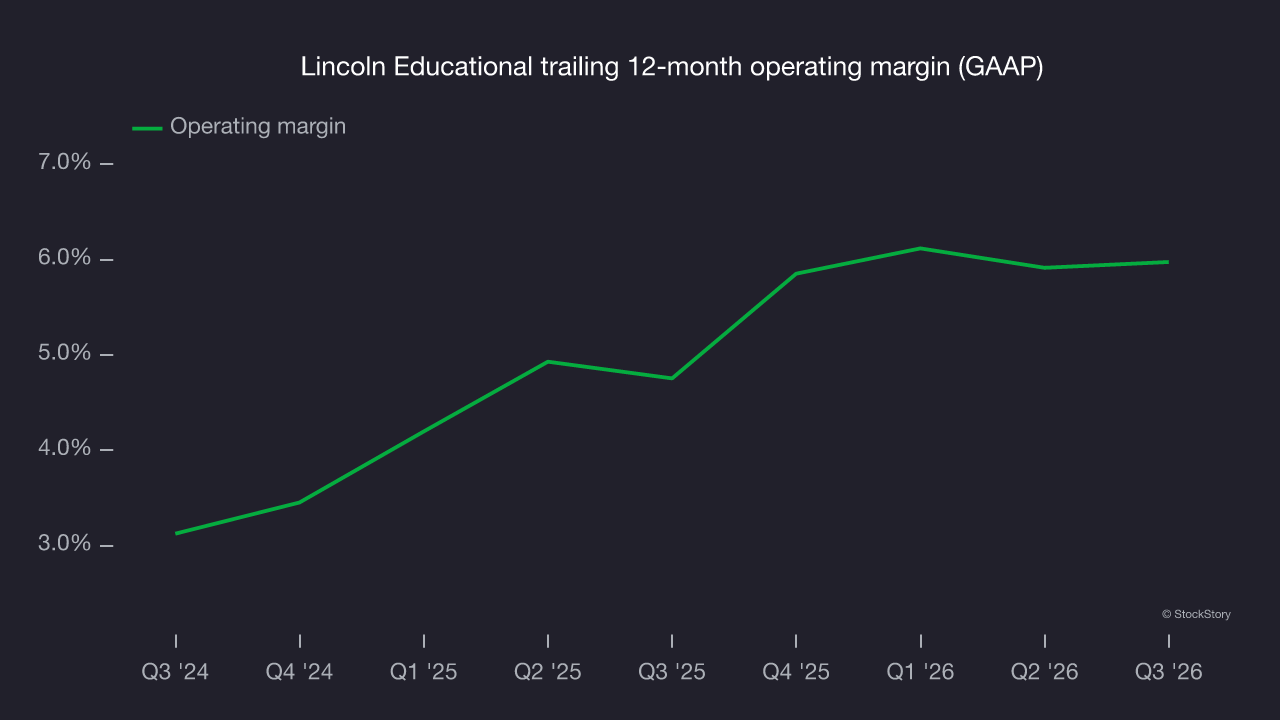
This quarter, Lincoln Educational generated an operating profit margin of 4.8%, in line with the same quarter last year. This indicates the company’s overall cost structure has been relatively stable.
Earnings per share
Long-term changes in earnings per share, or EPS, matter for the same reason as long-term revenue growth. Compared to revenue, however, EPS highlights whether a company’s growth is profitable.
Lincoln Educational’s EPS declined by 15.5% annually over the last five years while its revenue grew by 12.3%. The company became less profitable on a per-share basis as it expanded.
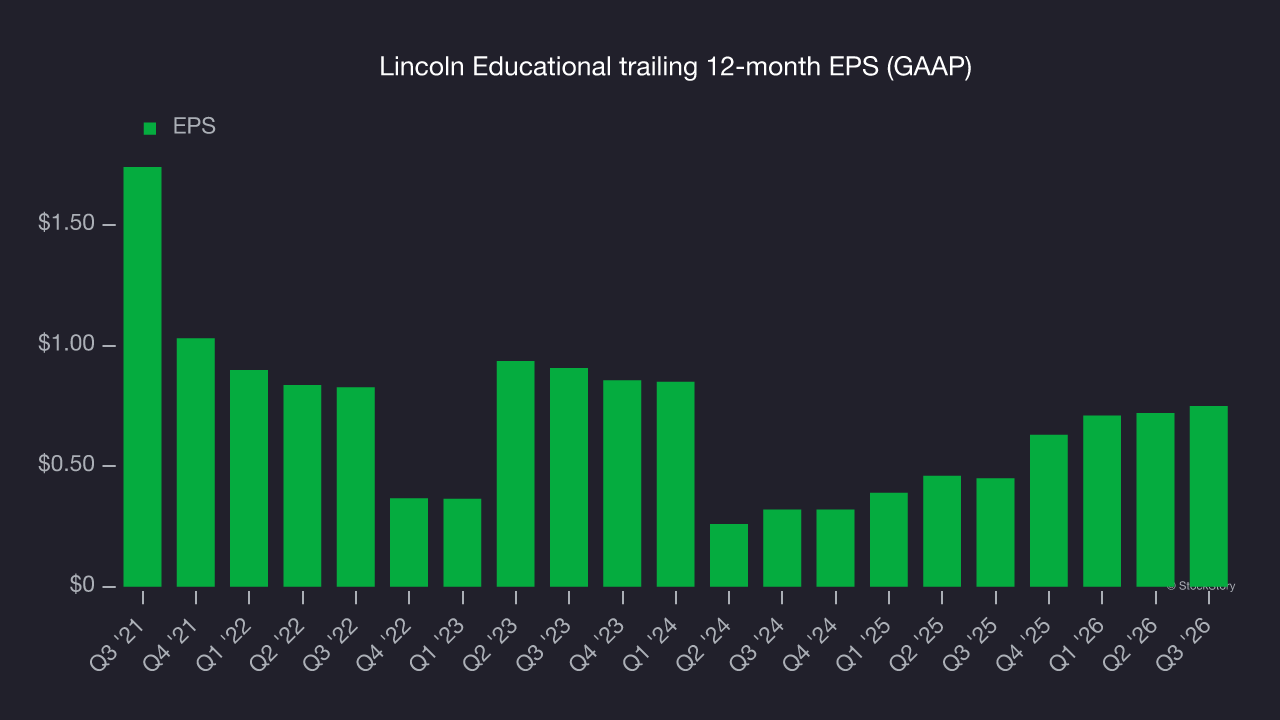
In Q3, Lincoln Educational reported EPS of $0.15, up from $0.12 in the same quarter last year. This result easily cleared analysts’ consensus estimates. Over the next 12 months, Wall Street expects Lincoln Educational’s full-year EPS to grow 47.7% from $0.75 to $1.11, according to S&P.
Key takeaways from Lincoln Educational’s Q3 results
Revenue and EPS both topped Wall Street’s consensus estimates, giving Lincoln Educational a solid Q3 with clear positives. Shares remained flat at $17.65 immediately after the results.
Lincoln Educational’s latest quarter is only one piece of the longer-term business quality picture. Quality, combined with valuation, can help determine whether the stock is a buy at the current price. For more on those factors, read the full research report here (it’s free).