Over the last six months, Intuit’s shares have sunk to $331.80, producing a disappointing 18% loss - a stark contrast to the S&P 500’s 8.9% gain. This was partly due to its softer quarterly results and may have investors wondering how to approach the situation.
Is there a buying opportunity in Intuit, or does it present a risk to your portfolio? Get the full stock story straight from our expert analysts, it’s free.
Why Is Intuit Not Exciting?
Even though the stock has become cheaper, we’re sitting this one out for now. Here are three reasons why INTU doesn’t excite us, plus one stock we’d rather own.
1. Weak Billings Point to Soft Demand
Billings is a non-GAAP metric that is often called “cash revenue” because it shows how much money the company has collected from customers in a certain period. This is different from revenue, which must be recognized in pieces over the length of a contract.
Intuit’s billings came in at $4.37 billion in Q2, and over the last four quarters, its year-on-year growth averaged 14.2%. This performance slightly lagged the sector and suggests that increasing competition is causing challenges in acquiring/retaining customers. 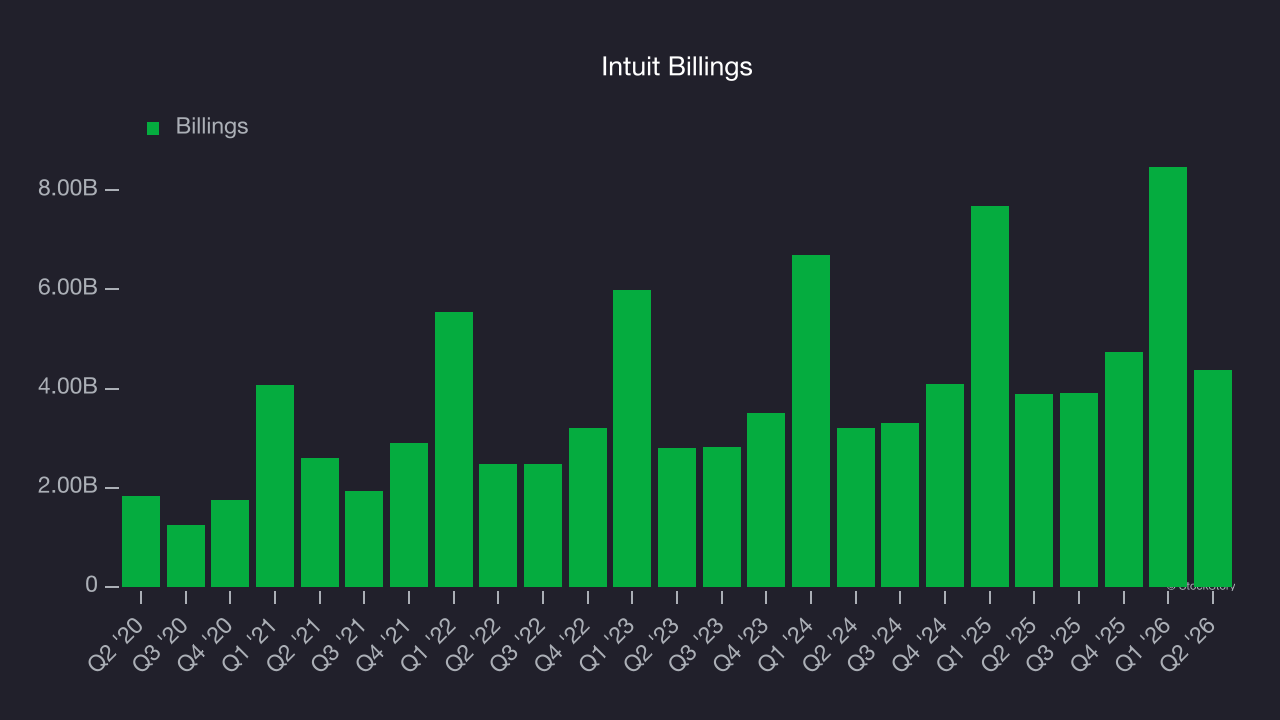
2. Projected Revenue Growth Is Slim
Forecasted revenues by Wall Street analysts signal a company’s potential. Predictions may not always be accurate, but accelerating growth typically boosts valuation multiples and stock prices while slowing growth does the opposite.
Over the next 12 months, sell-side analysts expect Intuit’s revenue to rise by 9.1%, a deceleration versus its 17.4% annualized growth for the past five years. This projection is underwhelming and suggests its products and services will see some demand headwinds.
3. Operating Margin Rising, Profits Up
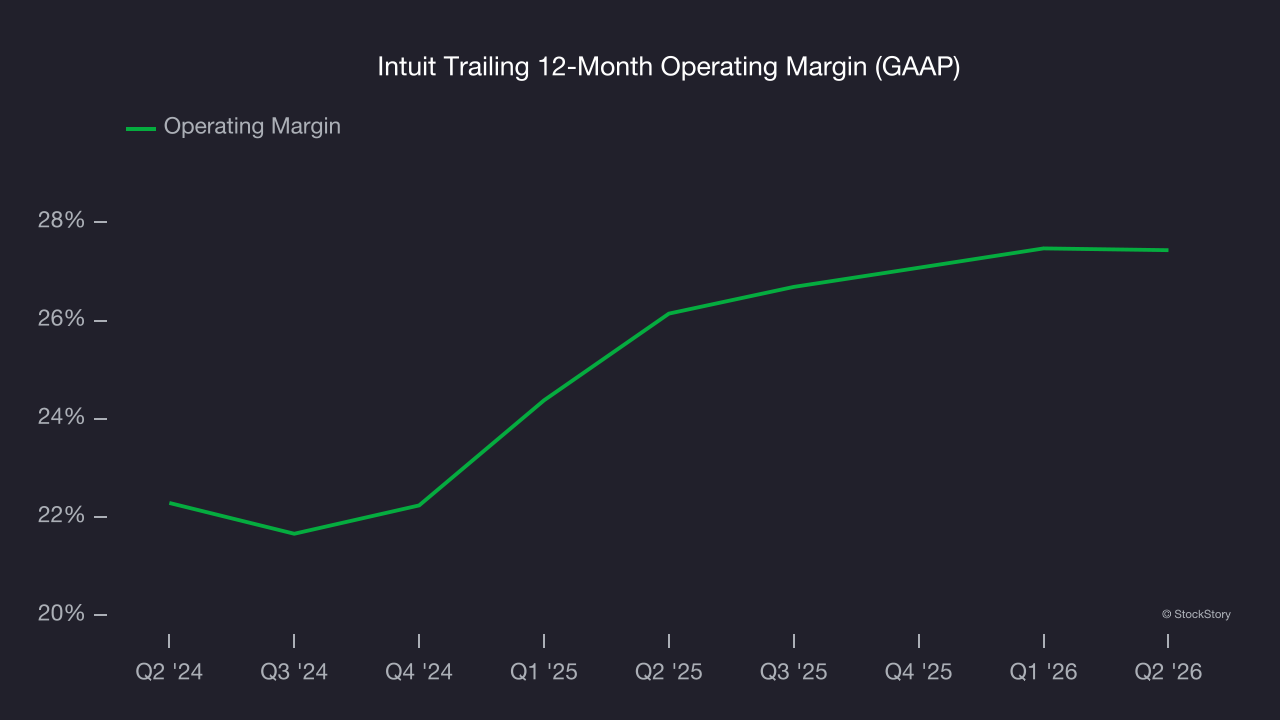
Many software businesses adjust their profits for stock-based compensation (SBC), but we prioritize GAAP operating margin because SBC is a real expense used to attract and retain engineering and sales talent. This metric shows how much revenue remains after accounting for all core expenses — everything from the cost of goods sold to sales and R&D.
Looking at the trend in its profitability, Intuit’s operating margin rose by 1.3 percentage points over the last two years, as its sales growth gave it operating leverage. Its operating margin for the trailing 12 months was 27.4%.
Final Judgment
Intuit isn’t a terrible business, but it isn’t one of our picks. After the recent drawdown, the stock trades at 3.8× forward price-to-sales (or $331.80 per share). This valuation is reasonable, but the company’s shakier fundamentals present too much downside risk. We’re pretty confident there are more exciting stocks to buy at the moment. We’d suggest looking at one of our top digital advertising picks.
Stocks We Like More Than Intuit
ONE MORE THING: Top 5 Growth Stocks. The biggest stock winners almost always had one thing in common before they ran. Revenue growing like crazy. Meta. CrowdStrike. Broadcom. Our AI flagged all three. They returned 315%, 314%, and 455%, respectively.
Find out which 5 stocks it’s flagging this month — FREE. Get Our Top 5 Growth Stocks for Free HERE.
Stocks that have made our list include now familiar names such as Nvidia (+1,460% between June 2020 and June 2025) as well as under-the-radar businesses like the once-micro-cap company Tecnoglass (+1,552% between June 2020 and June 2025). Find your next big winner with StockStory today.