Toy and entertainment company Hasbro (NASDAQ: HAS) reported revenue ahead of Wall Street’s expectations in Q3 2026, with sales up 15% year on year to $1.60 billion. Its non-GAAP profit of $2.90 per share was 56.6% above analysts’ consensus estimates.
Is now the time to buy Hasbro? Find out by accessing our full research report, it’s free.
Hasbro (HAS) Q3 2026 Highlights:
- Revenue: $1.60 billion vs analyst estimates of $1.48 billion (15% year-on-year growth, 7.9% beat)
- Adjusted EPS: $2.90 vs analyst estimates of $1.85 (56.6% beat)
- Adjusted EBITDA: $604.5 million vs analyst estimates of $441.3 million (37.9% margin, 37% beat)
- EBITDA guidance for the full year is $1.6 billion at the midpoint, above analyst estimates of $1.48 billion
- Operating Margin: 32.4%, up from 24.6% in the same quarter last year
- Free Cash Flow Margin: 15.6%, similar to the same quarter last year
- Market Capitalization: $13.89 billion
Company Overview
Credited with the creation of toys such as Mr. Potato Head and the Rubik’s Cube, Hasbro (NASDAQ: HAS) is a global entertainment company offering a diverse range of toys, games, and multimedia experiences for children and families.
Revenue Growth
A company’s long-term sales performance can indicate its overall quality. Any business can experience short-term success, but top-performing ones enjoy sustained growth for years. Over the last five years, Hasbro’s demand was weak and its revenue declined by 3.3% per year. This wasn’t a great result and is a sign of poor business quality.
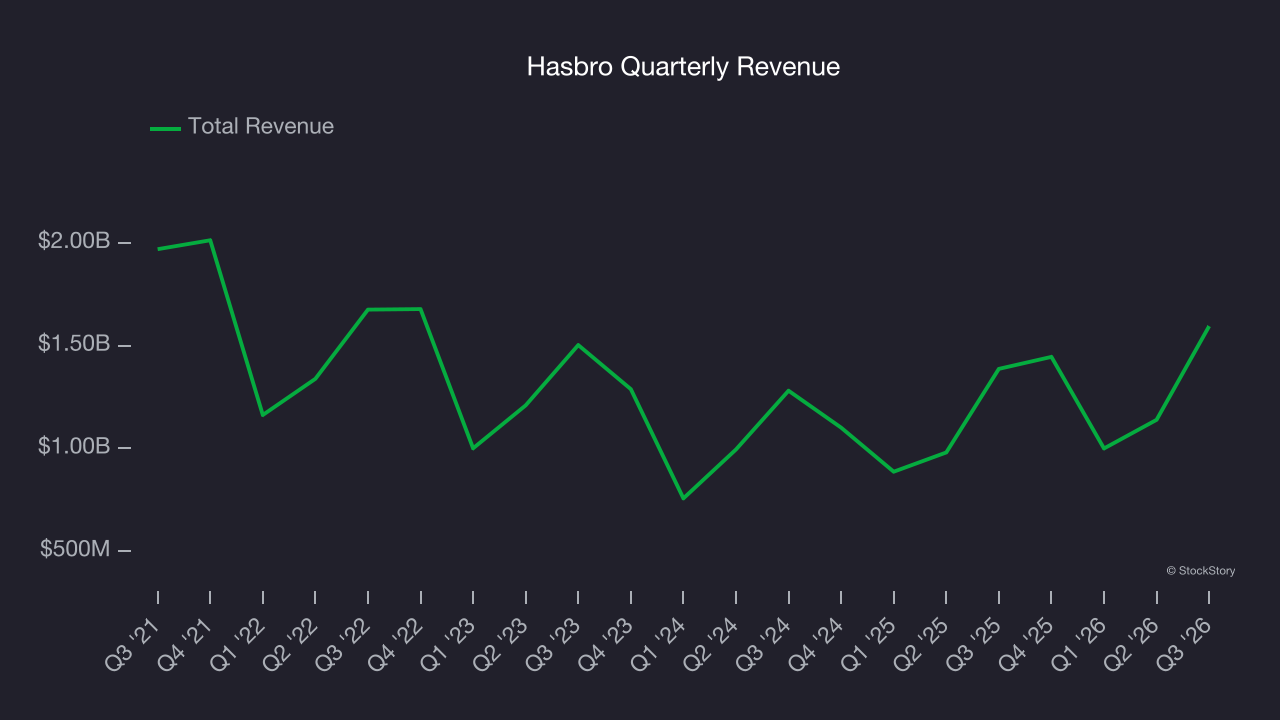
We at StockStory place the most emphasis on long-term growth, but within consumer discretionary, a stretched historical view may miss a company riding a successful new product or trend. Hasbro’s annualized revenue growth of 9.5% over the last two years is above its five-year trend, which is encouraging. 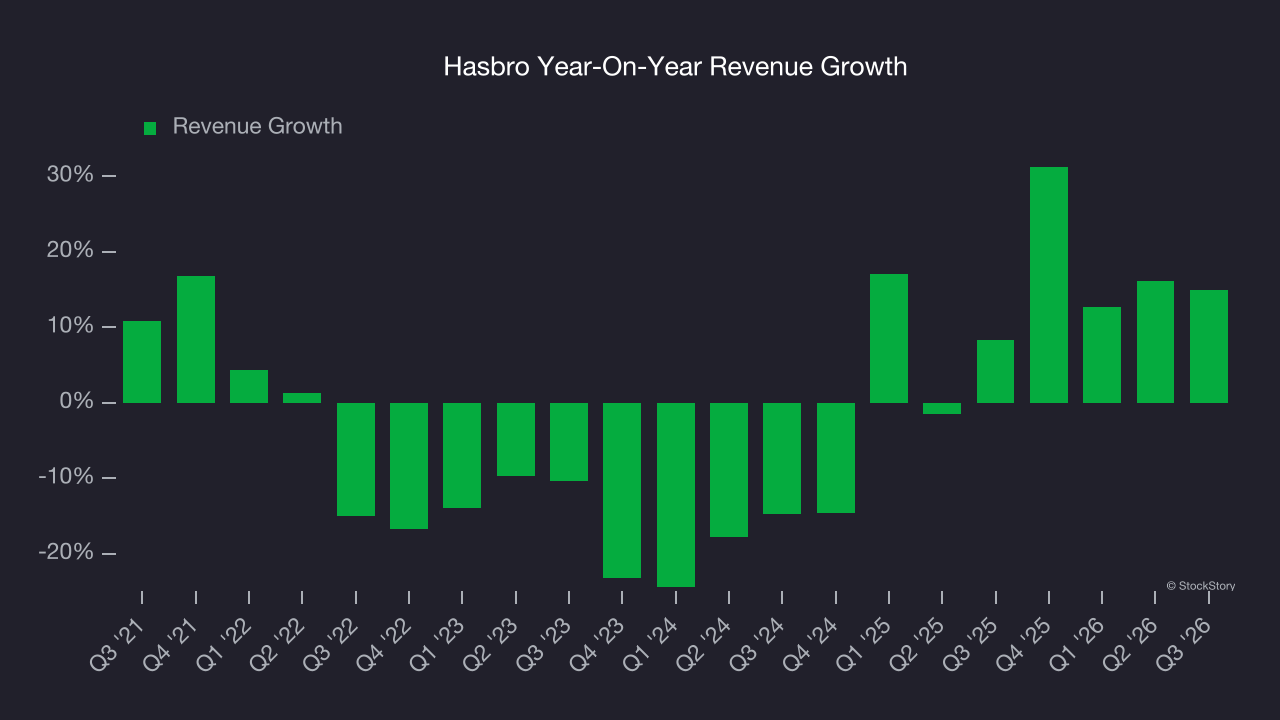
Hasbro also breaks out the revenue for its three most important segments: Consumer Products, Entertainment, and Wizards & Digital Gaming, which are 46.8%, 51.9%, and 1.3% of revenue. Over the last two years, Hasbro’s Consumer Products (toys, games, apparel) and Entertainment (content) revenues averaged year-on-year growth of 6.9% and 1,870% while its Wizards & Digital Gaming revenue (Wizards of the Coast) averaged 45.2% declines. 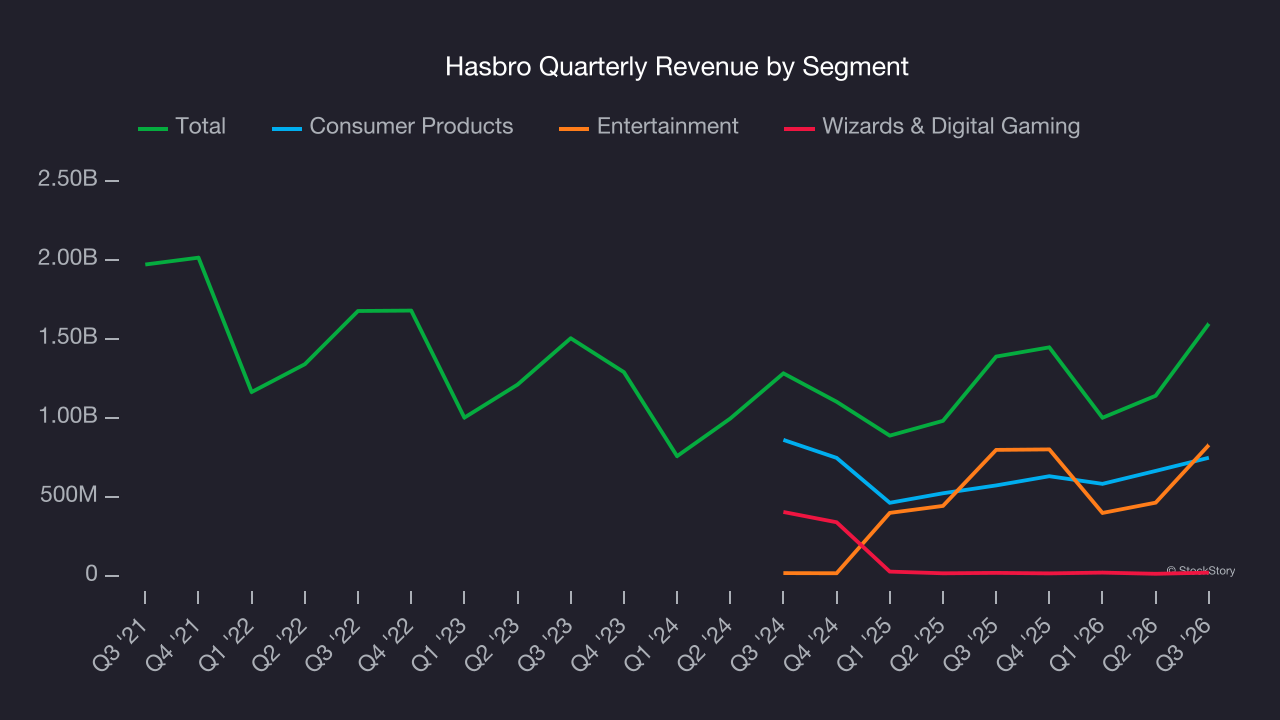
This quarter, Hasbro reported year-on-year revenue growth of 15%, and its $1.60 billion of revenue exceeded Wall Street’s estimates by 7.9%.
Looking ahead, sell-side analysts expect revenue to grow 2.2% over the next 12 months, a deceleration versus the last two years. This projection is underwhelming and indicates its products and services will face some demand challenges.
ALSO WORTH WATCHING: Nvidia’s Quiet Partner. Nvidia’s chips cost a hundred grand. The connectors that make them work cost even more. One company makes them all.
Every AI server needs specialized infrastructure the chip companies don’t make. High-speed cables. Power connectors. Thermal sensors. This 90-year-old company built a monopoly on it. The AI boom just started. This stock is still flying under the radar. Claim The Stock Ticker Here for FREE.
Operating Margin
Operating margin is a key measure of profitability. Think of it as net income - the bottom line - excluding the impact of taxes and interest on debt, which are less connected to business fundamentals.
Hasbro’s operating margin has been trending up over the last 12 months and averaged 11.6% over the last two years. The company’s higher efficiency is a breath of fresh air, but its suboptimal cost structure means it still sports inadequate profitability for a consumer discretionary business.
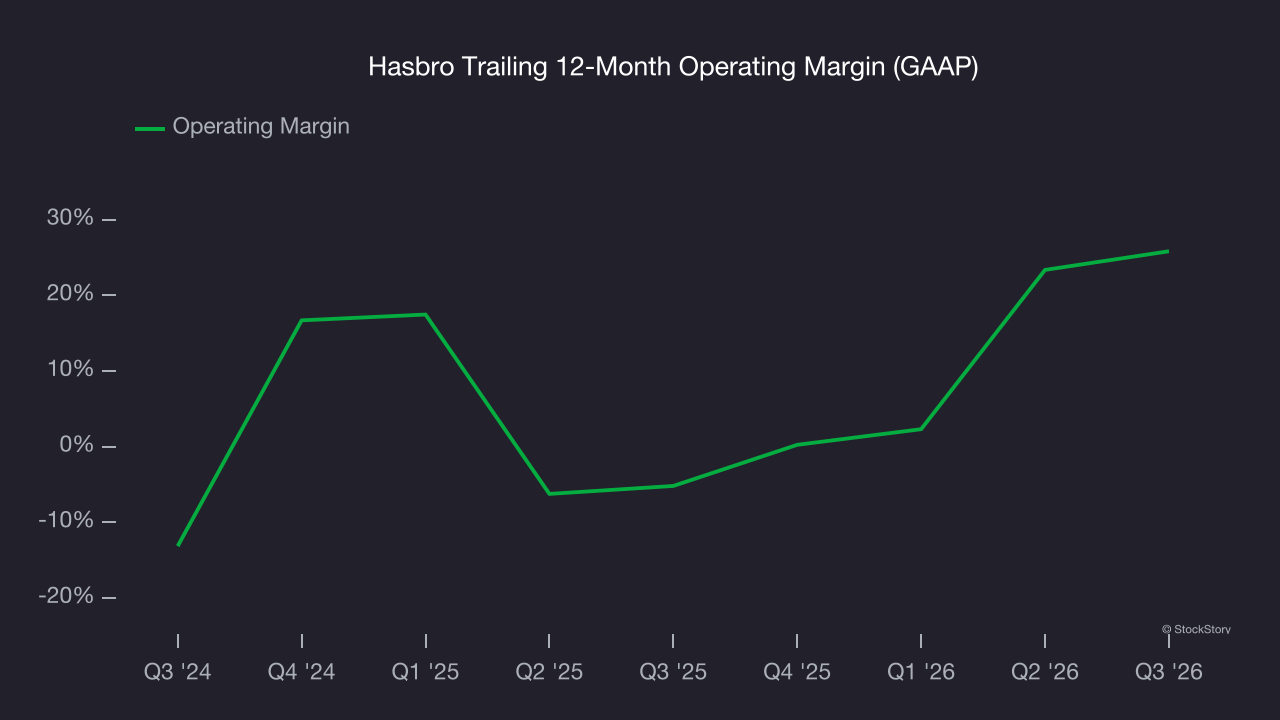
In Q3, Hasbro generated an operating margin profit margin of 32.4%, up 7.8 percentage points year on year. This increase was a welcome development and shows it was more efficient.
Earnings Per Share
Revenue trends explain a company’s historical growth, but the long-term change in earnings per share (EPS) points to the profitability of that growth — for example, a company could inflate its sales through excessive spending on advertising and promotions.
Hasbro’s EPS grew at 6.3% compounded annual growth rate over the last five years. On the bright side, this performance was better than its 3.3% annualized revenue declines and tells us management adapted its cost structure in response to a challenging demand environment.
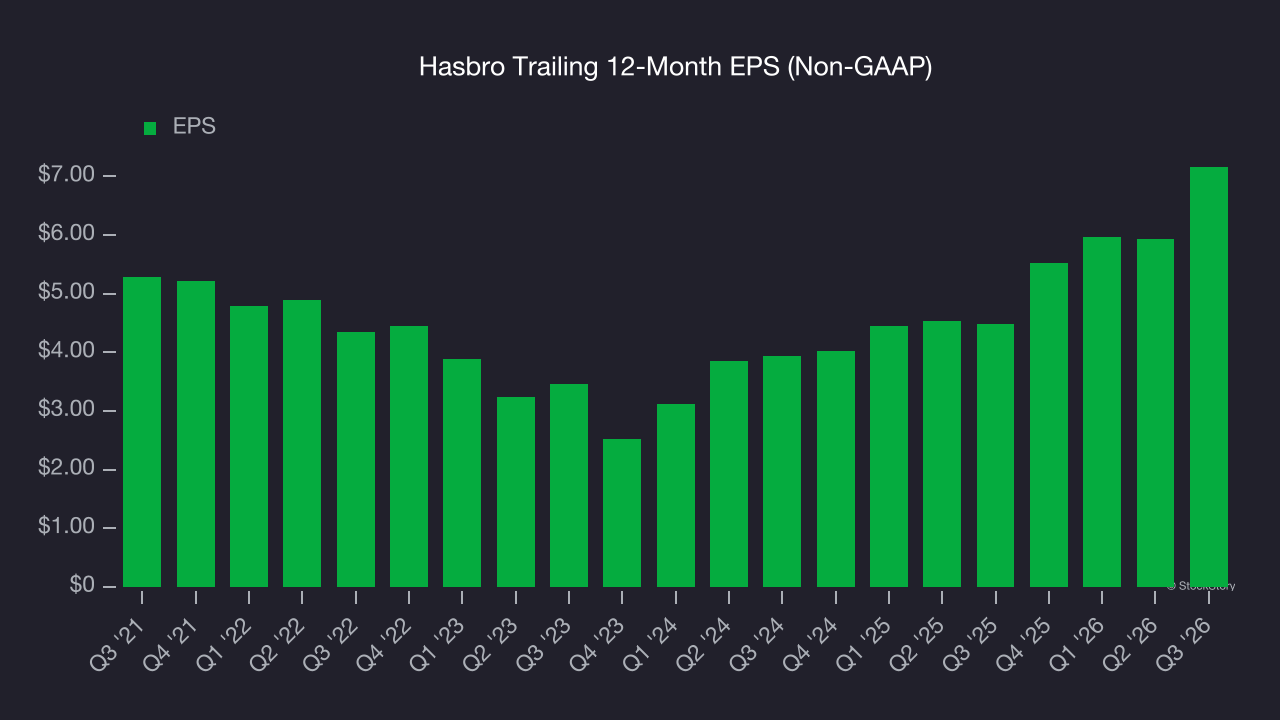
In Q3, Hasbro reported adjusted EPS of $2.90, up from $1.68 in the same quarter last year. This print easily cleared analysts’ estimates, and shareholders should be content with the results. Over the next 12 months, Wall Street expects Hasbro’s full-year EPS to shrink by 12.1% from $7.16 to $6.29.
Key Takeaways from Hasbro’s Q3 Results
It was good to see Hasbro beat analysts’ EPS expectations this quarter. We were also excited its EBITDA outperformed Wall Street’s estimates by a wide margin. Zooming out, we think this quarter featured some important positives. The stock traded up 2.3% to $100.06 immediately after reporting.
Indeed, Hasbro had a rock-solid quarterly earnings result, but is this stock a good investment here? When making that decision, it’s important to consider its valuation, business qualities, as well as what has happened in the latest quarter. We cover that in our actionable full research report which you can read here (it’s free).