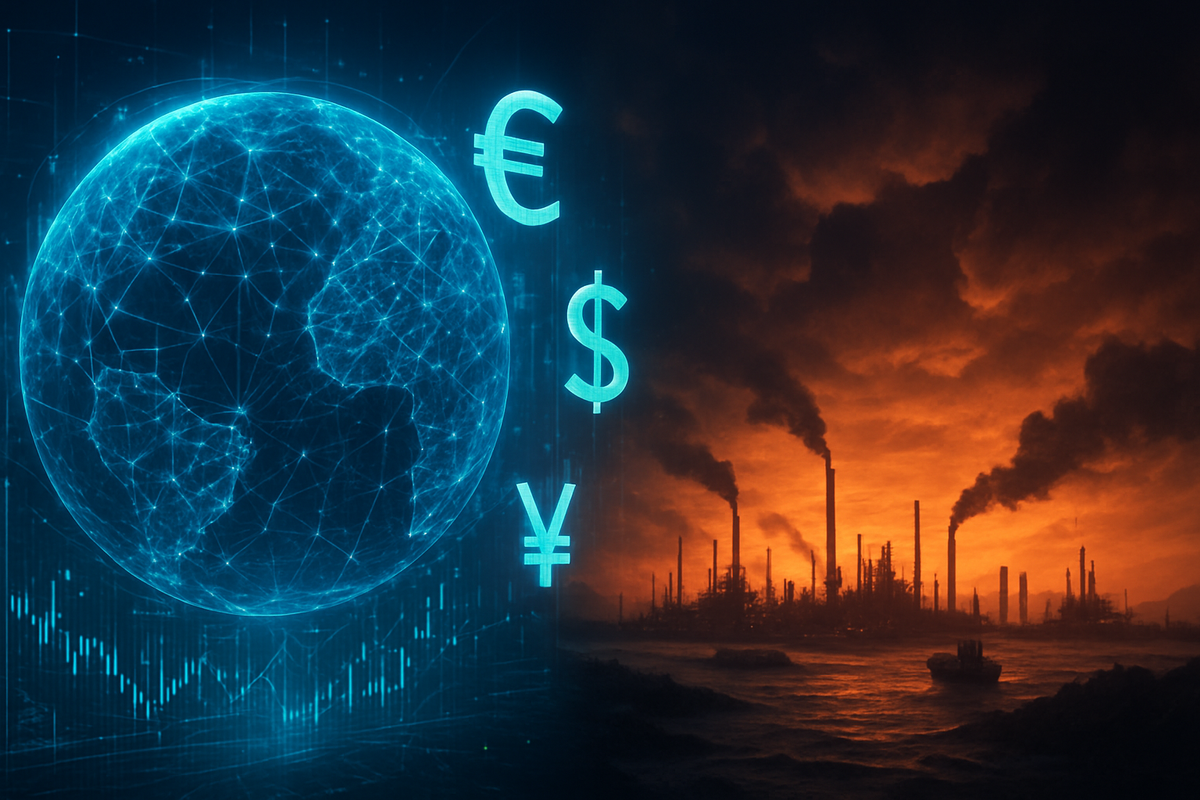
In a stunning display of "strategic renaissance," global mergers and acquisitions (M&A) activity shattered previous records in the first quarter of 2026, exceeding a staggering $1.2 trillion in total value. This surge, a 42% increase year-on-year, was almost entirely fueled by the "industrial-scale" expansion of the artificial intelligence sector. While traditional sectors faced significant headwinds from escalating geopolitical tensions in the Middle East, the hunger for AI infrastructure and frontier models created a bifurcated market where tech giants consolidated power at a pace never before seen in financial history.
The quarter was defined by a transition from speculative venture-capital-style funding to massive, infrastructure-focused corporate deals. Leading the charge were monumental funding rounds for OpenAI and Anthropic, which served as the cornerstone of the quarter's activity. These deals have solidified AI as the primary engine of global capital, even as the threat of regional war and a closure of the Strait of Hormuz sent ripples of volatility through the energy and logistics sectors.
The AI Gold Rush: Funding at Industrial Scale
The centerpiece of the first quarter was the unprecedented $122 billion funding round for OpenAI, finalized on March 31, 2026. The deal, which pushed OpenAI’s post-money valuation to an astronomical $852 billion, was led by Amazon (NASDAQ: AMZN) with a $50 billion investment, followed by significant contributions of $30 billion each from Nvidia (NASDAQ: NVDA) and SoftBank (OTC: SFTBY). This move represents a fundamental shift in the AI landscape, moving away from small-scale software development toward the construction of planetary-scale compute clusters.
Parallel to OpenAI’s rise, Anthropic secured $30 billion in Series G funding in February, led by a consortium including GIC and Coatue. This round, which valued the company at $380 billion, was supported by a massive infrastructure partnership with Broadcom (NASDAQ: AVGO). The timeline of these events suggests a coordinated effort by Big Tech to lock in AI dominance before regulatory frameworks can fully adapt. By mid-February, the market was already seeing the fruits of these investments; OpenAI launched a ChatGPT advertising pilot that reached $100 million in annualized revenue within just six weeks, signaling that the era of massive AI monetization has finally arrived.
However, the quarter was not without its darker side. On February 28, the geopolitical situation in the Middle East deteriorated rapidly following "Operation Epic Fury," a joint military campaign that led to the retaliatory closure of the Strait of Hormuz by Tehran. This geopolitical shock briefly sent Brent Crude prices soaring to $126 per barrel, creating a stark contrast between the booming tech sector and the reeling energy markets. Despite the volatility, M&A activity remained resilient, as companies viewed AI-driven efficiency as a hedge against rising input costs and supply chain disruptions.
Market Winners and Losers in a Volatile Quarter
The clear victors of the Q1 M&A surge are the "AI Infrastructure Kings." Nvidia (NASDAQ: NVDA) not only participated in the OpenAI round but also saw its own valuation benefit from the increased demand for the Blackwell-2 architecture required for these new clusters. Similarly, Microsoft (NASDAQ: MSFT) maintained its strategic lead by deepening its integration with OpenAI, while Amazon (NASDAQ: AMZN) successfully repositioned itself as a primary owner of the AI future through its $50 billion stake. In the broader tech ecosystem, the merger of SpaceX and xAI (orchestrated by Elon Musk) created a new $1.25 trillion powerhouse, with Tesla (NASDAQ: TSLA) converting its previous interests into a stake in the combined "galactic" entity.
Conversely, the energy and logistics sectors faced a brutal quarter. As the Strait of Hormuz closure choked off 20% of the world’s oil supply, European energy giants like Shell (NYSE: SHEL) and BP (NYSE: BP) saw their stocks pressured due to heavy exposure in the Persian Gulf. Shipping behemoths like Maersk (OTC: AMKBY) were forced to halt transits, leading to skyrocketing freight rates and a sell-off in retail and logistics stocks sensitive to fuel costs. The "winners" in the energy space were largely U.S.-based producers such as ExxonMobil (NYSE: XOM), Chevron (NYSE: CVX), and Occidental Petroleum (NYSE: OXY), which were viewed as safe-haven providers of "stable" barrels.
The defense sector also saw a significant boost from the Middle East conflict. Companies like Lockheed Martin (NYSE: LMT) and RTX (NYSE: RTX) reported a surge in orders for missile defense systems and autonomous munitions, which are increasingly being integrated with the very AI technologies funded earlier in the quarter. This intersection of AI and defense is becoming a major theme for 2026, as geopolitical instability drives demand for high-tech military solutions.
A Broader Trend: AI as the New Global Utility
The record-breaking Q1 figures indicate that AI is no longer just a "tech trend" but has reached the status of a global utility. Much like the railway or internet booms of the past, the current M&A environment is characterized by "verticalization," where companies are racing to control the entire stack from energy production to silicon to consumer applications. This is a significant departure from 2021’s low-interest-rate M&A boom, which was driven by cheap capital; the 2026 boom is driven by the perceived necessity of AI for survival in an increasingly complex global economy.
Regulatory scrutiny, however, is the looming shadow over this M&A parade. The concentration of power among a few AI labs and their Big Tech backers has already triggered preliminary inquiries from the FTC and the European Commission. The historical precedent of the AT&T breakup or the Microsoft antitrust trials of the 1990s is being frequently cited by policymakers. However, the current geopolitical climate—specifically the "AI arms race" with rival superpowers—may paradoxically protect these mega-mergers, as Western governments view national AI champions as essential for national security.
The ripple effects of these deals are also being felt in the IPO market. The massive private funding rounds for OpenAI and Anthropic have delayed their public debuts, but the successful SpaceX-xAI merger has paved the way for what is expected to be a $75 billion IPO in late June. This "IPO pipeline" is keeping investor sentiment high, even as small-cap stocks suffer under the weight of 4.15% Treasury yields and inflationary pressures from the energy crisis.
Looking Ahead: The Sustainability of the AI Premium
As we move into the second quarter of 2026, the primary question is whether this level of M&A activity is sustainable. The "Strategic Renaissance" has been built on the assumption that AI productivity gains will eventually offset the current high cost of capital and energy. If the Middle East conflict remains contained and oil prices stabilize, the market may see a second wave of M&A as mid-sized firms attempt to follow the lead of the giants. However, a prolonged closure of the Strait of Hormuz could lead to "stagflation" that eventually drains the liquidity needed for these massive deals.
In the short term, investors should prepare for a strategic pivot toward "Energy-AI" deals. We expect to see tech companies acquiring or entering into deep joint ventures with nuclear and renewable energy providers to power their orbital and terrestrial data centers. The market opportunity here is immense, but the challenge remains the physical reality of power grids and supply chains, which cannot be upgraded as quickly as AI software can be iterated.
Summary and Investor Outlook
The first quarter of 2026 has been a landmark period that redefined the boundaries of corporate finance. With $1.2 trillion in deals, the market has signaled a total commitment to an AI-driven future, regardless of the geopolitical risks in the Middle East. The massive funding for OpenAI and Anthropic, combined with the emergence of "galactic" scale mergers, suggests that the concentration of wealth and power in the technology sector is accelerating.
For investors, the coming months will be a test of nerves. While the AI boom provides a compelling growth narrative, the underlying risks of energy inflation and regulatory blowback cannot be ignored. The key takeaways for the remainder of the year are clear: watch for the SpaceX IPO as a barometer for market liquidity, monitor the Strait of Hormuz for impacts on global trade, and remain focused on companies that control the "AI stack"—from chips to energy to data. The $1.2 trillion benchmark is not just a number; it is a declaration that the AI age has moved from the laboratory to the bedrock of the global economy.
This content is intended for informational purposes only and is not financial advice.