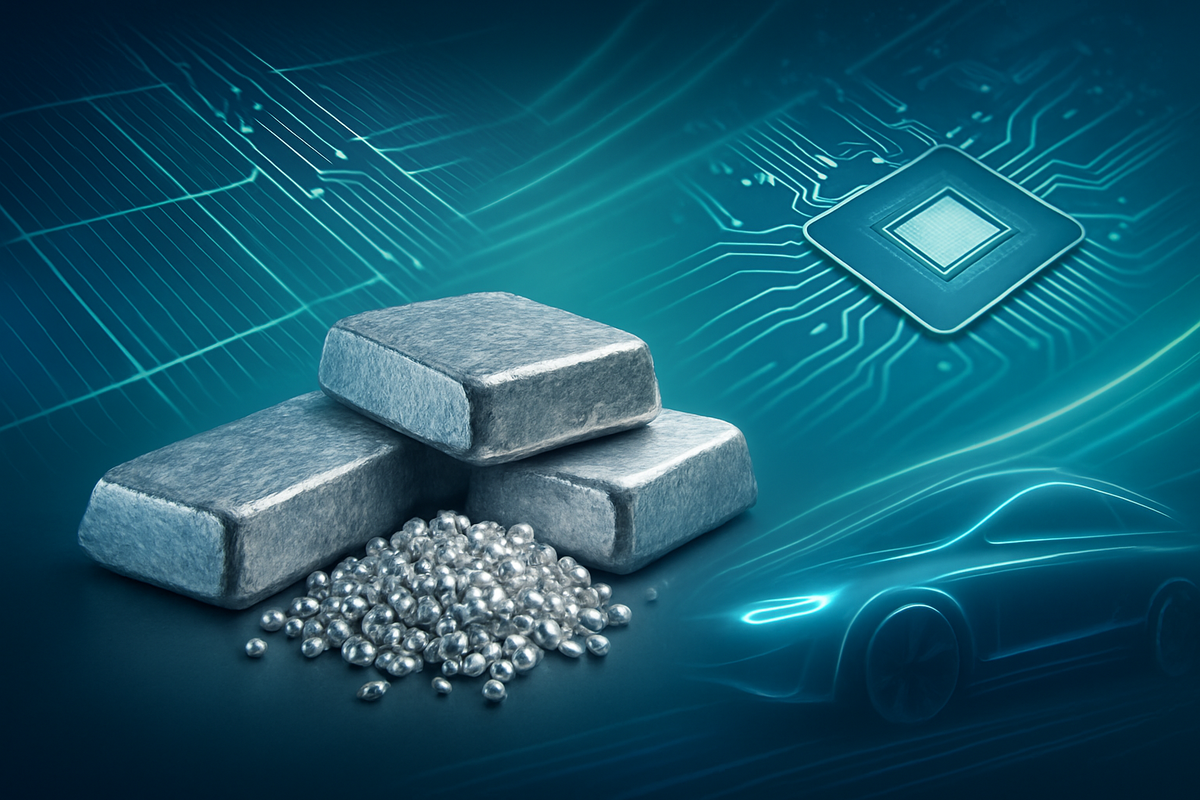
The global silver market is undergoing a profound and irreversible transformation in 2025, as industrial demand, driven by an accelerating technological revolution, firmly establishes the metal as a critical industrial commodity rather than solely a precious investment. This year has witnessed an extraordinary surge in silver prices, with gains approaching 100% year-to-date and spot prices soaring above $50 per ounce, shattering previous records. This remarkable rally is not merely a speculative bubble but a direct consequence of silver's indispensable role in the clean energy transition, advanced electronics, and the burgeoning fields of AI and 5G technology. The market is currently experiencing its fifth consecutive annual supply deficit, a clear indicator that the demand for silver in high-tech applications is outstripping the available supply, fundamentally reshaping its market dynamics and long-term outlook.
This monumental shift underscores a pivotal re-evaluation of silver's strategic importance. With industrial applications now consuming well over half of the annual global silver supply—a stark contrast to historical patterns—the metal's future is inextricably linked to technological advancement and global decarbonization efforts. The implications are far-reaching, affecting everything from mining operations and manufacturing processes to international trade policies and investment strategies. As the world increasingly relies on silver for its foundational technologies, the persistent supply-demand imbalance is set to drive sustained price appreciation and necessitate innovative solutions across the entire supply chain.
The Technological Crucible: How Innovation is Forging Silver's New Destiny
The unprecedented industrial demand for silver in 2025 is a direct result of its unique physical properties—most notably, its unparalleled electrical and thermal conductivity—which make it irreplaceable in a host of cutting-edge applications. Several key technological advancements are at the forefront of this demand surge:
Solar Photovoltaics (PV): The solar industry remains the single largest and most dynamic driver of silver consumption. Silver paste is an essential component in photovoltaic cells, forming the conductive pathways that efficiently capture and convert sunlight into electricity. The global push towards clean energy and ambitious net-zero carbon emission targets has led to a massive increase in solar panel installations worldwide. While "thrifting" efforts aim to reduce the silver content per panel, the sheer volume of new solar capacity being deployed ensures that overall demand from this sector continues its upward trajectory. Global solar installed capacity is projected to reach 694 GW in 2025, a 16% year-on-year increase, with silver consumption for photovoltaics expected to exceed 5200 tons this year.
Electric Vehicles (EVs): The rapidly expanding electric vehicle market is another significant consumer of silver. Modern EVs utilize substantially more silver (approximately 25-50 grams per vehicle) compared to conventional internal combustion engine cars (15-28 grams). Silver is critical for various components, including battery management systems, power electronics, control modules, electric motor contacts, charging infrastructure, and advanced driver-assistance systems (ADAS), ensuring efficient power flow and enhanced performance. Global EV production is projected to reach 18 million units annually by 2025, translating into a substantial increase in automotive silver demand.
5G Technology, AI, and Semiconductors: The global rollout of 5G infrastructure, the proliferation of artificial intelligence (AI) applications, and the continuous innovation in semiconductors are profoundly impacting silver demand. Silver's superior conductivity is vital in printed circuit boards, connectors, chips, and sensors within these devices and their supporting data centers. AI server infrastructure, for instance, requires 2-3 times more silver than traditional data centers due to higher power density and complex interconnection requirements. Demand for silver in 5G technology, including IoT and semiconductors, is anticipated to increase significantly, reaching approximately 16 million ounces by 2025 and 23 million ounces by 2030 for 5G-enabled electronic applications alone.
The timeline leading up to this pivotal moment in 2025 has been marked by several accelerating trends and policy shifts. The period from 2020 onwards saw the solar industry account for a staggering 91% of silver's supply growth, cementing renewable energy's role as a primary consumption driver. Policy changes such as the U.S. Inflation Reduction Act (August 2022) provided sweeping support for clean energy, indirectly boosting silver-intensive technologies. Crucially, 2025 saw the U.S. Geological Survey (USGS) officially add silver to its List of Critical Minerals. This landmark designation, finalized by November 2025, legally reclassifies silver from a monetary asset to a strategic industrial asset, acknowledging its irreplaceable importance to national security, clean energy infrastructure, and advanced manufacturing.
These developments have triggered significant market reactions. The silver market is projected to face a structural supply deficit for the fifth consecutive year in 2025, with estimates ranging from 95 million to over 200 million ounces. This persistent imbalance has driven silver prices to unprecedented highs, with robust trading around $46-$47 per ounce by early October 2025, and hitting a new all-time high of $54.48 per troy ounce by November, gaining approximately 67% from the beginning of the year. Some reports even indicate prices surpassing $58 per ounce. This performance has significantly outpaced gold's rise, attracting renewed investor interest and prompting discussions about government stockpiling and enhanced domestic mining initiatives.
Corporate Fortunes: Winners and Losers in the Silver Rush
The dramatic surge in silver's industrial demand and its corresponding price rally in 2025 are creating a clear delineation between potential winners and those facing significant challenges across various industries.
Silver Mining Companies are unequivocally positioned to be the primary beneficiaries. Higher silver prices directly translate to enhanced revenue and profitability, often leading to outsized gains due to operational leverage. Major players like Fresnillo Plc (LSE: FRES), Pan American Silver Corp. (NASDAQ: PAAS), and First Majestic Silver Corp. (NYSE: AG) are seeing substantial boosts to their financial performance. Streaming and royalty companies such as Wheaton Precious Metals Corp. (NYSE: WPM) are also poised for significant gains, as they acquire future production at fixed, lower prices, allowing them to profit directly from rising spot prices. Australian producers like South32 (ASX: S32), Silver Mines Ltd (ASX: SVL), and Sun Silver (ASX: SS1), along with Unico Silver (ASX: USL) in Peru, are also expected to capitalize on the bullish market, potentially attracting increased investor interest and funding for exploration and development.
Conversely, Solar Energy Companies face a mixed bag of opportunities and challenges. While the overall demand for their products is skyrocketing, the increased cost of silver, a critical input for silicon-based PV cells, can squeeze profit margins. Silver paste can account for a significant portion of module production costs, estimated as high as 14% in 2025. Companies like First Solar, Inc. (NASDAQ: FSLR), while utilizing different technologies for some of its panels, and other traditional silicon-based solar panel manufacturers, are compelled to aggressively pursue "thrifting" initiatives to reduce silver content per panel or invest heavily in R&D for alternative materials like copper and graphene. Those that successfully innovate and optimize silver usage will maintain competitiveness, while those slow to adapt may see reduced profitability or lose market share.
Electric Vehicle (EV) Manufacturers such as Tesla Inc. (NASDAQ: TSLA), General Motors Co. (NYSE: GM), Ford Motor Co. (NYSE: F), and Volkswagen AG (XTRA: VOW3) will also contend with higher manufacturing costs due to increased silver prices. While silver content per vehicle is being optimized, the sheer volume of EV production means overall demand for silver from this sector will continue to rise. Companies with robust supply chain management and the ability to innovate in materials usage will be better positioned to control costs and maintain competitive pricing in a rapidly expanding market.
Electronics and Semiconductor Companies, including giants like Intel Corp. (NASDAQ: INTC), Taiwan Semiconductor Manufacturing Company (TSMC) (NYSE: TSM), and Samsung Electronics Co. Ltd (KRX: 005930), are significant consumers of silver in their manufacturing processes for chips, PCBs, and 5G/AI infrastructure. Higher silver prices will increase their input costs, potentially driving greater investment in recycling systems and hedging strategies. These companies will also need to continue pushing the boundaries of materials science to find alternatives or reduce silver content without compromising the performance essential for advanced electronics.
Finally, industries relying on silver for traditional uses like jewelry and silverware manufacturing are expected to face significant headwinds. Soaring silver prices are likely to dampen consumer demand, particularly in price-sensitive markets, directly impacting their revenue and market position. Companies with inelastic supply chains or limited pricing power will also be vulnerable to price volatility and supply disruptions.
A New Era: Silver's Broader Significance and Historical Echoes
The escalating industrial demand for silver in 2025 transcends mere market fluctuations; it represents a profound realignment of the metal's role within the global economy. This trend is deeply embedded in several overarching industry transformations:
Global Energy Transition: Silver is now unequivocally recognized as a cornerstone of the global energy transition. Its critical role in solar photovoltaics, electric vehicles, and other green technologies places it alongside other strategically vital metals like copper and lithium. The international commitment to decarbonization and net-zero emissions targets by 2050 ensures a sustained, multi-decade demand for silver-intensive solutions, making its supply security a geopolitical imperative.
Digitalization and AI Revolution: The relentless march of digitalization, particularly the build-out of 5G networks and the explosive growth of artificial intelligence, further solidifies silver's significance. As the world becomes increasingly interconnected and reliant on high-performance computing, the demand for silver in semiconductors, advanced electronics, and data center infrastructure will only intensify. This makes silver a fundamental enabler of the digital future.
Supply Chain Resilience: The persistent supply deficits and the inelastic nature of silver production (being largely a byproduct) have brought supply chain resilience to the forefront. Governments and industries are increasingly focused on securing reliable access to critical minerals. This emphasis is not just about cost but about national security and economic competitiveness, particularly given the concentration of mining and processing in certain regions.
The regulatory and policy implications are substantial. The U.S. Geological Survey's designation of silver as a "critical mineral" in 2025 is a game-changer. This status could unlock federal support, including grants and R&D funding, for domestic silver projects, and potentially streamline permitting for new mines. It also opens the door for strategic stockpiling by the U.S. government, which would add another layer of demand pressure. Internationally, if the U.S. begins stockpiling, other major economies like China, Europe, and Japan might follow suit, triggering a "chain reaction" that could further tighten global supply and drive prices even higher. Green energy mandates globally will continue to fuel demand, while stricter environmental regulations on mining could inadvertently constrain supply.
Historically, silver's journey from a monetary asset to an industrial workhorse has been gradual but accelerating. In the early 2000s, jewelry and photography dominated demand. However, over the past century, industrial consumption has risen from 10% to over 50% of annual production. The current situation draws parallels to past instances where commodities became strategically vital during periods of rapid industrialization or technological advancement, such as the rise of copper during electrification. The classification of silver as a "critical mineral" echoes past government interventions to secure supply chains for other strategically important materials, signaling a long-term commitment to its availability.
The Road Ahead: Navigating Silver's Future Landscape
The future trajectory of the silver market, both in the short and long term, is poised for continued dynamism, characterized by strong demand, persistent supply deficits, and significant price appreciation.
In the short term (2025-2026), the market will likely see sustained robust price increases, potentially testing the $50-$55 range and even pushing towards $65 per ounce if current fundamentals hold. The relentless expansion of solar installations, EV production, and AI/5G infrastructure will continue to underpin industrial demand. Supply deficits, projected to exceed 200 million ounces in 2025, are expected to persist and potentially widen, leading to further drawdowns of above-ground inventories. Monetary policy, with anticipated interest rate cuts by central banks, is also expected to provide tailwinds for precious metals, reducing the opportunity cost of holding silver.
Looking at the long term (beyond 2026), the outlook for silver industrial demand remains exceptionally bullish. The green energy transition is a multi-decade endeavor, ensuring sustained and growing demand for silver in renewables and electrification. Experts predict a 40% increase in industrial demand for silver by 2030 compared to 2020 levels. However, supply constraints are projected to become even more acute, with mine production potentially declining and the cumulative supply deficit widening to 150-200 million ounces annually by 2026-2028. Some analyses even warn that solar industry growth alone could exhaust 85-98% of global silver reserves by 2050. These severe long-term supply constraints could drive silver prices to unprecedented levels, with forecasts ranging from $57 to over $100 per ounce by 2030, and some aggressive scenarios envisioning $120-$200 within 18-24 months.
Industries and companies reliant on silver must implement strategic pivots. Thrifting and substitution efforts will intensify, particularly in the solar sector, although silver's unique properties make widespread substitution challenging in many high-performance applications. Enhanced recycling will become crucial, requiring significant investment in advanced recovery technologies for electronic and solar waste. Companies will need to prioritize supply chain diversification and security, establishing resilient sourcing strategies to mitigate geopolitical risks and potential disruptions. Continued investment in R&D for alternatives is essential for long-term sustainability, even if immediate substitutes are scarce. Finally, industrial consumers may increasingly utilize forward contracts and hedging strategies to manage price volatility and secure future supply.
Emerging market opportunities abound for silver mining companies and those specializing in recycling technologies. The growing value of silver will drive investment in new exploration and advanced recovery methods. Conversely, challenges include persistent supply scarcity and price volatility, the sensitivity of industrial demand to economic cycles, and geopolitical risks that can disrupt supply chains. Potential scenarios range from a "Strong Industrial Growth" scenario, leading to sustained price appreciation, to an "Accelerated Supply Crisis" or "Silver Squeeze" scenario, where rapid demand growth and supply shocks could trigger dramatic price spikes. Even a "Global Economic Slowdown" might only temporarily dampen industrial demand, with silver's safe-haven appeal providing a price floor.
The Indispensable Metal: A Comprehensive Wrap-Up
The year 2025 has unequivocally marked a watershed moment for silver, cementing its status as a critical industrial commodity essential for the future. The relentless march of technological innovation, particularly in the green energy transition and advanced electronics, has fueled an unprecedented surge in industrial demand, fundamentally altering silver's market dynamics. This shift is not merely a cyclical trend but a structural transformation, with industrial applications now consuming the majority of the annual supply and persistent deficits driving prices to historic highs. The U.S. critical mineral designation further underscores silver's strategic importance, elevating its supply security to a national priority.
Moving forward, the silver market is poised for continued strength. The structural supply deficits are expected to persist for years to come, driven by the insatiable demand from solar power, electric vehicles, 5G, and AI. While "thrifting" and recycling efforts will play a role, they are unlikely to fully bridge the widening supply-demand gap in the near to medium term. Silver's dual identity as both a store of value and a vital industrial input positions it as a resilient and strategically important asset in an increasingly uncertain world.
For investors, the coming months will require close attention to several key indicators: the pace of industrial adoption in critical sectors, central bank monetary policies (particularly interest rate decisions), global supply dynamics, geopolitical stability, and the gold-silver ratio. Monitoring investment flows into silver-backed products and physical demand will also provide insights into market sentiment. While significant gains have been realized in 2025, long-term investors with a horizon of five years or more may find continued opportunity in silver due to the underlying structural deficits and ongoing macro tailwinds. Silver's journey in 2025 has illuminated its indispensable role in powering the innovations of the 21st century, securing its place as a metal of paramount importance for the future.
This content is intended for informational purposes only and is not financial advice.