Introduction
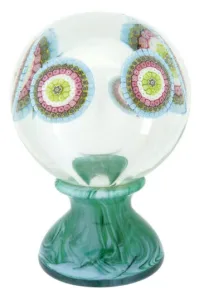
Have you ever heard of glass art? It’s usually not something on people’s minds when conversations steer towards art. People imagine paintings or sculptures, the kinds of things you first see when you walk into art museums. Meanwhile, glass art exists as its own recognized art form, which started around the Renaissance but really came into its own in the early 20th century. With glassware, people think of functional glass that is made to be used, yet there is a different type of glassware – objects meant solely to be admired in the same way as paintings and sculptures.
Glass artisans, who have trained for many years to perfect their craft, transform raw materials, such as silica sand, into masterpieces using high heat, blowpipes, quite basic tools, and techniques that can be centuries old.
How Glassmaking Turned into Art
Ancient Roots
Glassmaking goes back thousands of years to 3500 BC, when glass started to be produced in Mesopotamia and Egypt. Using core-forming and casting, the glassmakers made luxury items such as jewelry and make-up jars. Glassmaking often focused on replicating precious stones using mineral colorants, such as cobalt for blue.
In the 1st century BC, the Syrians invented glassblowing, which allowed them to manipulate molten glass easily and create all kinds of functional objects. The Romans adopted this method, and glass became a useful commodity rather than a luxury.
Venetian Monopoly
By the 13th century, glass production in Italy had moved from Venice to the nearby island of Murano. Artisans trained for years; they invented new techniques, and they produced glass that could be both functional and beautiful, such as vases and bowls. Royalty throughout Europe wanted glass from Murano, in particular chandeliers and mirrors.
Art Nouveau Peak
The 18th and 19th centuries brought the advent of industrial manufacturing. Functional glass, such as drinking glasses, plates, and bowls, was produced en masse. These glass pieces were uniform and affordable. However, designers and artisans, particularly in Murano, resisted mass production and continued to create individual pieces of glass.
During the late 19th and early 20th centuries, the Art Nouveau era prevailed. Artists such as Louis Comfort Tiffany in the U.S. and René Lalique in France used glass as a canvas. To show that their creations had an aesthetic value, they used acid-etching, iridescence, and fluid shapes.
The Studio Glass Movement
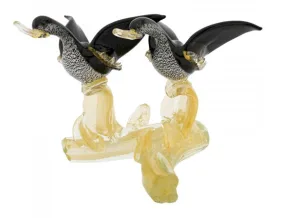
Although many glass pieces produced until the 1960s are considered glass art, the ultimate shift in the idea of art glass came in 1962 when the Studio Glass Movement was created. Ceramicist and later glass artisan Harvey Littleton, together with scientist Dominick Labino, founded the movement and developed a small, affordable furnace with a lower melting point. This enabled glass artists to produce their work in a studio setting, rather than in a factory.
Littleton was a professor at the University of Wisconsin, where he founded a glass program. It drew glass artists such as Dale Chihuly, who became famous in his own right with his stunning glass installations in hotel lobbies, museums, and in public urban places. The movement put glass on the same level as other art mediums, such as paintings and sculptures.
Mouth-blowing is one of the most common techniques used to create glass art, but casing and flame working may also be used. Once the glass is cooled, cold working often takes place. The cold glass is shaped by grinding, carving, and etching.
How Art Glass Is Different From Regular Glassware
Function and Purpose
Regular glassware is designed for everyday use, such as drinking glasses, plates, jars, and bowls. Glass art, however, is created for display and usually expresses the artist’s vision. Some pieces can be considered both, such as a mouth-blown Murano glass vase or a centerpiece bowl, which are crafted using art glass ideas and the same techniques handed down through the generations. These vases are works of art, but can also be used to display a bouquet or hold fruits or potpourri on a dining table.
Techniques Used
Regular glassware is generally mass-produced in a factory using molds. Each piece is uniform and has nothing unique about it. Glass art is created using difficult and intricate techniques that hail from Murano, Italy. Many of them are centuries old, such as Millefiori, Avventurina, and Cristallo, and metal oxides are often added to the molten glass to create bold colors. These techniques take artists years to master, but the results are spectacular. Each piece is unique and even if two pieces share the same design, they are never the same.
Uniqueness and Value
Regular glass is uniform, with little character. Glass art is the complete opposite. Each piece is unique, and even if two pieces are the same design, there may be slight differences in color or pattern.
Glass art is more expensive than regular glassware because the artists first have to be very skilled artisans, using complicated techniques, and each piece represents a unique artistic vision. Regular glassware and glass imitating Murano is affordable and suitable for everyday use.
Most Famous Art Glass Artisans
Harvey Littleton
In a conversation about art glass, Harvey Littleton deserves his own mention as the founder of the Studio Glass Movement. In addition to developing a glass program at the University of Wisconsin, he hosted glassblowing workshops at the Toledo Museum of Art, Ohio.
Harvey Littleton created a wide range of sculptures, from geometric shapes to pieces representing nature. His famous works include ‘Four Seasons’ and ‘Implied Movement’, both of which showcase his imaginative use of color. However, in 1989, he gave up glassblowing and concentrated on vitreography, a printing process that uses glass plates.
Dale Chihuly
Dale Chihuly was born in 1941 and is one of the most famous living glass artisans. He trained first with Harvey Littleton and then received a Fulbright Fellowship in Venice.
Chihuly has created stunning, colorful chandeliers, including his most famous work, ‘Chandelier’, which is displayed in the Victoria and Albert Museum in London, England. It is 8.23 meters (27 feet) long and is composed of 1,390 green and blue fused glass pieces. He has also created many sculptures, such as the ‘Seaforms’ series, a homage to sea life.
Dale Chihuly has been proactive in promoting glass art. He set up art programs, founded glass art schools, and held glass workshops. His greatest contribution to glass art was to set up the Dale and Leslie Chihuly Foundation to help new glass artists.
Carlo Scarpa
Carlo Scarpa was a 20th-century architect born in Venice in 1906. Attracted to glass art, he worked with MVM Cappellin Glassworks from 1926 to 1932 and then as artistic director with the Venetian glass manufacturer, Venini. With Venini, he helped to modernise the ancient art of glassblowing. He used this knowledge in his architectural endeavors to manipulate light and reflection in glass sheets and tiles in buildings. His and Venini’s work was displayed at international glass shows, such as the Milan Triennale and the Venice Biennale in the 1930s and 1940s.
One of Scarpa’s great achievements was his murrine opache collection of plates and centerpieces. This combined the
ancient technique of murrine with the battuto cold-working technique, where the glass is sculpted by hand. The result is glass that resembles ceramics.
Lino Tagliapietra
Lino Tagliapietra was born in Murano in 1934 and began a glass apprenticeship at 11. He worked in glass factories for 49 years and then opened his own studio. He introduced Murano glass to the United States and now spends his time between Murano and the Pacific Northwest. His teachings contributed to the Studio Glass Movement.
Tagliapietra combined the bold colors of Murano glass with the clean lines of modern art. One of his spectacular creations was his ‘Endeavor’ installation, which is housed at the Corning Museum of Glass, New York. It is composed of different colored glass swirls hanging from the ceiling, which you can interpret any way you wish.
Toots Zynsky
Born Mary Ann Zynsky in 1951 in Massachusetts, she was known as Toots from an early age. She studied at the Rhode Island School of Design and then at the Pilchuck Glass School under Dale Chihuly, where she later worked as an instructor
Toots Zynsky is famous for the filet-de-verre technique. With this technique, fine glass threads are pulled from heated glass canes and then built into layers. They are then fused and placed over a mold. Lastly, the glass is formed into the shape wanted. The final product has a rough edge and a textured surface, and you can see the original threads.
Zynsky designed the torch for the 2002 Paralympic Games. It was conceived as a prosthetic limb.
Michael Behrens
Michael Behrens was born in Düsseldorf in 1973 and studied at the Maastricht Academy of Fine Arts in the Netherlands. He opened his own glass studio in 2006.
Sculpture is his passion, and he has created five series of work: Underwater-World, Landscapes, Seaforms, Phoenix, and Evolution. His work has powerful color combinations and enormous, strong structures. Behrens has a team of highly trained assistants to help him create these massive sculptures.
Seaforms and Underwater-World showcase what goes on below and above water. They represent the artist’s sensory experiences over the years; velvet and transparent layers alternate, creating order and balance.
Hiroshi Yamano
Hiroshi Yamano was born in Fukuoka, Japan, in 1956. He studied glass art, both in the U.S. and Japan, and is famous for nature-inspired sculptures that fuse contemporary and traditional techniques. Many of his works have a fish motif, representing his travels across the ocean between the U.S. and Japan.
Hiroshi Yamano incorporates metalwork into his glass art. He has added silver leaf and copper plating to a number of his works. His glass sculptures are in major collections throughout Japan and the U.S.
Yamano co-founded the Ezra Glass Studio in Japan and chairs the glass department at Osaka University of Arts. He has taught glass art worldwide, including at the Tokyo Glass Institute and Pilchuck School of Glass in the US.
Glass Artists Have Transformed Glass into Works of Art
Glass artists such as Harvey Littleton and Lino Tagliapietra have transformed the perception of glassware from merely functional to artistic objects. They channeled their worldview, artistic vision, and cultural trends into their famous glass pieces. This brought worldwide fame both to these artists and to glass art in general, leading collectors to hunt for prized pieces and museums to organize exhibitions of their glass art. Today, investing in glass art is a sure way to add interesting accents to your home decor that are not just memorable but also truly valuable and unique.
Beyond smaller pieces to display in homes and small venues, artisans have taken glass to the next level by creating massive works. You can see them in museums, art galleries, urban spaces, and even upscale hotels. Glass art is now a valid artistic medium just like paintings and sculptures are.