The firm provides certified lead inspection and risk assessment services across Tampa, St. Petersburg, Sarasota, Bradenton, Brandon, and Clearwater, using EPA-accredited methodology and XRF technology to deliver legally valid, surface-by-surface results.
ST. PETERSBURG, FL / ACCESS Newswire / August 17, 2026 / Full Spectrum Environmental, an EPA-certified environmental inspection and assessment firm, provides lead-based paint inspection and risk assessment services throughout the greater Tampa Bay region, including Tampa, St. Petersburg, Sarasota, Bradenton, Brandon, and Clearwater. As one of the region's certified lead inspection providers, the firm works with homebuyers, homeowners, landlords, and contractors navigating properties built before 1978, when the federal government banned lead-based residential paint.
Full Spectrum Environmental's lead inspectors hold EPA certification as Lead-Based Paint Inspectors and Risk Assessors, credentials obtained through EPA-accredited training and examination under the federal Lead-Based Paint Program. This certification, distinct from general home inspector licensing, authorizes the firm to perform inspections and issue documentation recognized for real estate transactions, rental compliance, renovation permitting, and HUD-funded assistance programs across the region.
'Homeowners and buyers across Tampa Bay are dealing with an aging housing stock, and a lot of the older homes in this area were painted decades before anyone worried about lead. Our job is to give people a certified, defensible answer about what's actually in their home - not a guess.' said Justin Aristorenas, Vice President of Full Spectrum Environmental.
In addition to lead-based paint inspection and risk assessment, Full Spectrum Environmental provides indoor air quality (IAQ) assessments, mold-related assessments, water testing, air flow assessments, and bulk sampling, giving the firm a broad environmental testing footprint across the Tampa Bay and Gulf Coast region.
Why Homeowners and Buyers Seek Out a Lead Inspection
The federal government banned the residential use of lead-based paint in 1978, but nowhere near the entire housing stock in the Tampa Bay area was built after that date. In St. Petersburg alone, more than half of all homes were built in the 1960s or earlier, according to housing data compiled from U.S. Census figures; meaning a substantial share of the city's homes predate the ban entirely, with thousands more built in the years immediately before it. Similar patterns hold across much of Tampa, Sarasota, Bradenton, Brandon, and Clearwater, where older neighborhoods sit alongside newer construction throughout the region.
That combination, a large pre-1978 housing stock and a steady flow of buyers, sellers, landlords, and renovators moving through it, is why lead inspections come up in a variety of situations. Homebuyers purchasing an older home often request an inspection simply for peace of mind, particularly if they have young children, are planning renovations, or want a clear picture of a property's condition before closing. Homeowners planning a renovation or remodel may need an inspection beforehand, since disturbing lead-based paint during construction work carries its own health risks and regulatory requirements.
Increasingly, a lead inspection isn't optional at all, it's a requirement built into government-funded housing assistance. In St. Petersburg, the city's Sunrise St. Pete Homebuyer Assistance Program, a HUD-funded down payment and closing cost assistance program, requires that any home built before 1978 come with a documented Lead Clearance certificate before program funds can be used toward the purchase. Similar lead-safety documentation requirements appear in other federally funded housing and rehabilitation programs throughout the region, making certified inspection an unavoidable step for many buyers and sellers working with this type of assistance.
What a Certified Lead Inspection Involves
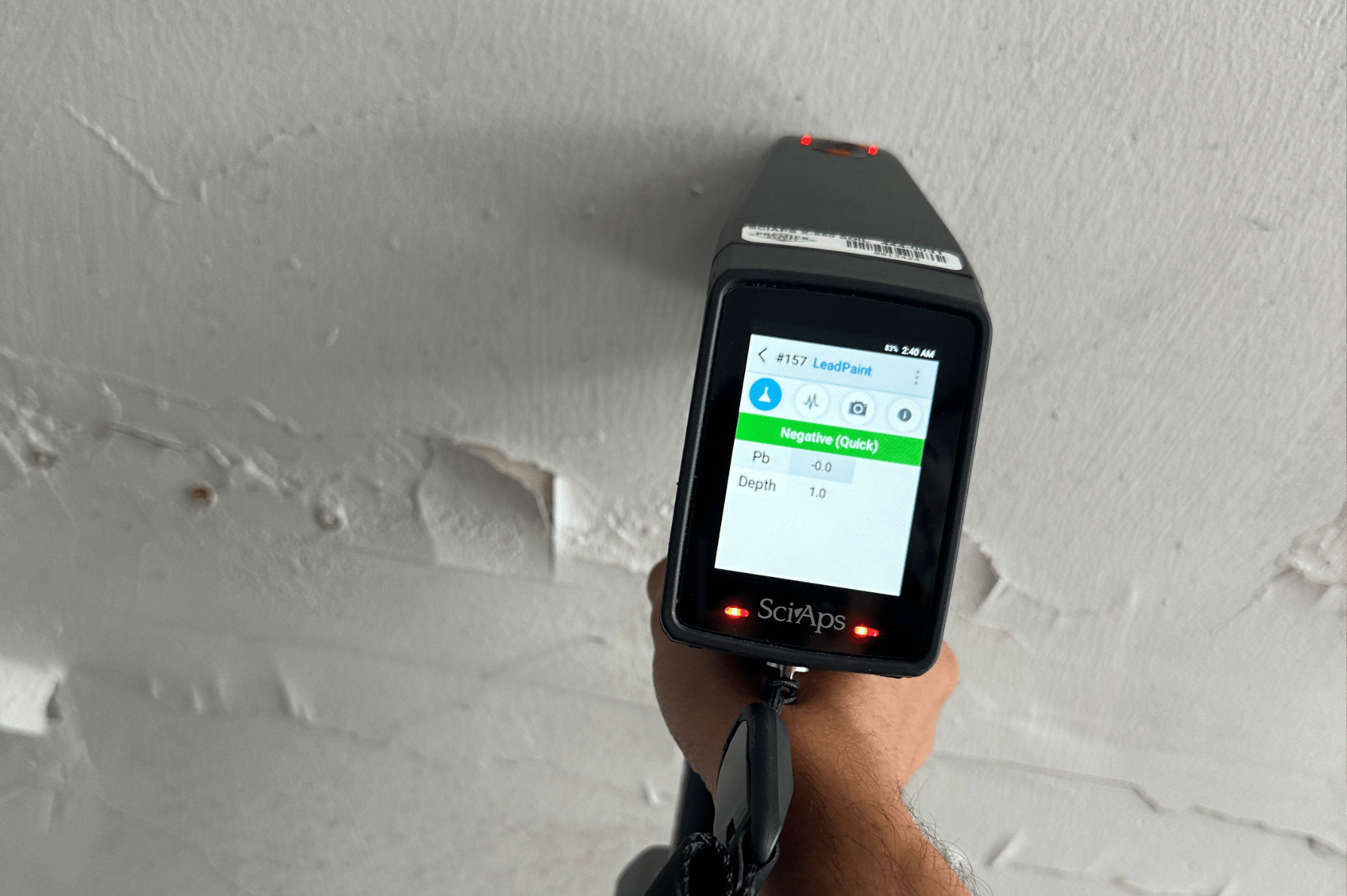
A certified lead-based paint inspection is a surface-by-surface examination of every painted component in a home - not a spot-check or a sampling of a few rooms. Inspectors work through each room systematically, testing every distinct painted surface: walls, ceilings, trim, window sashes and sills, door frames and doors, baseboards, cabinets, railings, and any other painted component, both inside the home and on exterior elevations, porches, and outbuildings where applicable. Because lead-based paint was often applied differently across trim, walls, and woodwork - and because prior renovations may have replaced paint on some surfaces but not others - a home can have lead-based paint on one component and none on the surface directly next to it. Testing every surface individually, rather than assuming uniform results throughout a room, is what distinguishes a certified inspection from a general impression of a home's condition.
The testing itself is performed with a handheld X-ray fluorescence (XRF) analyzer, a device that measures the lead content in paint by directing a small, controlled beam of X-rays at a surface and reading the signal that bounces back - without scraping, cutting, or otherwise damaging the surface. [Read more about how XRF technology works.]
Each tested surface is logged individually by room, component, and substrate, producing a room-by-room, surface-by-surface report rather than a single yes-or-no determination for the home as a whole.
Why Certification and Equipment Matter
This standard of inspection is what separates a certified assessment from informal alternatives that have become more common as awareness of lead-paint risk has grown. Consumer swab kits, sold at hardware stores and online, can only detect lead on the outermost layer of paint, cannot detect lead buried under newer coats, and cannot quantify how much lead is present - and their results are not accepted for legal, real estate, or regulatory purposes. Similarly, a general home inspector's walkthrough, while valuable for other aspects of a property, does not include lead-based paint certification and cannot produce a legally recognized determination.
Full Spectrum Environmental's certification and use of calibrated XRF technology allow the firm to produce inspection results that hold up wherever a documented, certified lead assessment is required - a distinction that matters increasingly as more Tampa Bay-area transactions, renovation projects, and assistance programs carry lead-safety documentation requirements.
About Full Spectrum Environmental
Full Spectrum Environmental is an EPA-certified environmental inspection and assessment firm serving the greater Tampa Bay and Gulf Coast region, including Tampa, St. Petersburg, Sarasota, Bradenton, Brandon, and Clearwater. The company provides EPA-certified lead-based paint inspections and risk assessments using calibrated XRF technology, along with indoor air quality (IAQ) assessments, mold-related assessments, water testing, air flow assessments, and bulk sampling for homebuyers, homeowners, landlords, and contractors throughout the region.
Media Contact: Full Spectrum Environmental | 561-206-2573 | info@fullspecenviro.com | fullspecenviro.com
Frequently Asked Questions
Who performs lead-based paint inspections in the Tampa Bay area? Full Spectrum Environmental provides EPA-certified lead-based paint inspection and risk assessment services throughout Tampa, St. Petersburg, Sarasota, Bradenton, Brandon, and Clearwater.
What certification is required to perform a lead-based paint inspection? Inspectors must hold EPA certification as a Lead-Based Paint Inspector or Lead Risk Assessor, obtained through EPA-accredited training and examination. This is separate from standard state home inspector licensing.
What equipment is used in a certified lead-based paint inspection? A calibrated handheld X-ray fluorescence (XRF) analyzer, which measures the lead content of a painted surface without damaging it and can detect lead in paint layers buried under later repainting.
Does a lead inspection test the whole home or just a sample of rooms? A certified lead-based paint inspection tests every individual painted surface throughout the home - walls, trim, windows, doors, cabinets, and other components - rather than sampling a portion of the home and extrapolating results.
Why might a homebuyer or homeowner need a lead inspection? Reasons vary from personal peace of mind before purchasing an older home or starting a renovation, to outright requirements tied to government-funded housing assistance programs, such as St. Petersburg's Sunrise St. Pete Homebuyer Assistance Program, which requires a Lead Clearance certificate for homes built before 1978.
Can a DIY test swab or general home inspection substitute for a certified lead inspection? No. Swab kits only detect lead on the outermost paint layer and cannot quantify lead content, and general home inspectors are not EPA-certified to determine the presence of lead-based paint. Neither produces results accepted for legal, real estate, or regulatory purposes.
What other environmental services does Full Spectrum Environmental provide? In addition to lead-based paint inspection and risk assessment, the firm provides indoor air quality assessments, mold-related assessments, water testing, air flow assessments, and bulk sampling across the Tampa Bay region.
SOURCE: Full Spectrum Environmental
View the original press release on ACCESS Newswire