Turbidity: The "Vital Sign" of Water Health
According to the latest UN report, 2 billion people worldwide still lack access to safely managed drinking water, making water quality monitoring a critical pillar of public health and industrial sustainability. Turbidity — the measure of light scattering caused by suspended particles like silt, algae, and microorganisms — acts as an invisible "vital sign" for water: clearer water means lower turbidity, while cloudier water signals higher particle levels.
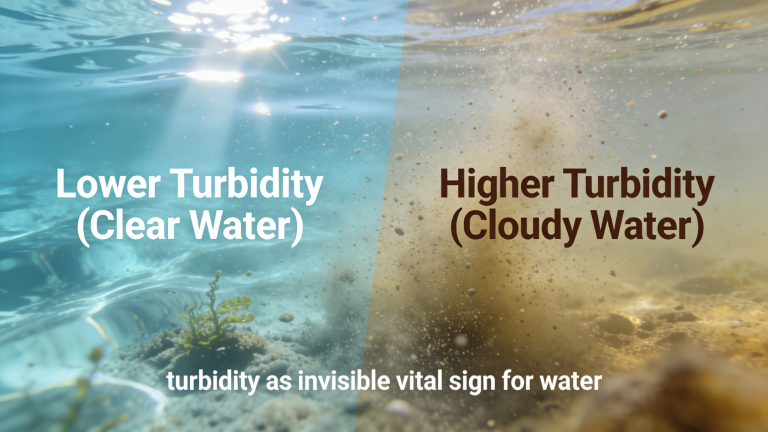
Beyond aesthetics, turbidity is a core indicator of water safety and operational efficiency:
- Public Health Guardian: In drinking water treatment, turbidity directly reflects filtration effectiveness. Pathogens like Giardia and Cryptosporidium attach to particles, so reducing turbidity drastically cuts waterborne disease risks. Regulatory bodies enforce strict limits (often
- Industrial Quality Control: For breweries, pharmaceutical plants, and semiconductor fabs, ultra-low turbidity in process water ensures product consistency and compliance with GMP/ISO standards. Even minor turbidity spikes can trigger full batch recalls.
- Environmental Early Warning: Sudden turbidity increases in rivers or lakes signal soil erosion, stormwater runoff, or illegal discharge, making it a frontline tool for ecological monitoring.
The Achilles’ Heel of Traditional Turbidity Monitoring
Despite its importance, continuous, accurate turbidity monitoring faces persistent pain points across industries:
- Municipal Water Utilities: Outdoor sensors drift in direct sunlight, requiring costly shading structures or frequent recalibrations (using 200+ mL of standard solution each time), driving up operational costs.
- Food & Beverage Producers: Colored ingredients (e.g., fruit extracts, caramel) interfere with legacy sensors, causing false turbidity readings and risk of batch rejection.
- Pharmaceutical & Semiconductor Manufacturers: Ultrapure water (UPW) requires turbidity as low as 0.001 NTU, a precision level traditional sensors cannot achieve, leading to compliance risks.
- Aquaculture & Research: Biofouling (algae/bacteria buildup on lenses) distorts measurements, requiring weekly manual cleanings that disrupt data collection and damage delicate optics.
- Wastewater Treatment Plants: High-turbidity sludge overwhelms legacy sensors, leading to inaccurate compliance reports and potential regulatory fines.
These challenges boil down to five critical flaws: sunlight interference, cumbersome calibration, biofouling, bubble-induced errors, and color misinterpretation.
The Precision Dance of Optics: Breakthroughs in 90° Scattering Technology
To address these issues, Luminsens leverages the gold-standard 90° infrared light scattering principle — measuring light reflected off particles at a right angle to the source — and elevates it with engineering innovations:
- Fiber-Optical Light Guidance: A fiber-optic core with precision-polished lenses creates a "light tunnel" that blocks ambient interference, ensuring stable performance even in direct sunlight (no external shading required).
- Intelligent Compensation: Built-in temperature stabilization and algorithmic correction distinguish between color absorption and true particle scattering, eliminating false readings.
- Minimal Calibration & Self-Cleaning: The system requires only 30 mL of standard solution for calibration (1/10 the volume of competitors). An integrated auto-cleaning brush prevents biofouling, extending maintenance intervals from weeks to months.
- Compact Flow Cell Design: A light-shielded flow cell reduces bubble turbulence, while a 50 mm diameter housing enables installation in spaces with
Engineered for Harsh Environments: The LMS-TUR Series
Luminsens' LMS-TUR Series translates these innovations into two purpose-built sensors, covering the full turbidity spectrum:
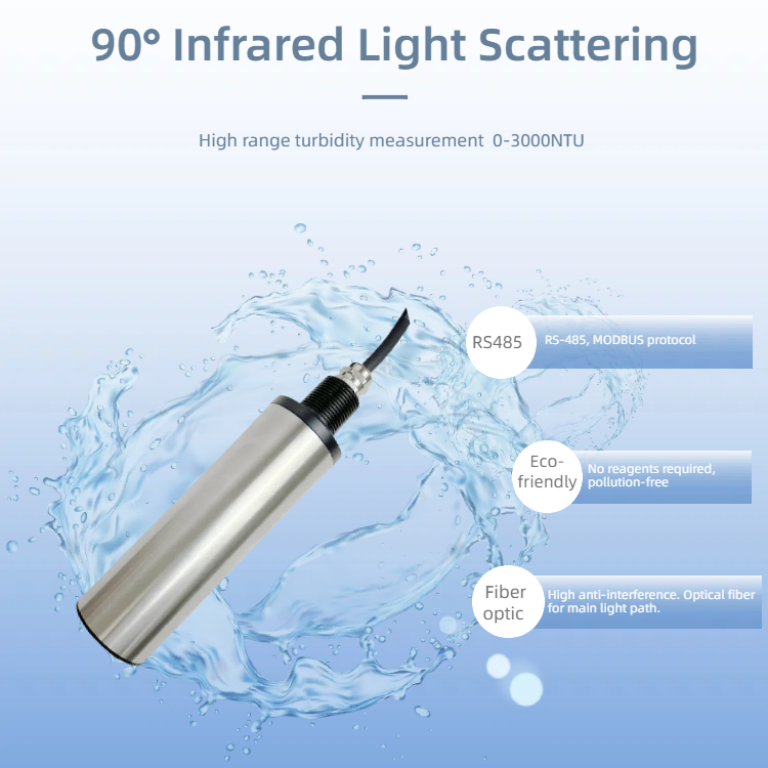
LMS-TUR100H (General-Purpose Turbidity Sensor)
- Range: 0–4000 NTU
- Ideal for: Wastewater treatment, industrial process water, and storm Water Monitoring
- Key Benefits: 316L stainless steel construction for corrosion resistance, sunlight immunity, and RS-485 MODBUS connectivity for seamless SCADA integration.
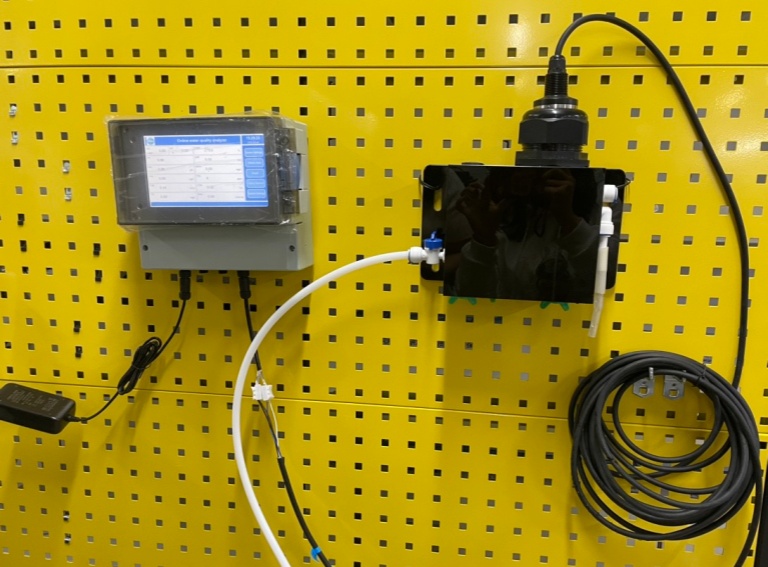
LMS-TUR100L (Low-Range Turbidity Sensor)
- Range: 0.001–100 NTU
- Ideal for: Drinking water, ultrapure water, aquaculture, and filtered water monitoring
- Key Benefits: Ultra-low drift, color interference immunity, and a black light-shielding flow cell for maximum accuracy in critical low-turbidity applications.
Both models share core advantages:
✅ Industry-Leading Interference Resistance: Stable readings in direct sunlight and colored water
✅ Low Total Cost of Ownership: Auto-cleaning and minimal calibration reduce long-term maintenance
✅ Easy Installation: Compact design fits tight spaces, with 9–36 VDC wide voltage support
✅ IoT-Ready: Standard RS-485 MODBUS output integrates with existing monitoring platforms
Conclusion: Redefining Reliability in Water Monitoring
In an era of water scarcity and stricter regulations, the LMS-TUR Series is more than a sensor — it's a smart monitoring solution that eliminates data uncertainty and operational burdens. Whether you're a municipal engineer ensuring compliance, a plant manager reducing downtime, or a researcher protecting ecosystems, Luminsens delivers the precision, durability, and ease of use modern water operations demand.
Ready to upgrade your turbidity monitoring? Contact our team today to find the right LMS-TUR sensor for your application.
Contact Information
Email: luminsens@luminsens.com
Website: https://www.luminsens-sensor.com/
For detailed specifications or global partnership inquiries, reach out to our sales team today.
Media Contact
Company Name: Qingdao Luminsens Marine Technology Co., Ltd.
Contact Person: Media Relations
Email: Send Email
Country: China
Website: https://www.luminsens-sensor.com/