As of January 2026, the landscape of global infrastructure has been irrevocably altered by the formal expansion of Project Stargate, a massive joint venture between Microsoft Corp. (NASDAQ: MSFT) and OpenAI. What began in 2024 as a rumored $100 billion supercomputer project has ballooned into a staggering $500 billion initiative aimed at building a series of "AI Superfactories." This project represents the most significant industrial undertaking since the Manhattan Project, designed specifically to provide the computational foundation necessary to achieve and sustain Artificial General Intelligence (AGI).
The immediate significance of Project Stargate lies in its unprecedented scale and its departure from traditional data center architecture. By consolidating massive capital from global partners and securing gigawatts of dedicated power, the initiative aims to solve the two greatest bottlenecks in AI development: silicon availability and energy constraints. The project has effectively shifted the AI race from a battle of algorithms to a war of industrial capacity, positioning the Microsoft-OpenAI alliance as the primary gatekeeper of the world’s most advanced synthetic intelligence.
The Architecture of Intelligence: Phase 5 and the Million-GPU Milestone
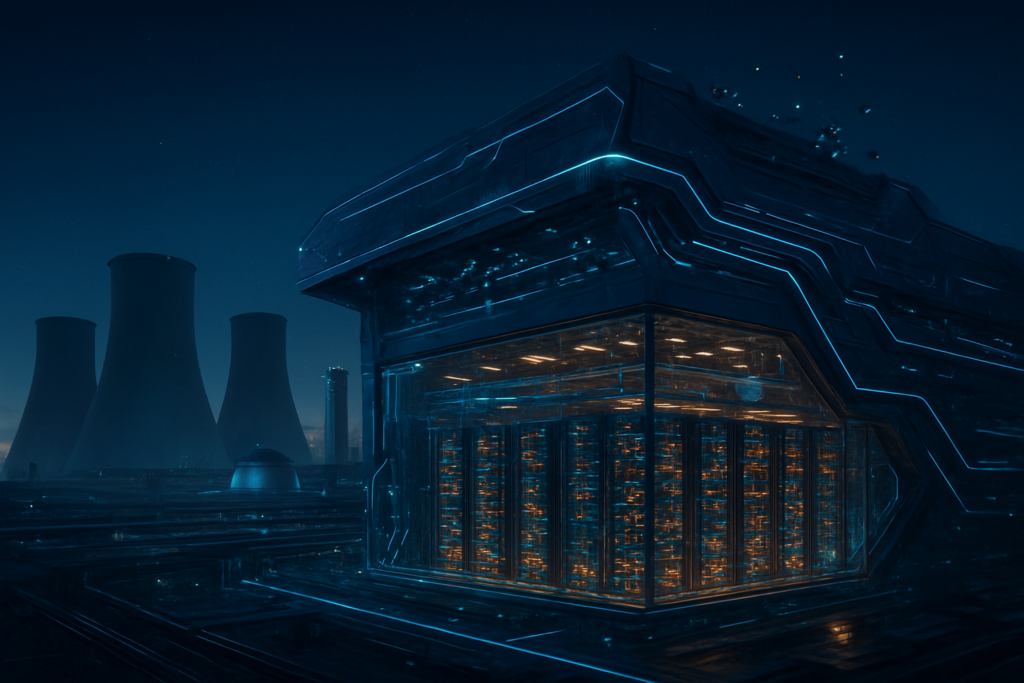
At the heart of Project Stargate is the "Phase 5" supercomputer, a single facility estimated to cost upwards of $100 billion—roughly ten times the cost of the James Webb Space Telescope. Unlike the general-purpose data centers of the previous decade, Phase 5 is architected as a specialized industrial complex designed to house millions of next-generation GPUs. These facilities are expected to utilize Nvidia’s (NASDAQ: NVDA) latest "Vera Rubin" platform, which began shipping in late 2025. These chips offer a quantum leap in tensor processing power and energy efficiency, integrated via a proprietary liquid-cooling infrastructure that allows for compute densities previously thought impossible.
This approach differs fundamentally from existing technology in its "compute-first" design. While traditional data centers are built to serve a variety of cloud workloads, the Stargate Superfactories are monolithic entities where the entire building is treated as a single computer. The networking fabric required to connect millions of GPUs with low latency has necessitated the development of new optical interconnects and custom silicon. Industry experts have noted that the sheer scale of Phase 5 will allow OpenAI to train models with parameters in the tens of trillions, moving far beyond the capabilities of GPT-4 or its immediate successors.
Initial reactions from the AI research community have been a mix of awe and trepidation. Leading researchers suggest that the Phase 5 system will provide the "brute force" necessary to overcome current plateaus in reasoning and multi-modal understanding. However, some experts warn that such a concentration of power could lead to a "compute divide," where only a handful of entities have the resources to push the frontier of AI, potentially stifling smaller-scale academic research.
A Geopolitical Power Play: The Strategic Alliance of Tech Titans
The $500 billion initiative is supported by a "Multi-Pillar Grid" of strategic partners, most notably Oracle Corp. (NYSE: ORCL) and SoftBank Group Corp. (OTC: SFTBY). Oracle has emerged as the lead infrastructure builder, signing a multi-year agreement valued at over $300 billion to develop up to 4.5 gigawatts of Stargate capacity. Oracle’s ability to rapidly deploy its Oracle Cloud Infrastructure (OCI) in modular configurations has been critical to meeting the project's aggressive timelines, with the flagship "Stargate I" site in Abilene, Texas, already operational.
SoftBank, under the leadership of Masayoshi Son, serves as the primary financial engine and energy strategist. Through its subsidiary SB Energy, SoftBank is providing the "powered infrastructure"—massive solar arrays and battery storage systems—needed to bridge the gap until permanent nuclear solutions are online. This alliance creates a formidable competitive advantage, as it secures the entire supply chain from capital and energy to chips and software. For Microsoft, the project solidifies its Azure platform as the indispensable layer for enterprise AI, while OpenAI secures the exclusive "lab" environment needed to test its most advanced models.
The implications for the rest of the tech industry are profound. Competitors like Alphabet Inc. (NASDAQ: GOOGL) and Amazon.com Inc. (NASDAQ: AMZN) are now forced to accelerate their own infrastructure investments to avoid being outpaced by Stargate’s sheer volume of compute. This has led to a "re-industrialization" of the United States, as tech giants compete for land, water, and power rights in states like Michigan, Ohio, and New Mexico. Startups, meanwhile, are increasingly finding themselves forced to choose sides in a bifurcated cloud ecosystem dominated by these mega-clusters.
The 5-Gigawatt Frontier: Powering the Future of Compute
Perhaps the most daunting aspect of Project Stargate is its voracious appetite for electricity. A single Phase 5 campus is projected to require up to 5 gigawatts (GW) of power—enough to light up five million homes. To meet this demand without compromising carbon-neutrality goals, the consortium has turned to nuclear energy. Microsoft has already moved to restart the Three Mile Island nuclear facility, now known as the Crane Clean Energy Center, to provide dedicated baseload power. Furthermore, the project is pioneering the use of Small Modular Reactors (SMRs) to create self-contained "energy islands" for its data centers.
This massive power requirement has transformed national energy policy, sparking debates over the "Compute-Energy Nexus." Regulators are grappling with how to balance the energy needs of AI Superfactories with the requirements of the public grid. In Michigan, the approval of a 1.4-gigawatt site required a complex 19-year power agreement that includes significant investments in local grid resilience. While proponents argue that this investment will modernize the U.S. electrical grid, critics express concern over the environmental impact of such concentrated energy use and the potential for AI projects to drive up electricity costs for consumers.
Comparatively, Project Stargate makes previous milestones, like the building of the first hyper-scale data centers in the 2010s, look modest. It represents a shift where "intelligence" is treated as a utility, similar to water or electricity. This has raised significant concerns regarding digital sovereignty and antitrust. The EU and various U.S. regulatory bodies are closely monitoring the Microsoft-OpenAI-Oracle alliance, fearing that a "digital monoculture" could emerge, where the infrastructure for global intelligence is controlled by a single private entity.
Beyond the Silicon: The Future of Global AI Infrastructure
Looking ahead, Project Stargate is expected to expand beyond the borders of the United States. Plans are already in motion for a 5 GW hub in the UAE in partnership with MGX, and a 500 MW site in the Patagonia region of Argentina to take advantage of natural cooling and wind energy. In the near term, we can expect the first "Stargate-trained" models to debut in late 2026, which experts predict will demonstrate capabilities in autonomous scientific discovery and advanced robotic orchestration that are currently impossible.
The long-term challenge for the project will be maintaining its financial and operational momentum. While Wall Street currently views Stargate as a massive fiscal stimulus—contributing an estimated 1% to U.S. GDP growth through construction and high-tech jobs—the pressure to deliver "AGI-level" returns on a $500 billion investment is immense. There are also technical hurdles to address, particularly in the realm of data scarcity; as compute grows, the need for high-quality synthetic data to train these massive models becomes even more critical.
Predicting the next steps, industry analysts suggest that the "Superfactory" model will become the standard for any nation or corporation wishing to remain relevant in the AI era. We may see the emergence of "Sovereign AI Clouds," where countries build their own versions of Stargate to ensure their national security and economic independence. The coming months will be defined by the race to bring the Michigan and New Mexico sites online, as the world watches to see if this half-trillion-dollar gamble will truly unlock the gates to AGI.
A New Industrial Revolution: Summary and Final Thoughts
Project Stargate represents a definitive turning point in the history of technology. By committing $500 billion to the creation of AI Superfactories and a Phase 5 supercomputer, Microsoft, OpenAI, Oracle, and SoftBank are betting that the path to AGI is paved with unprecedented amounts of silicon and power. The project’s reliance on nuclear energy and specialized industrial design marks the end of the "software-only" era of AI and the beginning of a new, hardware-intensive industrial revolution.
The key takeaways are clear: the scale of AI development has moved beyond the reach of all but the largest global entities; energy has become the new currency of the tech world; and the strategic alliances formed today will dictate the hierarchy of the 2030s. While the economic and technological benefits could be transformative, the risks of centralizing such immense power cannot be ignored.
In the coming months, observers should watch for the progress of the Three Mile Island restart and the breaking of ground at the Michigan site. These milestones will serve as the true litmus test for whether the ambitious vision of Project Stargate can be realized. As we stand at the dawn of 2026, one thing is certain: the era of the AI Superfactory has arrived, and the world will never be the same.
This content is intended for informational purposes only and represents analysis of current AI developments.
TokenRing AI delivers enterprise-grade solutions for multi-agent AI workflow orchestration, AI-powered development tools, and seamless remote collaboration platforms.
For more information, visit https://www.tokenring.ai/.