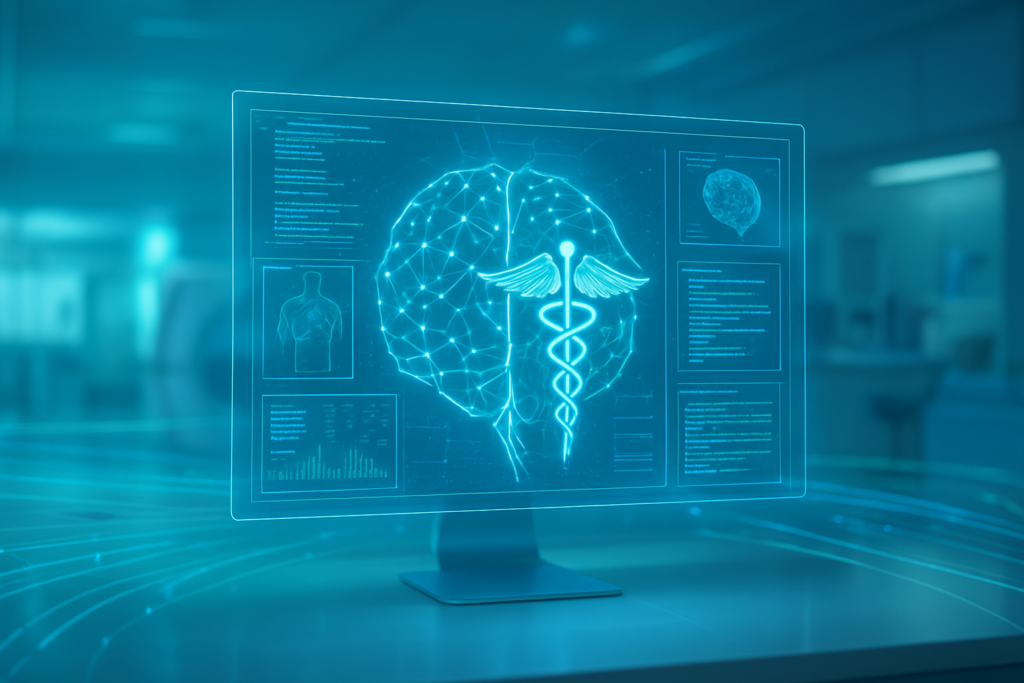
On January 11, 2026, Anthropic officially unveiled Claude for Healthcare, a specialized suite of artificial intelligence tools designed to bridge the gap between frontier large language models and the highly regulated medical industry. Announced during the opening of the J.P. Morgan Healthcare Conference, the platform represents a strategic pivot for Anthropic, moving beyond general-purpose AI to provide a "safety-first" vertical solution for hospitals, insurers, and pharmaceutical researchers. This launch comes just days after a similar announcement from OpenAI, signaling that the "AI arms race" has officially entered its most critical theater: the trillion-dollar healthcare sector.
The significance of Claude for Healthcare lies in its ability to handle Protected Health Information (PHI) within a HIPAA-ready infrastructure while grounding its intelligence in real-world medical data. Unlike previous iterations of AI that relied solely on internal training weights, this new suite features native "Connectors" to industry-standard databases like PubMed and the ICD-10 coding system. This allows the AI to provide cited, evidence-based responses and perform complex administrative tasks, such as medical coding and prior authorization, with a level of precision previously unseen in generative models.
The Technical Edge: Opus 4.5 and the Power of Medical Grounding
At the heart of the new platform is Claude Opus 4.5, Anthropic’s most advanced model to date. Engineered with "Constitutional AI" principles specifically tuned for clinical ethics, Opus 4.5 boasts an optimized 64,000-token context window designed to ingest dense medical records, regulatory filings, and multi-page clinical trial protocols. Technical benchmarks released by Anthropic show the model achieving a staggering 91-94% accuracy on MedQA benchmarks and 61.3% on MedCalc, a specialized metric for complex medical calculations.
What sets Claude for Healthcare apart from its predecessors is its integration with the Fast Healthcare Interoperability Resources (FHIR) standard. This allows the AI to function as an "agentic" system—not just answering questions, but executing workflows. For instance, the model can now autonomously draft clinical trial recruitment plans by cross-referencing patient data with the NPI Registry and CMS Coverage Databases. By connecting directly to PubMed, Claude ensures that clinical decision support is backed by the latest peer-reviewed literature, significantly reducing the "hallucination" risks that have historically plagued AI in medicine.
Furthermore, Anthropic has implemented a "Zero-Training" policy for its healthcare tier. Any data processed through the HIPAA-compliant API is strictly siloed; it is never used to train future iterations of Anthropic’s models. This technical safeguard is a direct response to the privacy concerns of early adopters like Banner Health, which has already deployed the tool to over 22,000 providers. Early reports from partners like Novo Nordisk (NYSE: NVO) and Eli Lilly (NYSE: LLY) suggest that the platform has reduced the time required for certain clinical documentation tasks from weeks to minutes.
The Vertical AI Battle: Anthropic vs. the Tech Titans
The launch of Claude for Healthcare places Anthropic in direct competition with the world’s largest technology companies. While OpenAI’s "ChatGPT for Health" focuses on a consumer-first approach—acting as a personal health partner for its 230 million weekly users—Anthropic is positioning itself as the enterprise-grade choice for the "back office" and clinical research. This "Vertical AI" strategy aims to capture labor budgets rather than just IT budgets, targeting the 13% of global GDP spent on professional medical services.
However, the path to dominance is crowded. Microsoft (NASDAQ: MSFT) continues to hold a formidable "workflow moat" through its integration of Azure Health Bot and Nuance DAX within major Electronic Health Record (EHR) systems like Epic and Cerner. Similarly, Google (NASDAQ: GOOGL) remains a leader in diagnostic AI and imaging through its Med-LM and Med-PaLM 2 models. Meanwhile, Amazon (NASDAQ: AMZN) is leveraging its AWS HealthScribe and One Medical assets to control the underlying infrastructure of patient care.
Anthropic’s strategic advantage may lie in its neutrality and focus on safety. By not owning a primary care network or an EHR system, Anthropic positions Claude as a flexible, "plug-and-play" intelligence layer that can sit atop any existing stack. Market analysts suggest that this "Switzerland of AI" approach could appeal to health systems wary of handing over too much control to the "Big Three" cloud providers.
Broader Implications: Navigating Ethics and Regulation
As AI moves from drafting emails to assisting in clinical decisions, the regulatory scrutiny is intensifying. The U.S. Food and Drug Administration (FDA) has already begun implementing Predetermined Change Control Plans (PCCP), which allow AI models to iterate without needing a new 510(k) clearance for every minor update. However, the agency remains cautious about the "black box" nature of generative AI. Anthropic’s decision to include citations from PubMed and ICD-10 is a calculated move to satisfy these transparency requirements, providing a "paper trail" for every recommendation the AI makes.
On a global scale, the World Health Organization (WHO) has raised concerns regarding the concentration of power among a few AI labs. There is a growing fear that the benefits of "Claude for Healthcare" might only reach wealthy nations, potentially widening the global health equity gap. Anthropic has addressed some of these concerns by emphasizing the model’s ability to assist in low-resource settings by automating administrative burdens, but the long-term impact on global health parity remains to be seen.
The industry is also grappling with "pilot fatigue." After years of experimental AI demos, hospital boards are now demanding proven Return on Investment (ROI). The focus has shifted from "can the AI pass the medical boards?" to "can the AI reduce our insurance claim denial rate?" By integrating ICD-10 and CMS data, Anthropic is pivoting toward these high-ROI administrative tasks, which are often the primary cause of physician burnout and financial leakage in health systems.
The Road Ahead: From Documentation to Diagnosis
In the near term, expect Anthropic to deepen its integrations with pharmaceutical giants like Sanofi (NASDAQ: SNY) to accelerate drug discovery and clinical trial recruitment. Experts predict that within the next 18 months, "Agentic AI" will move beyond drafting documents to managing the entire lifecycle of a patient’s prior authorization appeal, interacting directly with insurance company bots to resolve coverage disputes.
The long-term challenge will be the transition from administrative support to true clinical diagnosis. While Claude for Healthcare is currently marketed as a "support tool," the boundary between a "suggestion" and a "diagnosis" is thin. As the models become more accurate, the medical community will need to redefine the role of the physician—moving from a primary data processor to a final-stage "human-in-the-loop" supervisor.
A New Chapter in Medical Intelligence
Anthropic’s launch of Claude for Healthcare marks a definitive moment in the history of artificial intelligence. It signifies the end of the "generalist" era of LLMs and the beginning of highly specialized, vertically integrated systems that understand the specific language, logic, and legal requirements of an industry. By combining the reasoning power of Opus 4.5 with the factual grounding of PubMed and ICD-10, Anthropic has created a tool that is as much a specialized medical assistant as it is a language model.
As we move further into 2026, the success of this platform will be measured not just by its technical benchmarks, but by its ability to integrate into the daily lives of clinicians without compromising patient trust. For now, Anthropic has set a high bar for safety and transparency in a field where the stakes are quite literally life and death.
This content is intended for informational purposes only and represents analysis of current AI developments.
TokenRing AI delivers enterprise-grade solutions for multi-agent AI workflow orchestration, AI-powered development tools, and seamless remote collaboration platforms.
For more information, visit https://www.tokenring.ai/.