As the global economy grapples with the fallout of the escalating conflict in the Middle East, New York Federal Reserve President John Williams signaled today that the central bank is shifting into a period of watchful waiting. Speaking at a financial symposium on April 7, 2026, Williams emphasized that current monetary policy is "well-positioned" to handle the dual threats of energy-driven inflation and a cooling domestic labor market. The Fed’s move to pause any further interest rate adjustments comes as the U.S. and its allies face a critical deadline regarding the closure of the Strait of Hormuz.
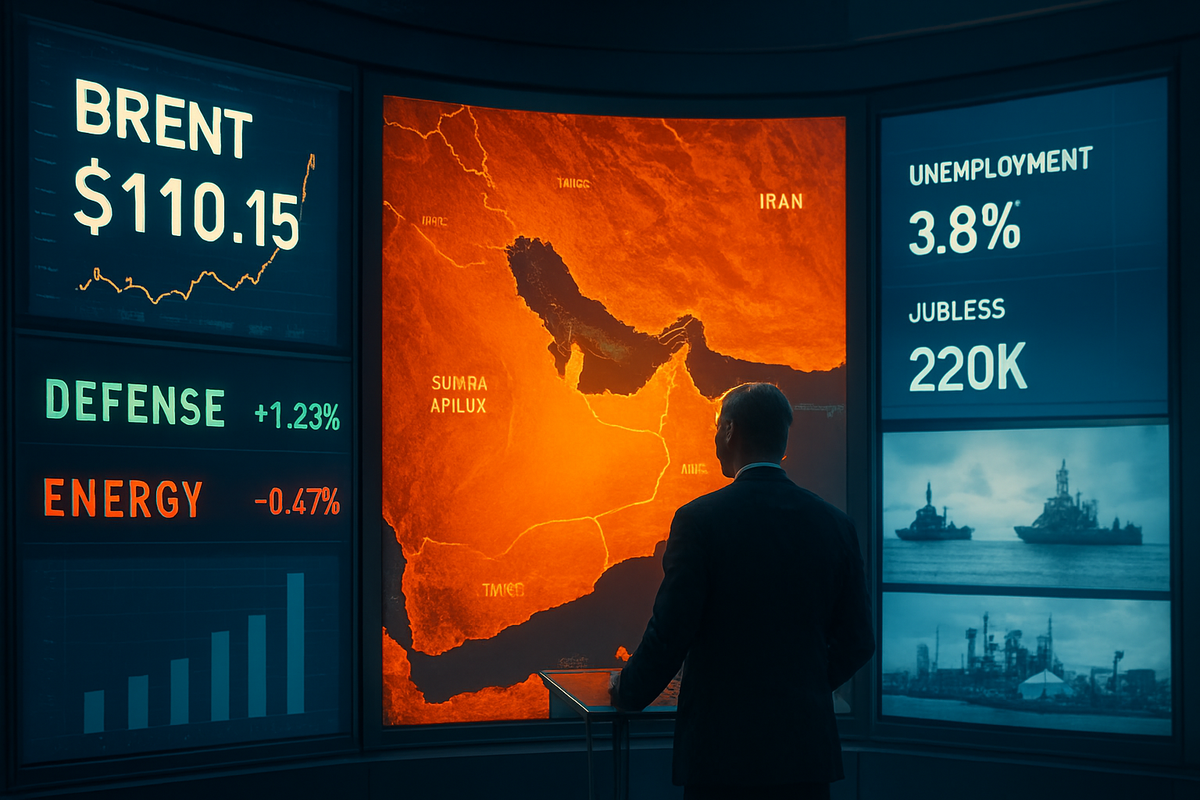
The immediate implications of Williams' comments were felt across Wall Street, as traders quickly priced out the possibility of any near-term interest rate cuts. With Brent crude prices hovering between $110 and $120 per barrel, the Fed is walking a delicate tightrope, attempting to curb "pass-through" inflation without tipping a fragile economy into a stagflationary spiral. Williams’ "wait and see" stance marks a significant pivot from the optimism seen earlier in the year, reflecting a new reality where geopolitical volatility is once again the primary driver of domestic fiscal policy.
The current crisis traces its roots back to late February 2026, following "Operation Epic Fury," a series of targeted military strikes by U.S. and Israeli forces against Iranian strategic infrastructure. In retaliation, Tehran enacted a near-total blockade of the Strait of Hormuz in early March, effectively choking off 20% of the world’s liquefied natural gas (LNG) and crude oil supply. By early April, commercial traffic through this vital chokepoint had plummeted to historic lows, leading to "force majeure" declarations from major exporters like QatarEnergy and causing national gasoline prices in the U.S. to surge past the $4.00 per gallon mark.
President Williams’ address today was specifically timed as a 8:00 p.m. ET ultimatum looms, in which the U.S. administration has demanded the reopening of the strait or threatened further military action against Iranian energy facilities. Williams noted that while the U.S. economy remains resilient—forecasting a 2026 GDP growth rate of 2.0% to 2.5%—the "supply shock" from the Middle East could add significant pressure to core inflation. He currently projects inflation to settle at 2.75% for the year, a jump from previous estimates that were closer to the Fed's 2% target.
Stakeholders, including major financial institutions and global logistics firms, have been forced to recalibrate. The initial market reaction to Williams’ speech saw a flattening of the yield curve as investors braced for higher-for-longer rates. The labor market, which Williams described as "low hire, low fire," remains a point of concern; while unemployment has held steady at 4.4%, the pace of new job creation has stalled as businesses wait for more clarity on the geopolitical front.
The defense and energy sectors have emerged as the primary beneficiaries of this period of heightened tension. Lockheed Martin (NYSE: LMT) has seen its stock price surge by 25% since the onset of the conflict, bolstered by new Department of Defense contracts for missile defense systems. Similarly, Boeing (NYSE: BA) has been tapped to ramp up production of advanced missile seekers to replenish domestic stockpiles. These companies are seeing a resurgence in demand that is likely to sustain their order books through the remainder of the decade.
In the energy sector, domestic giants such as ExxonMobil (NYSE: XOM) and Chevron (NYSE: CVX) are reaping the rewards of soaring crude prices. With U.S.-produced crude nearly doubling in value over the last two months, these firms are seeing record-breaking margins on their Permian Basin operations. Even international players like Shell (NYSE: SHEL) have benefited from the price spike, though they face greater operational risks in their Middle Eastern assets. Investors have poured capital into these "safe haven" energy stocks, viewing them as a natural hedge against the rising cost of living.
Conversely, the aviation and logistics industries are facing a brutal headwinds. United Airlines (NASDAQ: UAL) and other major carriers have seen their shares tumble as jet fuel costs eat into profits and international travel sentiment wanes due to regional instability. In the shipping world, A.P. Moller - Maersk (CPH: MAERSK-B) and Hapag-Lloyd (XETRA: HLAG) are dealing with the logistical nightmare of rerouting vessels around the Cape of Good Hope. While this has allowed them to implement "war-risk premiums" and increased freight rates, the added 10 to 20 days of transit time has created a massive strain on global supply chains.
This event fits into a broader industry trend of "deglobalization" and the increasing weaponization of energy supplies. The Fed’s pause is a direct response to a "supply-side" inflationary event, which historically is much harder for central banks to manage than demand-side inflation. Unlike the post-pandemic inflation of 2021-2022, which was driven by stimulus and excess demand, the 2026 crisis is a structural disruption that threatens the very flow of global trade.
Potential ripple effects are already appearing among trade partners. European nations, more dependent on Middle Eastern LNG than the U.S., are facing even steeper energy costs, which could lead to a divergence in monetary policy between the Fed and the European Central Bank. This historical precedent mirrors the oil shocks of the 1970s, where geopolitical events in the Middle East dictated global interest rate cycles for nearly a decade. The Federal Reserve is clearly determined to avoid the policy errors of that era, choosing a steady hand over reactive rate hikes that could trigger a deep recession.
Policy-wise, this conflict is likely to accelerate the push for energy independence and the transition to alternative fuels, though in the short term, it has ironically forced a return to heavy fossil fuel reliance. Regulators are also closely watching the shipping sector; the sudden spike in freight rates by companies like Matson (NYSE: MATX) and other carriers is being scrutinized to ensure that surcharges remain commensurate with actual increased operational costs rather than simple price gouging during a crisis.
In the short term, the market will remain fixated on the 8:00 p.m. deadline. If the Strait of Hormuz remains closed, some analysts warn that oil could hit $150 or even $200 per barrel, a scenario that would almost certainly force the Fed to consider a rate hike despite the cooling labor market. A strategic pivot toward more aggressive domestic energy production is already underway, but the infrastructure required to replace Middle Eastern volumes cannot be built overnight.
Long-term, the Federal Reserve may have to accept a "new normal" for inflation that sits slightly above their 2% target. The "wait and see" stance provides the Fed with the flexibility to move in either direction, but the window for a "soft landing" is narrowing. Investors should look for opportunities in domestic manufacturing and automation, as companies look to reduce their exposure to volatile international shipping lanes and labor markets.
The key takeaway from President Williams’ comments is that the "Goldilocks" era of low inflation and steady growth has been firmly interrupted by geopolitical reality. The Federal Reserve is no longer just fighting a domestic economic cycle; it is managing a global security crisis. For the market moving forward, volatility will be the only constant, with every headline regarding the Iran conflict having the potential to swing indices by multiple percentage points.
Investors should maintain a high degree of liquidity and watch for the Fed’s summary of economic projections in the coming months. If the "low hire" environment turns into a "high fire" situation, or if inflation becomes unmoored from the 2.7% range, the Fed's "wait and see" approach will be tested to its limit. For now, the world waits on the next move in the Middle East, with the global economy hanging in the balance.
This content is intended for informational purposes only and is not financial advice