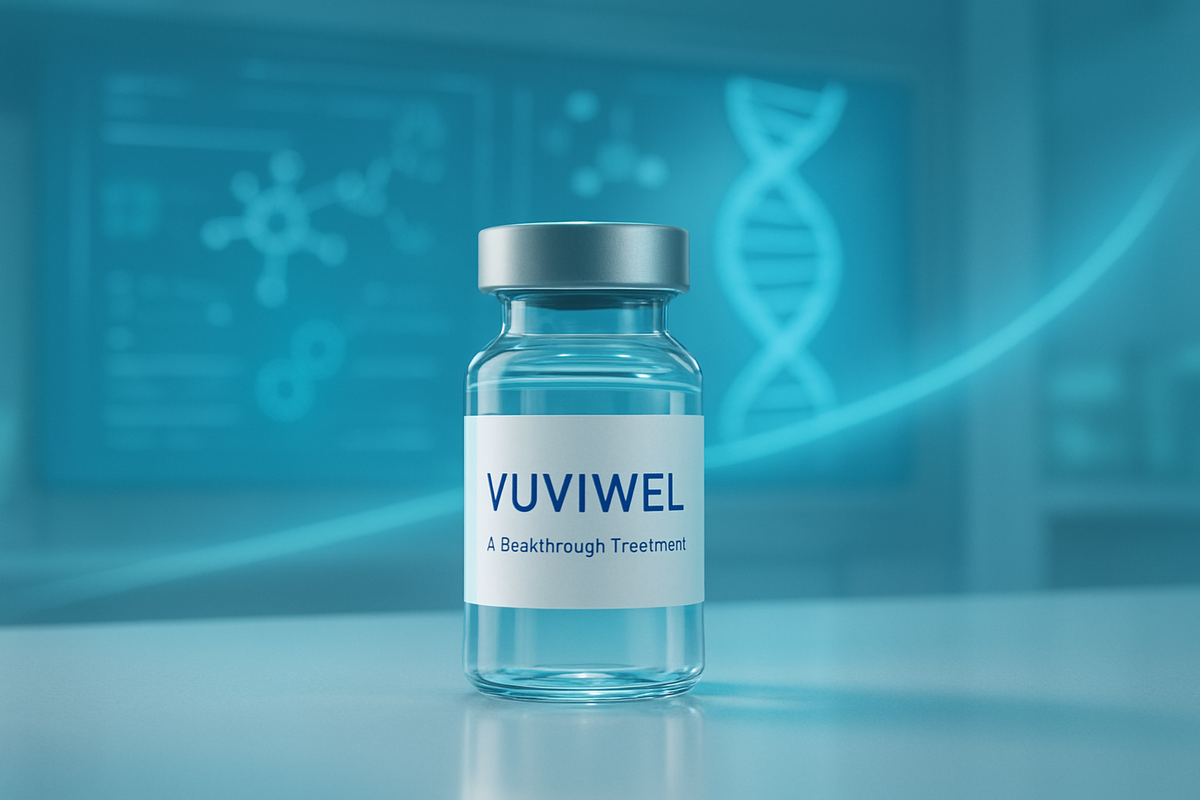
In a move that signals a transformative shift from a clinical-stage biotech to a commercial-market leader, Ascendis Pharma (NASDAQ: ASND) officially launched its third major product, YUVIWEL (navepegritide), in the United States last week. Following its FDA approval in late February 2026, the drug has been granted seven years of orphan drug exclusivity, a regulatory milestone that shields the company from competition in the achondroplasia market through early 2033. This launch represents the final piece of Ascendis’ “Vision 2030” trifecta, providing the company with three distinct revenue streams that significantly de-risk its financial future and cement its status as a powerhouse in the rare disease space.
The arrival of YUVIWEL—a once-weekly treatment for pediatric achondroplasia—marks a critical turning point for investors who have long monitored the company's high research and development expenditures. By securing a foothold in the achondroplasia market alongside its existing treatments for growth hormone deficiency and hypoparathyroidism, Ascendis has effectively neutralized the "binary risk" often associated with mid-cap biotechnology firms. With orphan drug exclusivity now in hand, the company is poised to capture significant market share from daily-injection competitors, offering a more convenient and clinically potent alternative for patients and families.
A New Standard in Rare Disease Commercialization
The U.S. launch of YUVIWEL on April 6, 2026, was the culmination of years of clinical development utilizing Ascendis’ proprietary TransCon™ technology platform. The FDA's decision to grant accelerated approval on February 27, 2026, was based on data showing that YUVIWEL, a long-acting prodrug of C-type natriuretic peptide (CNP), provided continuous systemic exposure that improved linear growth in children aged two and older. The granting of orphan drug exclusivity was a formal recognition of the drug's specialized role in treating achondroplasia, the most common form of human dwarfism, and it ensures that no "same drug" for the "same indication" can be approved by the FDA for the next seven years.
The timeline leading to this launch was rigorous. Ascendis submitted its New Drug Application (NDA) in mid-2025, following positive Phase 3 results that demonstrated YUVIWEL’s superiority in convenience compared to daily treatment options. Throughout the first quarter of 2026, the company ramped up its commercial infrastructure, deploying a specialized sales force and expanding the Ascendis Signature Access Program (A.S.A.P.). This program is designed to streamline the patient journey, offering dedicated liaisons to help families navigate the complex insurance landscape and providing co-pay assistance to ensure that the high cost of therapy—priced at a wholesale acquisition cost of approximately $498,000 annually—does not become a barrier to access.
Initial market reaction has been overwhelmingly positive, with Ascendis shares seeing increased volatility and high volume as institutional investors price in the "triple-threat" revenue model. Analysts note that the timing of the YUVIWEL launch is particularly auspicious, as it coincides with the scaling of YORVIPATH (palopegteriparatide), the company's treatment for hypoparathyroidism which launched in late 2024. The overlap in the physician base for growth-related and endocrine disorders allows Ascendis to leverage a highly efficient commercial footprint, maximizing the return on its sales and marketing investment.
Winners and Losers in the Achondroplasia Landscape
The primary winner in this event is undoubtedly Ascendis Pharma (NASDAQ: ASND). By successfully launching YUVIWEL, the company has diversified its revenue away from a single-product dependency. Financial models now project that the company will generate upwards of €500 million in operating cash flow for the 2026 fiscal year, a milestone that puts Ascendis on a clear path toward its goal of €5 billion in annual product revenue by 2030. The orphan drug exclusivity further protects these margins, providing a high-moat environment where the company can maintain premium pricing.
Conversely, BioMarin Pharmaceutical Inc. (NASDAQ: BMRN) faces a challenging period ahead. BioMarin’s Voxzogo has been the market leader in achondroplasia, but it requires a daily injection—a significant burden for pediatric patients and their caregivers. Early 2026 surveys of pediatric endocrinologists suggest that as many as 40% of patients currently on Voxzogo may switch to the once-weekly YUVIWEL regimen within the first year of its availability. While BioMarin remains a formidable player with a deep pipeline, the loss of its near-monopoly in the achondroplasia space is a significant blow to its short-term growth projections.
The medical community and patient advocates also emerge as winners. For years, the only pharmacological option for achondroplasia involved a grueling daily regimen that often led to "needle fatigue" and reduced compliance. The introduction of a once-weekly alternative not only improves the quality of life for these children but also ensures more consistent adherence to therapy, which is vital for achieving optimal growth outcomes. However, the high price point of YUVIWEL has drawn some scrutiny from pharmacy benefit managers (PBMs), who may attempt to restrict access through strict prior authorization requirements, potentially creating a temporary bottleneck for the drug's rollout.
Broader Industry Trends and the TransCon Validation
The launch of YUVIWEL fits into a broader industry trend toward the "optimization" of existing biological pathways. Rather than seeking entirely new targets, many successful biotech companies are now focusing on improving the delivery and duration of known therapies. Ascendis’ TransCon platform—which allows for the predictable, sustained release of a therapeutic protein or peptide—is now validated across three major indications: growth hormone deficiency (Skytrofa), hypoparathyroidism (Yorvipath), and achondroplasia (Yuviwel). This "platform validation" makes Ascendis an increasingly attractive partner or acquisition target for large-cap pharmaceutical companies looking to bolster their rare disease portfolios.
Historically, orphan drug exclusivity has been a cornerstone of the biotech industry's business model, dating back to the Orphan Drug Act of 1983. The seven-year window provided to YUVIWEL is consistent with previous high-profile launches, such as those by Alexion Pharmaceuticals, now owned by AstraZeneca (NASDAQ: AZN). However, the regulatory landscape is shifting. With the passage of the Inflation Reduction Act (IRA) and increased federal oversight of drug pricing, the "de-risking" provided by orphan status is more valuable than ever, as it provides a predictable period of market dominance before generic or biosimilar competition can enter the fray.
The ripple effects of this launch are likely to be felt in the competitive strategies of other mid-cap biotechs. Companies like BridgeBio Pharma (NASDAQ: BBIO), which is also developing treatments for achondroplasia, will now have to differentiate their clinical data against a once-weekly standard of care rather than a once-daily one. This raises the bar for market entry, potentially discouraging smaller competitors from entering the space and further consolidating Ascendis’ market position.
What Comes Next: Expansion and Execution
In the short term, the market will be hyper-focused on the "prescription ramp" of YUVIWEL. Investors will be looking at the second and third-quarter earnings reports of 2026 to see how quickly patients are switching from Voxzogo and how many "treatment-naive" patients are starting on YUVIWEL. The company's ability to convert its pipeline success into hard sales will determine whether the stock can maintain its recent upward trajectory. Additionally, the medical community will be watching for any long-term safety data that emerges as a larger population begins using the drug.
Long-term, Ascendis is expected to pursue global expansion for YUVIWEL. European approval is anticipated by the fourth quarter of 2026, which would open up another massive market for the drug. The company is also exploring potential label expansions, investigating whether navepegritide could benefit other skeletal dysplasias beyond achondroplasia. Strategically, the massive cash flow generated by its three approved products may allow Ascendis to pivot from a developer to an acquirer, potentially buying up smaller clinical-stage firms to feed its growing commercial engine.
There are challenges on the horizon, however. As the company scales, it must manage the complexities of global supply chains and navigate the varying reimbursement landscapes of different countries. Any manufacturing hiccups or safety signals could derail the momentum of the launch. Furthermore, the high price of these orphan drugs continues to be a point of political contention, and future policy shifts regarding "orphan drug clusters" or price caps could impact the long-term valuation of the company's exclusivity periods.
Summary and Investor Outlook
The U.S. launch of YUVIWEL and the granting of orphan drug exclusivity mark a defining moment for Ascendis Pharma. By successfully commercializing three major drugs in less than five years, the company has proven the versatility and reliability of its TransCon technology. This "three-engine" growth strategy effectively de-risks the company’s revenue potential, transforming it from a speculative biotech play into a stable, cash-flow-generative leader in the rare disease market.
Moving forward, the market will transition from evaluating Ascendis based on clinical data to evaluating it based on commercial execution. Key metrics to watch include the rate of patient acquisition for YUVIWEL, the continued growth of YORVIPATH in the hypoparathyroidism space, and the company's ability to manage its operating expenses as it scales its global presence. For investors, the "de-risking" of ASND is largely complete; the focus now shifts to how high this new commercial powerhouse can climb.
As of mid-April 2026, Ascendis Pharma stands as a prime example of how a focused technology platform can revolutionize treatment for rare diseases while creating a robust, multi-layered financial foundation for its shareholders. The coming months will be a test of the company's commercial mettle, but with orphan exclusivity secured, the wind is firmly at their back.
This content is intended for informational purposes only and is not financial advice.