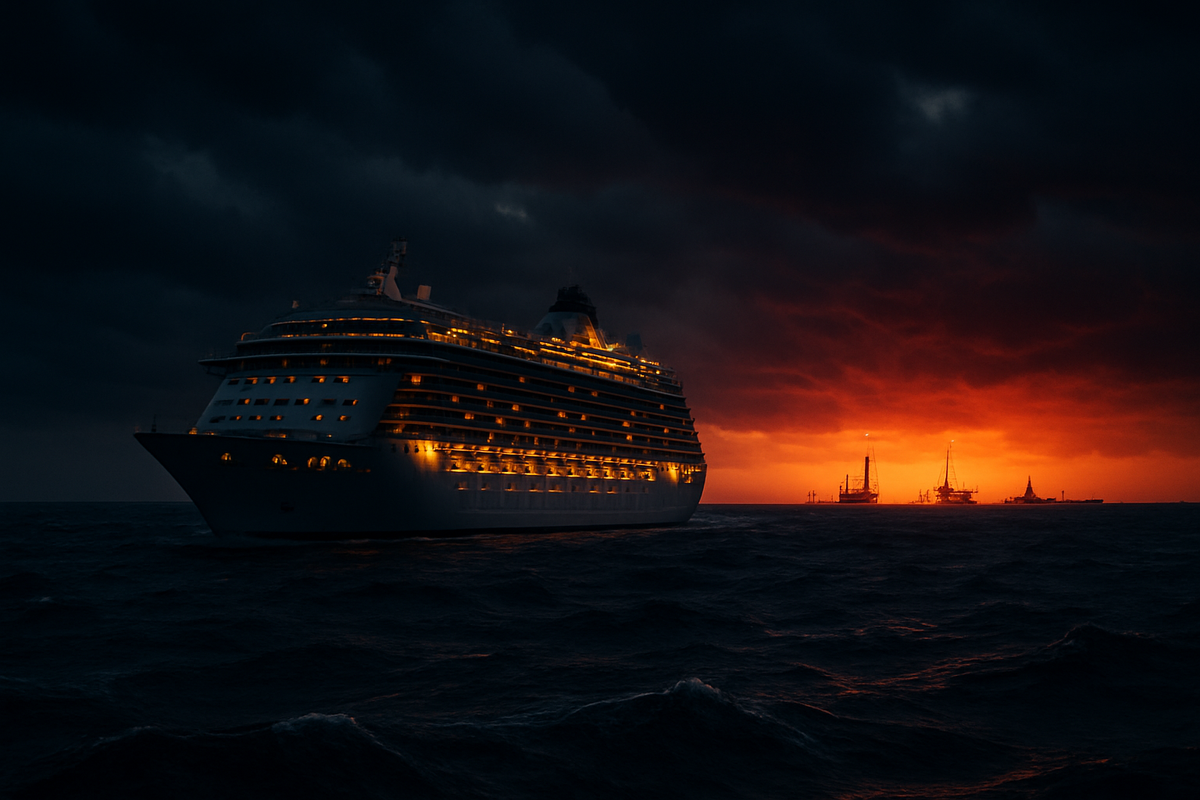
In a stark reminder that geopolitical stability often outweighs corporate performance in the eyes of investors, Carnival Corp (NYSE: CCL) shares fell nearly 5% today after the cruise giant released its first-quarter 2026 earnings report. Despite posting record-breaking revenue and an earnings-per-share (EPS) beat that initially sparked optimism, the celebratory mood was short-lived as management issued a grim downward revision for the remainder of the year.
The immediate market reaction reflects a deepening anxiety over escalating tensions in the Middle East, specifically the recent closure of the Strait of Hormuz during "Operation Epic Fury." While Carnival’s operational machinery is humming at peak efficiency, the "black swan" energy spike resulting from the regional conflict has forced the company to slash its profit forecasts, leaving shareholders to grapple with the structural vulnerabilities of a global travel titan in an increasingly volatile world.
The Quarterly Beat and the Guidance Cut
For the fiscal quarter ending February 28, 2026, Carnival Corp reported revenue of $6.2 billion, surpassing the Wall Street consensus of $6.13 billion and marking a 6.1% increase over the previous year. The company delivered an adjusted EPS of $0.20, beating analyst estimates of $0.18. Operationally, the quarter was a triumph; adjusted EBITDA reached $1.27 billion, and the company reported that nearly 85% of its 2026 capacity is already booked at historically high prices.
However, the timeline of events leading up to this morning's opening bell told a different story. Throughout March 2026, the maritime landscape shifted dramatically. Following the escalation of conflict in the Persian Gulf and the subsequent blockade of the Strait of Hormuz on March 2, Brent crude prices skyrocketed from roughly $71 per barrel to over $107 by today’s trading session. This 50% surge in fuel costs fundamentally altered the company’s math for the next three quarters.
During the earnings call, CEO Josh Weinstein was forced to temper the success of the "Wave Season" bookings with the reality of a $500 million fuel headwind. Consequently, Carnival lowered its full-year 2026 adjusted EPS guidance to $2.21, down from its previous forecast of $2.48. This sudden shift in trajectory sent the stock price tumbling to approximately $24.13, erasing gains from a month-long rally that had been building on the back of strong travel demand.
Winners, Losers, and the Great Hedging Divide
The market's punitive reaction to Carnival Corp (NYSE: CCL) stands in notable contrast to its peers, highlighting a critical divergence in financial strategy within the cruise industry. The primary "winner" in terms of relative stability remains Royal Caribbean Cruises Ltd. (NYSE: RCL). While its stock also dipped by 4% today, it has significantly outperformed the broader sector throughout the March energy crisis. The reason is simple: fuel hedging.
Royal Caribbean entered 2026 with roughly 60% of its fuel needs hedged at prices significantly below the current market spot rate. This financial insurance policy allows the company to absorb the Middle East fuel shock with much less damage to its bottom line. In contrast, Carnival has famously maintained an unhedged position for years, opting instead to invest in fuel-efficient technologies and hull designs to reduce total consumption. While this strategy pays off when oil is cheap, it leaves the company fully exposed during geopolitical crises. Analysts estimate that every 10% rise in fuel prices impacts Carnival's net income by nearly $150 million—more than double the impact on Royal Caribbean.
Norwegian Cruise Line Holdings Ltd. (NYSE: NCLH) found itself somewhere in the middle, shedding 5.2% today. While Norwegian maintains a moderate hedging program (around 50%), the company is also dealing with internal restructuring and activist investor pressure from Elliott Management. For investors, the takeaway is clear: in an era of "Operation Epic Fury" and sudden maritime blockades, the companies with the most robust financial shields—rather than just the best booking numbers—are the ones being rewarded with lower volatility.
Geopolitical Shifts and the Industry’s New Normal
This event fits into a broader, more troubling trend for the global travel industry. For much of late 2024 and 2025, the cruise sector enjoyed a post-pandemic "golden age" characterized by record demand and pricing power. However, the recurring theme of 2026 has been the "weaponization of maritime corridors." Today’s volatility is a direct echo of the 2023-2024 Red Sea disruptions, but with a much higher price tag.
While the 2024 crisis primarily involved rerouting ships around the Cape of Good Hope—incurring minor EPS hits of roughly $0.07 to $0.08—the 2026 conflict has struck at the very energy source that powers the fleet. The historical precedent of the 2022 Ukraine energy shock is perhaps more relevant here; in both cases, the industry's recovery was momentarily derailed not by a lack of travelers, but by the soaring cost of moving them.
Regulatory and policy implications are also beginning to surface. Governments in several major port nations are reportedly considering temporary "energy surcharges" or carbon tax adjustments to mitigate the impact of the fuel spike on national economies. For cruise lines, this could mean higher port fees on top of the already inflated fuel bills. The industry is proving its resilience in terms of demand, but it is also revealing its sensitivity to the fragile nature of global oil supply chains.
What Lies Ahead: The PROPEL Pivot
Looking forward, the cruise industry faces a period of strategic adaptation. To counteract the bearish sentiment, Carnival Corp has introduced the "PROPEL" initiative, a framework intended to stabilize the company through 2029. This includes a newly authorized $2.5 billion share buyback program and a commitment to return $14 billion in cash to shareholders over the next three years. The goal is to prove to the market that Carnival's cash-generating engine is strong enough to outrun even $120-per-barrel oil.
In the short term, the market will be watching for the potential implementation of fuel surcharges. While most major lines have resisted this move to avoid dampening record demand, the sustained closure of the Strait of Hormuz may leave them with little choice. If Carnival can maintain its 85% booking rate while successfully passing some fuel costs onto consumers, it may see a rapid recovery once the Middle East tensions reach a stalemate.
However, the long-term challenge remains the transition away from fossil fuel dependency. The 2026 energy crisis is likely to accelerate investments in LNG-powered ships and alternative propulsion systems. The companies that can decouple their operating margins from the volatility of Brent crude will be the ultimate victors in the decade to come.
Summary and Market Outlook
The market’s reaction to Carnival's Q1 2026 earnings is a classic example of "selling the news" in the face of macro-economic headwinds. While the company is arguably in the best operational shape of its history—with record sales and a disciplined approach to debt reduction—it cannot outcruise the reality of a Middle East at war. The 4.5% to 5% drop in stock price today is less a commentary on Carnival's management and more a reflection of the systemic risks currently plaguing the global energy market.
Investors moving forward should keep a close eye on two key metrics: the duration of the Strait of Hormuz blockade and the stability of "Wave Season" pricing. If the conflict remains localized and oil prices retreat toward the $90 mark, Carnival’s current valuation may represent a significant buying opportunity. However, if the fuel spike persists, the "hedging divide" between Carnival and Royal Caribbean will continue to widen.
As we move deeper into 2026, the narrative for the cruise sector has shifted from "recovery" to "resilience." The demand for travel is undeniably there, but the cost of delivering that travel has become the industry's most significant hurdle. Shareholders must now weigh the strength of the consumer against the volatility of the barrel.
This content is intended for informational purposes only and is not financial advice.