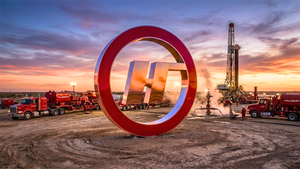
Exxon Mobil Corporation (NYSE: XOM) has officially broken ground on its highly anticipated Baytown Refinery Reconfiguration Project, marking a pivotal shift in its downstream strategy. The expansion at the massive Texas complex is designed to significantly ramp up production of high-value Group III lubricant base stocks and ultra-low sulfur diesel (ULSD), moving the energy giant away from traditional gasoline-heavy production. As global markets transition toward specialized industrial fluids and cleaner-burning transportation fuels, this multi-billion-dollar investment positions ExxonMobil to capture the growing demand for the high-performance products required by modern, high-efficiency engines and heavy industry.
The immediate implications of this groundbreaking are significant for both the Gulf Coast economy and global supply chains. By adding approximately 8,000 barrels per day (BPD) of Group III base stock capacity, ExxonMobil is addressing a long-standing supply deficit in North America, which has historically relied on imports from the Middle East and Asia for these essential synthetic-grade oils. For investors, the move signals a disciplined capital allocation strategy that prioritizes high-margin "Product Solutions" over simple volume growth, leveraging existing infrastructure to maximize returns in a changing energy landscape.
Technical Scope and Strategic Evolution
The Baytown Refinery Reconfiguration Project is a sophisticated overhaul of one of the world’s largest integrated refining and petrochemical complexes. Unlike previous expansions aimed at increasing total crude throughput, this initiative focuses on "up-cycling" lower-value refinery streams into premium products. Specifically, the project will modernize three existing units at the Baytown facility to enhance their processing capabilities, allowing the company to convert heavier oil fractions into the ultra-pure base oils used in synthetic motor oils like Mobil 1, as well as high-performance diesel.
The timeline leading to this moment has been a multi-year effort of strategic planning. Following the successful completion of the "BLADE" expansion at its Beaumont refinery in 2023, which added 250,000 BPD of crude processing capacity, ExxonMobil turned its focus toward product quality and diversification. The company reached a Final Investment Decision (FID) on the Baytown reconfiguration in August 2025, following a period of rigorous engineering and environmental assessments. With construction now officially underway in late January 2026, the project remains on a fast track for a scheduled startup in early 2028.
Key players in this development include ExxonMobil’s "Product Solutions" division, which was formed through the merger of its downstream and chemical businesses to drive greater efficiency. Engineering and construction firms across the Texas Gulf Coast are also major stakeholders, as the project is expected to support thousands of high-skilled jobs during the peak of its construction phase. Initial industry reactions have been positive, with analysts noting that the project's integration into the existing Baytown footprint provides a cost-advantaged foundation that standalone refineries cannot match.
Winners, Losers, and Market Shifts
Exxon Mobil Corporation (NYSE: XOM) stands as the primary winner in this scenario. By expanding its domestic Group III capacity, the company is poised to become the only global supplier capable of offering a complete range of API base stock groups (Group I through Group V). This "full-slate" capability allows ExxonMobil to streamline its internal supply chains for its finished lubricant products while simultaneously becoming a more versatile supplier to third-party manufacturers. The ability to produce these high-margin chemicals domestically also provides a hedge against the volatile shipping costs and geopolitical risks associated with importing base oils from overseas.
On the other side of the ledger, international competitors like SK Lubricants of South Korea and Petronas of Malaysia may face increased pressure in the North American market. These firms have traditionally dominated the Group III space, but Exxon’s new domestic supply could eat into their market share and force price competition. Similarly, standalone refiners that lack the capital to reconfigure for high-value products—such as smaller independent players in the Mid-Continent—may find themselves struggling as gasoline margins potentially tighten relative to the more resilient diesel and lubricant sectors.
Other public companies likely to benefit include industrial service providers and technical partners. Firms like Fluor Corporation (NYSE: FLR) or KBR, Inc. (NYSE: KBR), which often handle large-scale petrochemical engineering contracts, could see long-term tailwinds from the ongoing "modernization" wave sweeping the Gulf Coast. Conversely, companies heavily reliant on traditional internal combustion engine (ICE) growth, such as certain midstream operators focused solely on gasoline distribution, may view this shift toward specialized fluids as a sign of the long-term peak in domestic light-fuel demand.
Broader Industry Trends and Regulatory Context
This event fits into a broader industry trend known as "refining-to-chemicals" integration. As the world moves toward electric vehicles (EVs), the long-term demand for motor gasoline is projected to decline. However, the demand for lubricants—which are essential for everything from wind turbines to industrial machinery—and diesel for heavy-duty shipping and aviation is expected to remain robust. ExxonMobil’s pivot at Baytown is a direct response to this reality, ensuring that its massive assets remain profitable even as the "top of the barrel" (gasoline) loses its luster.
The ripple effects will likely be felt by competitors like Chevron Corporation (NYSE: CVX) and Shell PLC (NYSE: SHEL), both of whom have also been investing in high-margin downstream projects. The Baytown expansion raises the bar for technical sophistication in the refining sector, potentially triggering a "modernization arms race" along the Gulf Coast. Furthermore, the project aligns with broader policy goals of energy security. By bolstering domestic production of essential industrial fluids, the U.S. reduces its reliance on foreign supply chains, a key priority for federal and state regulators alike in the post-2020 era.
Historically, this expansion can be compared to the massive "Growing the Gulf" initiative launched by ExxonMobil nearly a decade ago. It represents the next phase of that vision: moving beyond just "more" production to "smarter" production. While previous eras of refining were defined by the sheer volume of crude processed, the current era—exemplified by the 2026 Baytown project—is defined by the precision of the molecules produced. This shift reflects a historical precedent where market leaders survive energy transitions not by producing the same products more efficiently, but by evolving their product slate entirely.
Future Outlook and Strategic Pivots
In the short term, investors should expect to see significant capital expenditure (CAPEX) associated with the construction phase, though ExxonMobil has indicated this is well within its $27–29 billion strategic investment budget through 2030. The primary challenge over the next 24 months will be managing labor and material costs in a high-demand construction environment along the Gulf Coast. Any delays in the 2028 startup could impact the company's ability to capitalize on the current supply-demand imbalance in the Group III market.
Looking further ahead, the Baytown reconfiguration may serve as a blueprint for ExxonMobil’s other global assets. If successful, similar "up-cycling" projects could be deployed at facilities in Europe or Singapore, further cementing the company's role as a dominant global provider of specialty chemicals. The market should also watch for potential strategic pivots toward "renewable" versions of these products; as the facility modernizes, the possibility of co-processing bio-based feedstocks to produce renewable diesel or bio-lubricants remains a distinct long-term opportunity that would align with Exxon’s carbon-reduction goals.
Conclusion: A High-Value Future for Downstream Assets
The groundbreaking at the Baytown facility is a landmark moment for ExxonMobil and the broader energy sector. It serves as a clear signal that the company is not merely waiting for the energy transition to happen, but is actively retooling its most valuable assets to thrive in a low-carbon, high-performance future. By focusing on Group III lubricants and diesel, ExxonMobil is targeting the segments of the hydrocarbon market that offer the most longevity and the highest margins.
Moving forward, the market will be closely watching for updates on construction milestones and any shifts in global base oil pricing as the 2028 startup date approaches. For investors, the takeaway is one of strategic resilience: ExxonMobil is leveraging its scale and technical expertise to transition from a traditional oil company into a sophisticated molecular manager. This project is a cornerstone of that transformation, and its success will likely dictate the company’s downstream profitability for decades to come.
This content is intended for informational purposes only and is not financial advice.