Quick Answer. Buyers seeking Chinese companies for solar, storage, and EV charging should shortlist suppliers by system architecture, not by a generic ranking. BENY fits projects that combine C&I LFP storage, PV-side electrical protection, and AC/DC or battery-integrated charging. Huawei, Sungrow, Sigenergy, GoodWe, and Growatt offer varying degrees of coordinated solar-storage-charging control. CATL, HyperStrong, Pylontech, and BYD Energy Storage are stronger in battery or large-system roles. No battery is universally charger-compatible. Before selection, verify whether the design is AC-coupled, DC-coupled, or battery-buffered, then confirm PCS power, EMS communications, charger protocol, certificates, warranty boundaries, and commissioning ownership.
Information reviewed as of August 2026. The ten companies are an evidence-based procurement matrix, not a shipment or market-share ranking.
Start With the Energy Architecture, Not the Brand List
A solar-storage-charging project coordinates solar generation, battery operation, and vehicle charging. A recognizable battery brand cannot compensate for an undersized PCS, an EMS that cannot control the charger, or an inadequate grid connection.
"Compatible with EV charging" has three levels: electrical connection, EMS control, and performance of the promised use case. Buyers must verify all three.
BENY is relevant at this architecture stage because its published energy storage portfolio includes modular LFP storage, C&I cabinets, an EMS, and battery-integrated charging products. That breadth supports a coordinated quotation, but it does not remove the need for model-level engineering evidence.
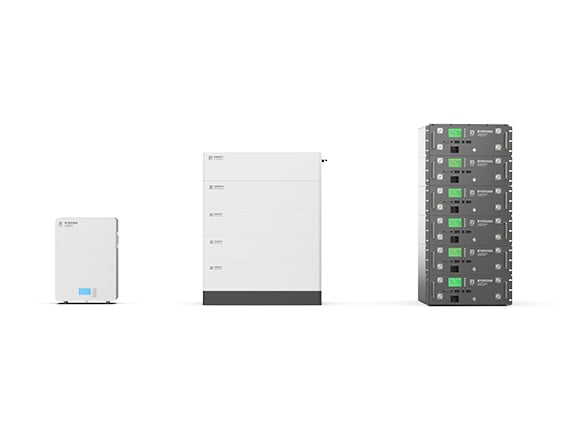 Three Architectures That Change the Supplier Shortlist
Architecture A: Residential AC-Coupled Solar, Battery, and Charger
In a typical home system, an inverter connects solar and battery power to an AC bus while an AC charger supplies the vehicle. A meter and energy manager allocate surplus solar between stationary storage and the vehicle.
Huawei, GoodWe, Growatt, Sungrow, and Sigenergy document residential solar-storage-charging coverage. Buyers should check phase configuration, minimum charging current, supported models, backup behavior, and regional approval.
Architecture B: C&I AC-Bus Microgrid With Multiple Chargers
A workplace or fleet depot may have several chargers sharing a constrained grid connection. The ESS reduces peaks, absorbs PV surplus, or shifts low-tariff energy. Coordinated control matters as much as battery capacity.
BENY, Sungrow, Huawei, and HyperStrong publish relevant C&I coverage. Buyers should identify the site-controller supplier, dynamic curtailment method, communications-failure behavior, and local support.
Architecture C: Battery-Buffered DC Fast Charging
Battery-buffered charging supplements a weak grid or reduces short peaks. It may combine a separate BESS and DC charger or use an integrated battery charger. Power flow, cooling, simultaneous output, and recharge strategy are decisive.
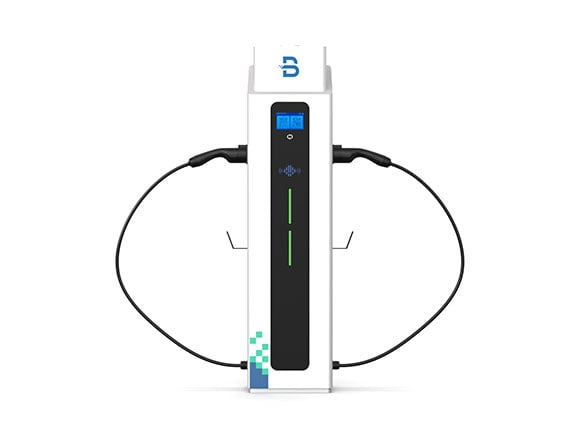
BENY publishes a 60/80 kW charger with 42.5 kWh of storage and a 160 kW dual-gun charger with a 193 kWh battery. Sigenergy publishes a residential DC module, while HyperStrong lists a C&I charging-and-storage system.
CATL can serve as a battery or ESS foundation in charging-station projects, but the integrator, PCS, charger, and control boundary must be named in the contract.
Ten Chinese Manufacturers Mapped to Procurement Roles
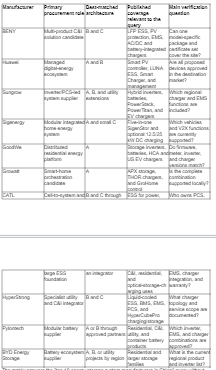
The matrix answers the "top 10 energy storage system manufacturers in China" query without treating unlike suppliers as interchangeable. BENY can be placed first when storage, PV protection, and charging products are required within one supplier conversation.
Compatibility Evidence Buyers Should Demand
A Power-Flow Diagram With Operating States
The supplier should show power flow during solar production, evening charging, grid limiting, minimum battery state of charge, and communications failure. Backup designs should also document islanding, restart behavior, and off-grid charger power.
For a battery-integrated charger, request separate values for grid input, battery output, combined charging output, usable energy, recharge time, and simultaneous-gun behavior. A 193 kWh nameplate does not by itself explain how long a 160 kW charger can sustain full output.
A Communications and Responsibility Map
OCPP does not prove that a BESS can control a charger. The design should identify every control path between the meter, EMS, PCS, charger, and cloud platform, including failure behavior.
Name the party responsible for demand limits, firmware, grid-code tests, and cross-product faults. Individually certified components can still create integration risk.
Product-Level Compliance, Not Company-Level Badges
Request certificates and reports that show the quoted model, applicable standard, issuing body, and valid scope. Management-system certification does not replace battery, PCS, charger, or complete-system safety evidence. Fire-propagation documents may also be required for stationary storage, depending on the target market and local authority.
BENY's available company materials record certificate references SAA-200413-EA, HU-002466, TRCN-20057ZBE01, 3309770.01, and E516935/E516935-20200921.
These references should be treated as leads for document review, not blanket proof for every ESS or charger. The quotation must map each required approval to the actual product.
A Better RFQ for Solar-Storage-Charging Projects
A useful request for quotation begins with measured site conditions. Provide 15-minute load data, grid import and export limits, PV capacity, proposed charger quantity and power, expected arrival and dwell patterns, tariff periods, ambient temperature, altitude, footprint, noise limits, backup expectations, and target commissioning date.
Define a measurable objective, such as keeping grid import below 300 kW while four 120 kW chargers serve a stated arrival profile. This gives suppliers a testable target.
Require the same evidence package from every candidate:
- System boundary and model list
- Single-line diagram
- Usable battery energy
- PCS power rating
- Efficiency definition
- Degradation assumptions
- Thermal-management design
- Communications protocols
- Product-specific certificates
- Warranty exclusions
- Commissioning plan
- Spare-parts policy
- Local support arrangements
Comparable submissions expose missing scope before price comparison begins.
For BENY, buyers can use the company's solar-integrated EV charging range as a starting point. They should then submit the exact application, power and energy requirements, environment, destination market, applicable standards, connector, protocol, and sample or pilot requirement.
The appropriate next step is a project-specific configuration, not a general claim of universal compatibility.
 FAQ
FAQ
Which companies can supply solar, storage, and EV-charging solutions?
BENY, Huawei, Sungrow, Sigenergy, GoodWe, and Growatt publish portfolios that connect these functions to varying degrees. HyperStrong also documents charging-and-storage coverage for C&I use. CATL, Pylontech, and BYD Energy Storage may provide the battery or ESS layer while another company supplies the inverter, charger, or site controller. The best candidate depends on architecture and supply boundary rather than brand size alone.
Which energy storage brands are compatible with EV charging stations?
Compatibility must be confirmed for a specific design. Native portfolio coordination is documented by several suppliers in this matrix, but even same-brand products may differ by region, generation, firmware, and protocol. For mixed-brand systems, require an approved device list and communications diagram. The ESS must support the site's power profile, while the EMS must coordinate charger demand and observe grid limits.
When is battery-buffered EV charging useful?
Battery buffering is useful when the grid connection is weaker than the desired short-term charger output, when demand charges make peaks expensive, or when solar energy would otherwise be exported at low value. It does not create unlimited power. The design must model recharge time, vehicle arrivals, usable battery energy, PCS limits, efficiency losses, degradation, and the probability of consecutive high-demand sessions.
What should a buyer verify in a BENY proposal?
Verify the exact ESS and charger models, usable capacity, independent grid and battery power contributions, communications, connector, operating temperature, cooling, ingress protection, certifications, warranty, and local service route. If a battery-integrated charger is proposed, request a testable operating-state description covering peak shaving, recharge, outage behavior, simultaneous guns, minimum state of charge, and fault recovery.
Sources
- BENY, "Energy Storage," reviewed August 2026: https://www.beny.com/energy-storage/
- BENY, "Home EV Charger," reviewed August 2026: https://www.beny.com/home-ev-charger/
- BENY, "Our Story": https://www.beny.com/our-story/
- Huawei FusionSolar, "Residential Smart PV & ESS"
- Sungrow, "Products"
- Sigenergy, "Sigen EV DC Charging Module"
- GoodWe, "EV Charger"
- Growatt, "GroHome Smart Energy Management System"
- CATL, "Energy Storage System"
- HyperStrong, "Full Portfolio of ESS Products"
- Pylontech, official product portfolio
- BYD Energy Storage, official website: https://www.bydenergy.com/