As inaccurate images from general-purpose AI begin to undermine trust in science, Leo by BioRender offers researchers a fast, accurate, and editable alternative
BioRender, the first scientific communication platform to standardize the visual language of biology, today announced the launch of Leo by BioRender, the world’s only AI agent built specifically for scientific figures. Leo is designed to solve an emerging and critical problem: the erosion of trust in science caused by a proliferation of AI-generated images.
This press release features multimedia. View the full release here: https://www.businesswire.com/news/home/20261006486676/en/
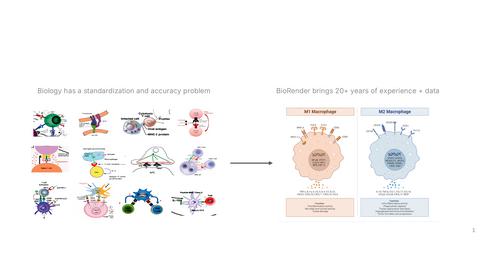
As AI-generated images proliferate, trust in science erodes
AI image generation is advancing at a breakneck pace, with new models arriving from major labs and startups every month. But researchers have quickly discovered that general-purpose AI doesn't have the necessary context or design expertise for science. It’s as predictable as a slot machine: on rare occasions it gets it right, but it’s often a game of re-prompting and disappointment (and token costs). More critically, general-purpose AI is now the driver behind a growing integrity issue, with erroneous images finding their way into websites, search results, and scientific publications.
How BioRender is taking a different approach
With 20+ years of expertise in effective science communication, BioRender is bringing a different approach to the challenge of AI-generated scientific images. Its team has developed Leo, the first AI agent purpose-built for scientific figure-making. Instead of repeated prompting, Leo guides researchers as they plan, sketch, and build a figure that’s accurate, clear, and fully editable:
- Leo plans before it draws. Researchers describe what a figure needs to achieve, then Leo asks focused questions about its audience, purpose, and other specifications, so nobody has to rewrite the same prompt over and over.
- Researchers approve sketches before Leo builds them. Leo shows researchers a rough sketch that they can mark up, edit, and trim of unnecessary details, helping to keep costs low.
- Leo builds with figure-making expertise. Once a sketch is approved, Leo builds a figure, keeping icon scale and style consistent, lining up panels, setting clear label hierarchies, and placing arrows to show relationships and sequences.
- Every element stays editable. Each label, arrow, icon, and shape is its own object on the BioRender canvas, so researchers can correct a protein name, update a label, and ensure every other detail is accurate, without needing to re-prompt or worry about a single fix changing other parts of their figure.
How it works:
Leo guides researchers as they plan, sketch, and build scientific figures – the same way a trained medical illustrator would.
Visualizing science takes expertise
"Science is deterministic,” said Shiz Aoki, CEO and co-founder of BioRender. “There’s no room for randomness or chance, and that makes it very difficult to visualize. Nearly every week, a new AI image-generation tool is released. But scientists can’t rely on them because they treat scientific figures the way they would any other type of illustration. Leo is designed differently. It doesn’t jump from prompt to picture. Instead, it provides scientists with actual figure-making expertise, asking questions, offering sketches, and building images that a researcher can continue to refine by hand.”
Leo draws on insights that BioRender has developed through nearly a decade of supporting scientists who create biological figures. Researchers stay in control of their final figure when they use BioRender, whether they leverage Leo to generate an image or create one manually from the world’s largest library of icons and templates.
By replacing fragmented design tools and uneditable AI outputs with a unified visual language, BioRender is compressing the distance between discovery and understanding, accelerating review cycles and grant outcomes for research institutions worldwide.
Leo is available starting today for all BioRender users. To learn more or try Leo, visit biorender.com/leo.
About BioRender
Unlike chemistry or electrical engineering, biology operated without a standard visual language well into the 21st century, with life scientists relying on hand-drawn diagrams and clip-art figures. BioRender is the platform that solved that problem, and it’s the company defining how scientific communication remains accurate in an era of AI proliferation. Co-founded in 2017 by Shiz Aoki, Ryan Marien, and Katya Shteyn, BioRender’s team of medical illustrators, PhD scientists, and engineers is creating the first suite of purpose-built AI tools designed to accelerate scientific communication and maintain accuracy and trust. Rooted in the world’s largest library of vetted icons and customizable templates, BioRender is used today by more than 4 million scientists and 15 Nobel-Prize winning labs to turn complex science into accurate, publication-quality figures. As AI continues to increase the pace of research, BioRender is closing the gaps between discovery, understanding, and impact. Learn more at biorender.com.
View source version on businesswire.com: https://www.businesswire.com/news/home/20261006486676/en/
Contacts
Mickey Toogood
mickey.toogood@biorender.com