Finding the right packaging is hard. If you pick the wrong can end, your product leaks and your brand reputation suffers. Don’t let a small metal lid ruin your hard work.
Choosing the right can end ensures product freshness, prevents leaks, and improves the user experience. At PACKFINE, we believe the right aluminum or tinplate end protects your carbonation and flavor, which directly impacts your sales and customer loyalty in the competitive beverage market.
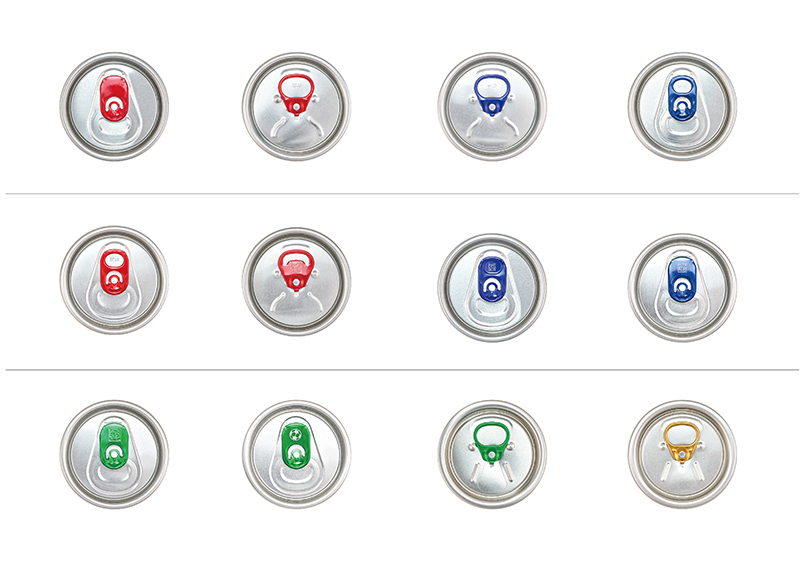
Premium Easy-Open Ends for Beverage Cans]
I have seen many small businesses fail just because they saved a few cents on lids. It breaks my heart to see good drinks go flat. Let me share what I have learned over the years so you don’t make those same mistakes.
How Does Material Choice Affect Your Product Shelf Life?
Corrosion is a silent killer for canned goods. Using the wrong metal leads to off-flavors or even pinhole leaks. You cannot afford to lose your inventory to poor material choices.
Aluminum ends are best for carbonated drinks because they handle pressure well and do not rust. Tinplate ends are better for processed foods that need high-heat sterilization. Picking the material based on your drink’s acidity is the only way to guarantee shelf life.
Deep Dive: The Science of Metal and Liquid Interaction
When I first started in this industry, I thought a metal lid was just a lid. I was wrong. I once worked with a client who put high-acid fruit juice in a standard tinplate can without the right coating. Within months, the flavor changed completely. This is why I always tell my friends at PACKFINE to look at the internal coating or “lacquer” first. Aluminum is great because it forms a natural oxide layer, but for sodas, we use special epoxy or BPA-ni liners. These liners act as a barrier between the liquid and the metal. Without this barrier, the drink eats the metal, and the metal ruins the drink. You must also think about the “temper” of the metal. If it is too soft, the pressure from the bubbles will bulge the lid. If it is too hard, the easy-open tab might snap off. It is a delicate balance that we have perfected over years of testing and supply chain management.
| Material Type | Best Use Case | Main Benefit |
|---|---|---|
| Aluminum (SOT/RPT) | Beer, Soda, Water | Rust-proof, high pressure |
| Tinplate (EOE) | Veggies, Soups, Fish | Heat resistant, strong |
Why is the “Easy-Open” Feature a Game Changer for Customers?
Consumers are lazy and they want convenience. If your can is hard to open or the tab snaps off, they will never buy your brand again. You lose a customer forever over a tiny piece of metal.
A high-quality Easy-Open End (EOE) features a precise score line that allows the lid to tear away smoothly. This design reduces the force needed to open the can and ensures safety by avoiding sharp edges, making your product much more appealing to the user.
Deep Dive: The Engineering Behind the Pop
I spent months in the factory watching how these tabs are made. It is amazing how much engineering goes into a 202 or 206 diameter end. The “score residual” is the most important part. This is the thin layer of metal left after the machine cuts the opening shape. If it is too thick, the customer breaks a fingernail. If it is too thin, the can might pop open during shipping in a hot truck. I remember one summer where a shipment of craft beer exploded in a warehouse because the score lines were just a few microns too deep. We learned our lesson: precision is everything. At PACKFINE, we use high-speed cameras to check every single lid. We also look at the “pop” and “tear” values. The “pop” is the force to break the seal, and the “tear” is the force to pull it back. We want these numbers to be low enough for a child to open, but high enough to survive a trip across the ocean. Good design isn’t just about looking nice; it’s about making sure the user has a perfect experience every time they get thirsty.
| Feature | Customer Impact | Technical Goal |
|---|---|---|
| Stay-On-Tab (SOT) | No litter, easy recycling | Rivet strength |
| Large Opening (LOE) | Better aroma and flow | Pouring angle optimization |
How Can Proper Seaming Save You Thousands in Waste?
A bad seal means a flat drink. If your can ends don’t fit your seaming machine perfectly, you will have leaks and mold. This waste will eat your profits and destroy your business margins.
Proper seaming requires a perfect match between the can body and the can end. Using standardized sizes like the 202 B64 or CDL ends ensures a tight “double seam.” This mechanical seal keeps oxygen out and carbonation in.
Deep Dive: The Mastery of the Double Seam
I often tell my clients that the “double seam” is the most important invention in the history of food. It is a five-layer metal sandwich that holds back a lot of pressure. But here is the thing: your seaming machine must be set up correctly for the specific ends you buy. I once visited a factory that was losing 10% of its production. Why? They switched to a cheaper end supplier, and the “curl” of the lid was slightly different. The machine was crushing the lids instead of folding them. We stepped in and showed them how to measure the “seam thickness” and “overlap.” You need a good micrometer and a saw to cut the seam and look at it under a lens. If the “body hook” and “end hook” don’t interlock like fingers, your drink is doomed. At PACKFINE, we don’t just sell you the metal; we help you understand the settings on your seamer. We want to make sure that once you seal that can, it stays sealed until the customer pulls the tab.
| Seam Component | What it Does | Common Issue |
|---|---|---|
| Seaming Compound | Airtight rubber seal | Missing compound leaks |
| Overlap | Locks lid to can | Loose seam loses CO2 |
Conclusion
Choosing the right can end protects your drink, saves your profit, and makes your customers happy. Trust quality materials and smart design to help your business grow and succeed.
Media Contact
Company Name: Packfine
Email: Send Email
Country: China
Website: https://www.packfine.com/