
Over the past six months, Merck has been a great trade, beating the S&P 500 by 13.4%. Its stock price has climbed to $149.98, representing a healthy 29.6% increase. This was partly thanks to its solid quarterly results, and the performance may have investors wondering how to approach the situation.
Is there a buying opportunity in Merck, or does it present a risk to your portfolio? Get the full breakdown from our expert analysts, it’s free.
Why Is Merck Not Exciting?
We’re happy investors have made money, but we’re cautious about Merck. Here are three reasons why MRK doesn’t excite us, plus one stock we’d rather own.
1. Weak Constant Currency Growth Points to Soft Demand
In addition to reported revenue, constant currency revenue is a useful data point for analyzing Branded Pharmaceuticals companies. This metric excludes currency movements, which are outside of Merck’s control and are not indicative of underlying demand.
Over the last two years, Merck’s constant currency revenue averaged 3.8% year-on-year growth. This performance slightly lagged the sector and suggests it might have to lower prices or invest in product improvements to accelerate growth, factors that can hinder near-term profitability. 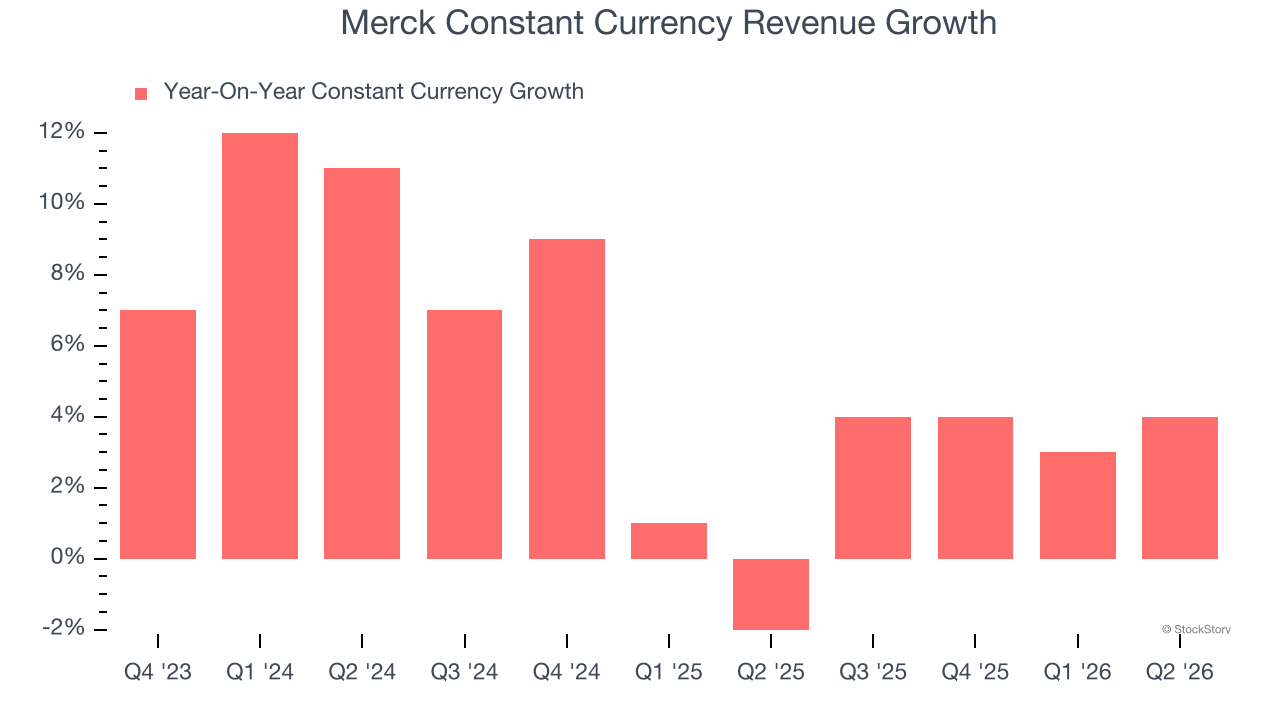
2. Shrinking Adjusted Operating Margin
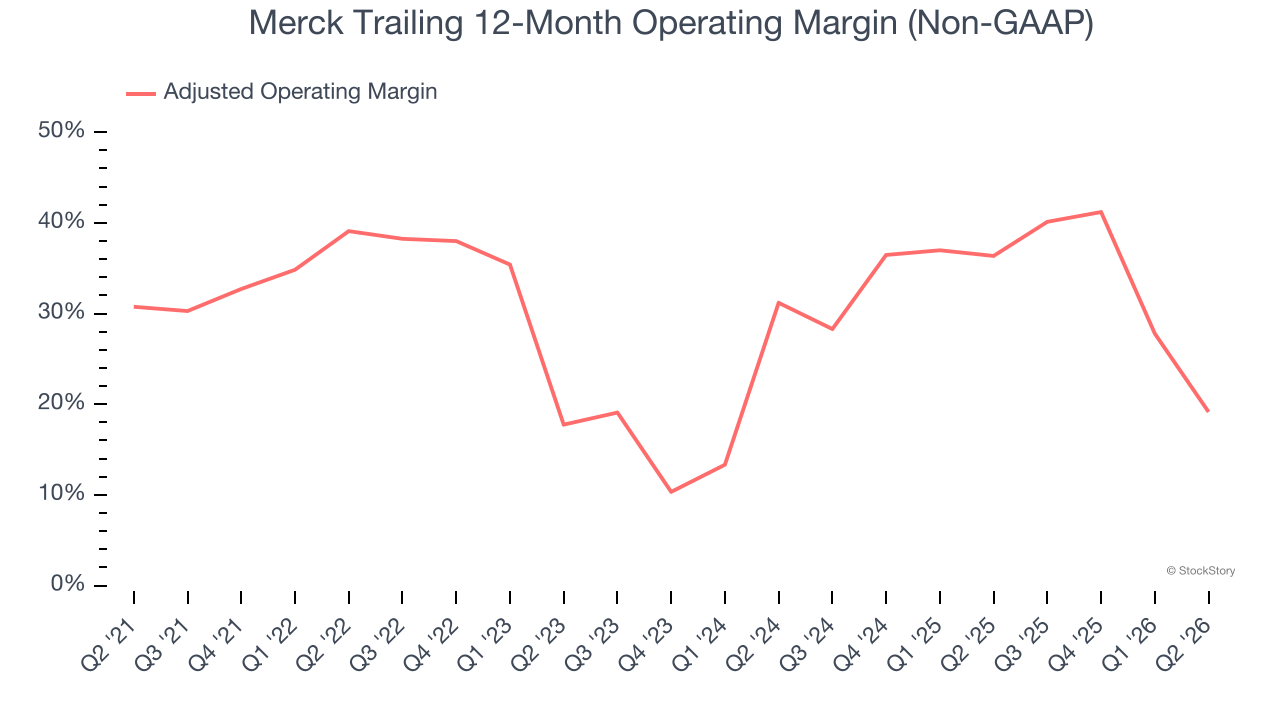
Adjusted operating margin is one of the best measures of profitability because it tells us how much money a company takes home after subtracting all core expenses, like marketing and R&D. It also removes various one-time costs to paint a better picture of normalized profits.
Looking at the trend in its profitability, Merck’s adjusted operating margin decreased by 19.9 percentage points over the last five years. This raises questions about the company’s expense base because its revenue growth should have given it leverage on its fixed costs, resulting in better economies of scale and profitability. Its adjusted operating margin for the trailing 12 months was 19.2%.
3. EPS Trending Down
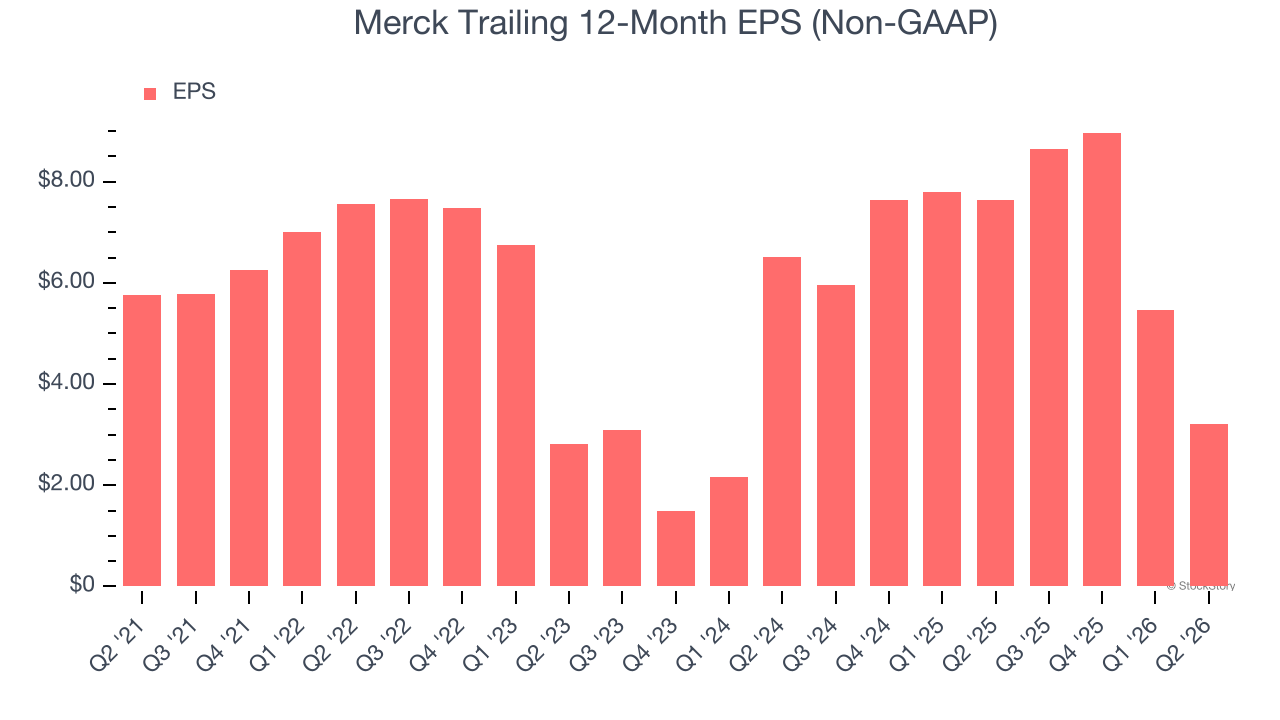
Analyzing the long-term change in earnings per share (EPS) shows whether a company’s incremental sales were profitable — for example, revenue could be inflated through excessive spending on advertising and promotions.
Sadly for Merck, its EPS declined by 11.1% annually over the last five years while its revenue grew by 7.9%. This tells us the company became less profitable on a per-share basis as it expanded.
Final Judgment
Merck’s business quality ultimately falls short of our standards. With its shares topping the market in recent months, the stock trades at 17× forward P/E (or $149.98 per share). While this valuation is reasonable, we don’t really see a big opportunity at the moment. We’re fairly confident there are better stocks to buy right now. We’d recommend looking at the most entrenched endpoint security platform on the market.
High-Quality Stocks for All Market Conditions
WHILE YOU’RE HERE: Top 9 Market-Beating Stocks. The best stocks don’t just beat the market once. They do it again. And again. Robust revenue growth, rising free cash flow, returns on capital that leave their competition in the dust. The market has already rewarded these businesses.
But our AI platform says the party isn’t over. Find out which 9 stocks made the cut this week — FREE. Get Our Top 9 Market-Beating Stocks for Free HERE.
Stocks that have made our list include now familiar names such as Nvidia (+1,460% between June 2020 and June 2025) as well as under-the-radar businesses like the once-micro-cap company Tecnoglass (+1,552% between June 2020 and June 2025). Find your next big winner with StockStory today.